

This one is for home service owners who work with a marketing agency now, or did in the past. If someone else built your website, runs your ads or set up your Google profile, read on. Two minutes from now you'll know which of it is actually yours. Inside: a six-point check, what really happens when you leave an agency, how to ask for everything back politely and firmly (with an email you can send as is), and the contract red flags to catch before you sign.
In this article
You've decided to leave your agency. No drama: the results aren't there, and you're tired of paying every month. You send an email. The next day you get this back: "Your website was built on our platform and is our property. We can transfer it to you for $3,500. Otherwise it will be taken offline on the 1st."
You dig out the contract you signed three years ago on the hood of your truck and there it is. Fine print, page seven. And while you're at it, you find out the domain isn't in your name either, the ad account isn't, and the phone number printed on every business card, yard sign and truck magnet you own belongs to them.
Think that's not you? Maybe it isn't. Plenty of agencies play it straight. But "maybe" is a bad insurance policy for a business that feeds your family. The check takes two minutes. That's less time than you'd spend on hold with support after your site goes dark.
Sound familiar?
🔑You don't have the keys
- You don't have a login to your own website. To change a phone number or a price on a page, you email the agency and wait a week.
- The ad report shows up once a month as a PDF. You can't log into the ad account yourself: "it's complicated, we'll handle it."
- The agency set up your Google profile. You have no idea who's listed as the owner. Years of reviews are sitting on somebody's account.
⛓️Leaving feels risky
- You've been unhappy with the agency for six months, but you stay, because losing the website in the middle of busy season sounds like a nightmare.
- The website was "free." The $300 a month for "maintenance" apparently isn't, and it never ends. You did the math: over three years you've paid for it twice.
- Every lead goes into the agency's CRM. If you leave, where's five years of customer history? You don't know.
🧾Your money, their account
- Your ad budget runs through the agency's card, and you get an invoice with a markup. How much actually went into ads is a matter of faith.
- The agency reports lots of cheap leads, but jobs are few. You can't check where those leads came from, because you don't have access.
- And the worst part: it feels like you're not working for yourself, but for whoever holds the keys to your business.
The 2-minute check
Grab your phone and go through these six points. Don't change anything yet. Just look.
Who actually owns your stuff
- Domain. Type your website address into ICANN Lookup. The Registrar field shows where the domain is registered (GoDaddy, Namecheap and so on). The owner's name is often hidden by a privacy service, so the real question is: do you have a login at that registrar, under your own email? If the domain is "somewhere at the agency," it isn't yours.
- Hosting and website builder. Can you log into the account where the site lives as the owner, not a "user" or "editor"? Who pays for hosting: you, on your card, or the agency as part of "maintenance"?
- Google Ads. Log in. If you can't, that's your answer. If you can, check your access level: you need Admin. Only an admin can manage who has access and unlink an agency's manager account. And whose card is in billing?
- Meta (Facebook and Instagram). In business settings, check which business portfolio owns the ad account. If it belongs to the agency's portfolio and you only have partner access, the ad account isn't yours.
- Google Business Profile. A profile has one primary owner, who can add and remove people and even delete the profile. That should be you. The agency can be an owner or a manager.
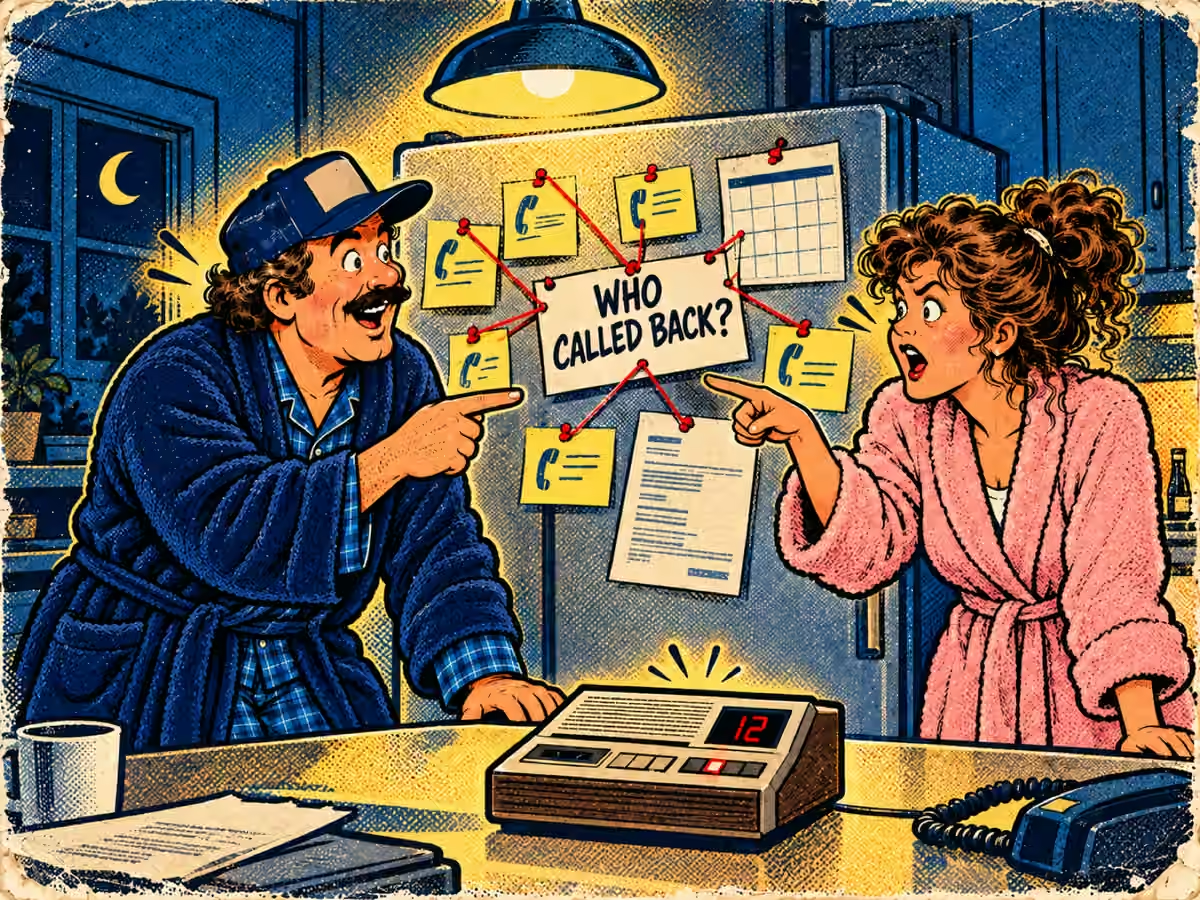
- CRM and customer list. Try exporting your customer list to a file right now. Done in a minute? Great. Have to "request it from your account manager"? Then the list isn't really yours.
Bonus number seven: the phone number on your website, cards, yard signs and profile. Yours, or the agency's? If the agency bought a call-tracking number and put it everywhere, that number may stop ringing your phone when you leave.
If every answer is "mine, I log in myself," relax, you've got a decent agency. Every "not sure" or "the agency's" is something you might not get to take with you. Three or more, and it's better to start the conversation now, while you're still on good terms.
What happens when you leave
Here are the four thoughts owners use to put this check off, and what's hiding behind each one.
"My agency is fine, they wouldn't do that"
Maybe they wouldn't. But agencies close, get sold and churn through staff. Your site doesn't have to be taken down by a bad guy. It can go down because nobody's watching: the agency's card expired, the domain didn't renew, the renewal notice went to the inbox of someone who quit last year. If the domain isn't in your name, you won't even get the reminder.
"The contract says it's all mine"
Good. But "mine on paper" and "I'm the owner in the account" are two different things. If the contract says the site is yours but only the agency has the login, in a dispute you'll be proving it through a lawyer while your site sits offline. Check ownership in the accounts, not just the contract.
"I'll grab everything when I leave"
The moment you leave is when you have the least leverage: you've stopped paying, and the agency has no reason to hurry. A handover that takes a day now can drag on for weeks in a dispute. Get the keys while things are friendly, and keep working together if you're happy.
"Whatever, I'll just start over"
It's not just the website that starts over. The ad account has your campaign history and data on who called and who became a customer. A new account has to learn all over again, and you pay for that learning. Your Google profile has years of reviews; a new one starts at zero. Your customer list is everyone you could have texted in spring: "time to refresh that fence?"

This is about your money, not lawyers
There's another side to this. Your website, profile, reviews and job photos aren't "tech stuff." They're how a homeowner understands why you're worth what you charge: the work you've done, how your process goes, what's included in the price, your warranty, what customers say. Everything that lets you quote higher than the guy down the street without apologizing.
Agencies that hold on to the keys often run on the same model: chase cheap leads. The report shows lots of inquiries at a low cost, and in real life they're people who sent the same request to five contractors, live a hundred miles away or were looking for a job. A handful turn into work. Meanwhile the website is a template with your logo that sells "cheap and fast," not your craftsmanship.
I do it the other way around. The website and the ads show why your company is worth the money, so the people who reach out want the job done right, not the lowest bid. You may get fewer leads and each one may cost more, but they book the estimate and sign the contract. The number I watch is cost per job, not cost per lead.
That's why ownership matters twice over. Think of a storefront window. For years you've put your best work in it, collected reviews, rewritten the copy. If the window belongs to the landlord, when you move you take the inventory, and leave behind the window your customers learned to recognize.
How to ask for everything back, politely and firmly
You don't have to pick a fight or leave right away. A decent agency will hand ownership to the owner without a fuss. It's your company. Here's the order.
- Make a list using the six points above: what's yours, what you're not sure about, what's definitely with the agency.
- Email, don't call. An email leaves a trail: the date, the request, the answer. Keep the tone calm. You're not accusing anyone, you're getting your business records in order. Template below.
- Ask for ownership, not a password. Not "send me the login," but "make me primary owner of the profile," "give me Admin on Google Ads," "move the domain to my registrar account." A password to someone else's account guarantees you nothing.
- Set a deadline. Five business days is reasonable. For what it's worth, under ICANN rules your registrar has to give the domain holder the transfer code within five calendar days of the request.
- Once it's done, check and clean up. Log into everything yourself, change passwords, keep the agency as a manager if you're staying with them, and remove anyone you don't recognize.
- If they say no. For your Google profile you can request ownership through Google itself: the current owner gets an email and has 3 days to respond, and if they don't, you may be able to verify the profile directly. For the domain and the contract, talk to a lawyer, with the email trail in hand.
Email template you can send as is
- Subject: Account ownership for [Company Name]
- Hi [Name], as part of getting our business records in order, I’m making sure [Company Name] is the owner of record on all of our marketing accounts. This isn’t about changing anything in our work together.
- Could you please do the following by [date, 5 business days]: (1) make me primary owner of our Google Business Profile; (2) give [my email] Admin access to our Google Ads account; (3) confirm which business portfolio owns our Meta ad account and add mine as owner; (4) move the domain [domain.com] to my registrar account, or send me the transfer code; (5) give me owner access to the website hosting/builder account; (6) send a full export of our customer and lead list; (7) confirm who owns the tracking phone number(s) used on our site and profile.
- You’re welcome to keep your current access so the work continues as usual. Thanks for your help. [Your name], [Company Name]
If the agency says "sure, no problem" and does it, great. Keep working together: now it's a partnership, not a hostage situation. If you hear "it's complicated," "it's our platform" or "the transfer fee is $3,500," you just learned the most important thing about your agency, and you learned it in time.
Contract red flags
If you're choosing an agency, check the contract before you sign. If you already signed, find these clauses now so you know what you're dealing with.
- "All materials, the website and content are the property of the agency," or "transfer to the client after all contract payments are made."
- "The website is provided as part of a monthly subscription," with no buyout option, or a buyout price to be named later.
- The domain is registered "in the agency's name for convenience." Whose convenience?
- Ads run in the agency's account, and your budget goes through their card with a "processing fee."
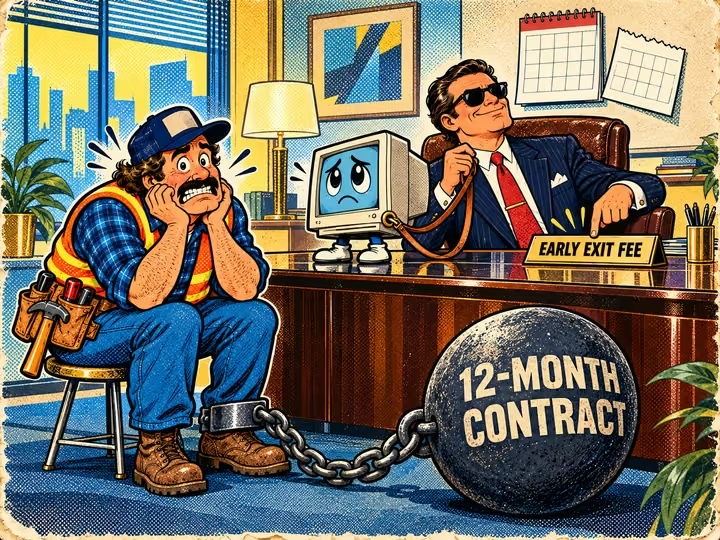
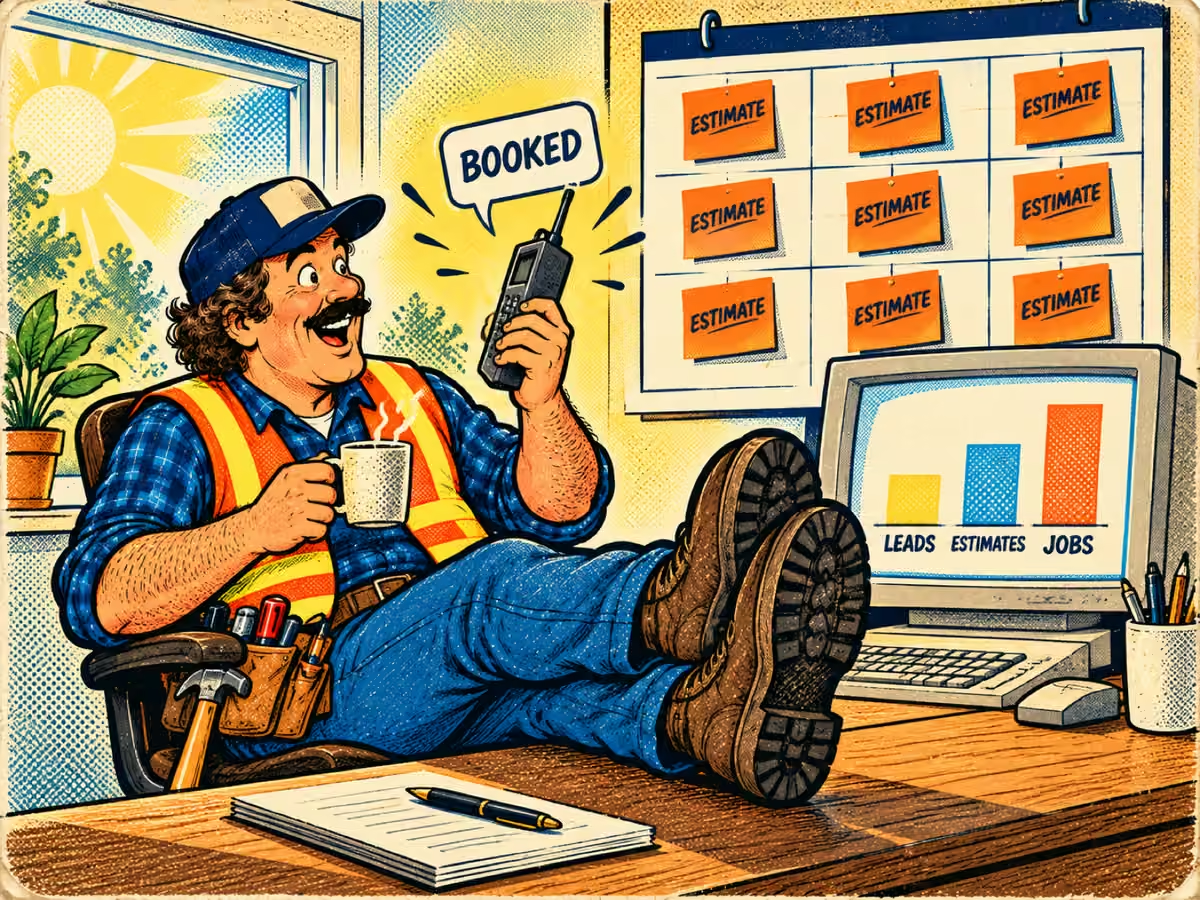
- A 12-month contract with auto-renewal and an early termination fee.
- Exporting your customer list is "available on request" or costs extra.
- Call-tracking numbers belong to the agency, and the contract says nothing about what happens to them when you leave.
Who I am and why I do this

I’m Eddie A. For 12+ years I’ve worked in marketing and sales: projects in 50+ industries, ad budgets up to $60,000 a month, and $12M+ in revenue attributed to campaigns I managed — in the U.S., Canada, the UAE, Turkey, Europe and Kazakhstan. I’m based in Apopka, Florida, and run a registered LLC.
- 12+years in marketing and sales
- 50+industries I’ve run ads for
- $60Kmax monthly ad budget
- $12M+revenue from my campaigns
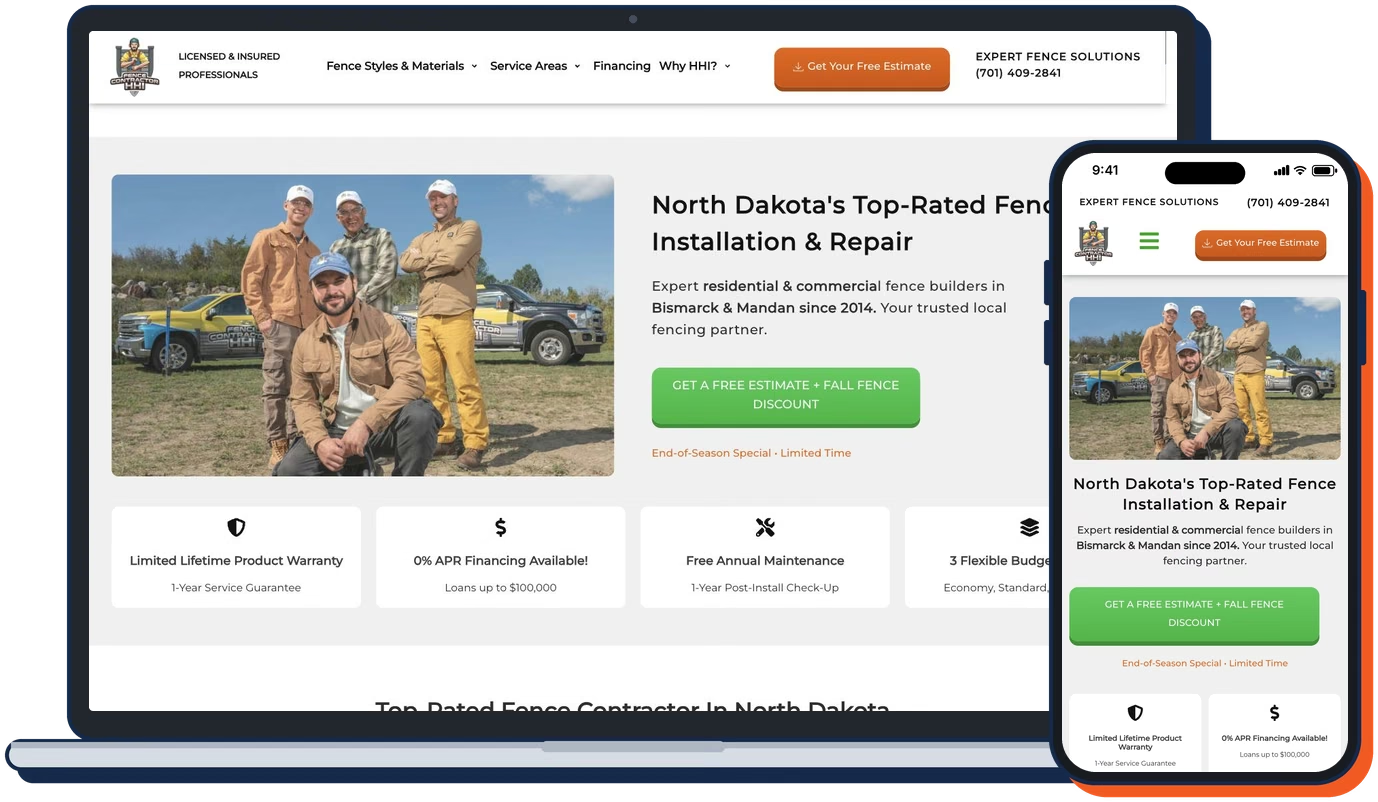
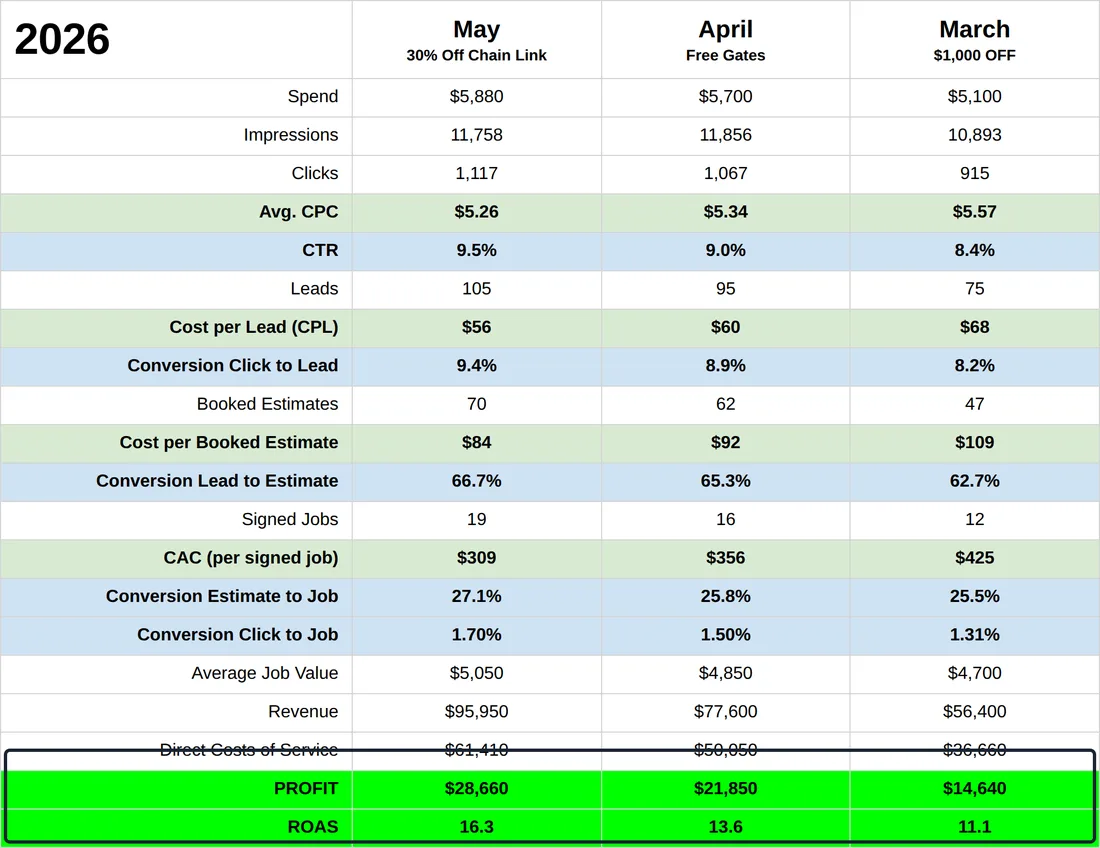
One example from home services: a fence company in North Dakota. In May 2026 a lead cost about $56, two out of three leads (67%) turned into a booked estimate, and each new customer cost $309 on an average job of about $5,000. There was no magic ad. The ads and the website showed why this company was worth choosing, every lead got a reply within minutes, every step had an owner, and no estimate was left without a next step.
I work alone — no account managers, no junior team. You always talk to me. I don’t just run ads: I build the sales side too — call scripts, follow-up messages, email templates — and I own how many leads turn into estimates and paid jobs.
A website that's yours
With me it works differently from day one: the website, domain, ad accounts and customer list are in your name. Ads run in your account, and the leads are yours alone, never resold. You pay by the week with no annual contract. Want to stop? Tell me by Friday, the next week isn't billed, and you get every login and file within 3 business days, no penalty. Websites: a landing page is $1,500, a full website $3,900, a website with SEO $4,900, and on the site and your Google profile I show why you're worth what you charge.

Done for you: work with me
A good fit if
- the business already makes steady money and you want to grow, not experiment;
- you’d rather be on jobs than learning ad platforms, websites and automations;
- you can put about $2,000 a month into marketing, ad spend included.
What I do
- Leads that turn into jobs. Your ads and website show why your company is worth the money — your work, your process, what’s included, your warranty, your reviews — so the people who reach out want results, not the lowest bid.
- Google and Meta ads — live in 3 days.
- A website or a page for your service — with a clear “book an estimate” button.
- No lead slips through — instant text and email after every lead, missed-call text-back, estimate booking, reminders after the quote.
- A sales system — call scripts, quote and email templates, rules for whoever answers the phone.
How I work
- No contracts. Pay by the week; stop any week.
- Everything is yours. Domain, website, ad accounts and customer list are in your name from day one.
- Reports in jobs: leads, booked estimates, quotes, paid jobs and what each job cost.
- You work directly with me. No account managers.
- No promised lead counts — I own the quality of the setup, the speed and honest numbers.
Who this isn't for
- If you want me to win your website back from an agency. I'm not a lawyer. I'll help you figure out what to ask for and how, but contract disputes go to an attorney.
- If you're shopping for the cheapest leads. I focus on leads that turn into jobs, not a pretty number in a report.
- If you want a guarantee of "50 leads a month." I don't give one, and I'd advise you not to trust anyone who does.
Questions owners ask
My agency says the site is on their platform and can't be moved
Sometimes that's technically true: the site was built in the agency's own closed builder. Then ask what you can take, like the copy, photos and domain, and what a transfer would cost. Either way, the domain should be yours: it keeps your web address and email, and a site can always be rebuilt.
I want to keep working with my agency. Won't they be offended?
A decent agency won't be. You're asking to be the owner of your own company's accounts, and their access stays. Say exactly that in the email (template above). The ones who get upset are usually the ones who benefit from you being stuck.
The domain is registered to a former employee or a relative
That happens a lot. While you're on good terms, ask them to move it to the company's registrar account. If they can't be reached and the domain is close to expiring, start with the registrar, and talk to a lawyer if it turns into a dispute. Don't wait: if a domain isn't renewed, after the grace period anyone can register it.
They won't hand over my old site. What does a new one cost?
A landing page for one service is $1,500, a full website $3,900, a website with SEO $4,900, and ongoing SEO plus your Google profile after launch is $190 a week. Everything is in your name from day one: domain, hosting, logins. And the site is built around why you're worth the money, not around the word "affordable."
How is working with you different?
The website, domain, ad accounts and customer list are yours from day one. Pay by the week, no annual contract. Want to stop? Tell me by Friday, the next week isn't billed, and you get every login and file within 3 business days, no penalty.
Do I need a lawyer to do this check?
Not for the check itself: it's just logging in and looking. You only need a lawyer if the agency refuses to hand over something the contract says is yours, or if the contract itself is the problem.