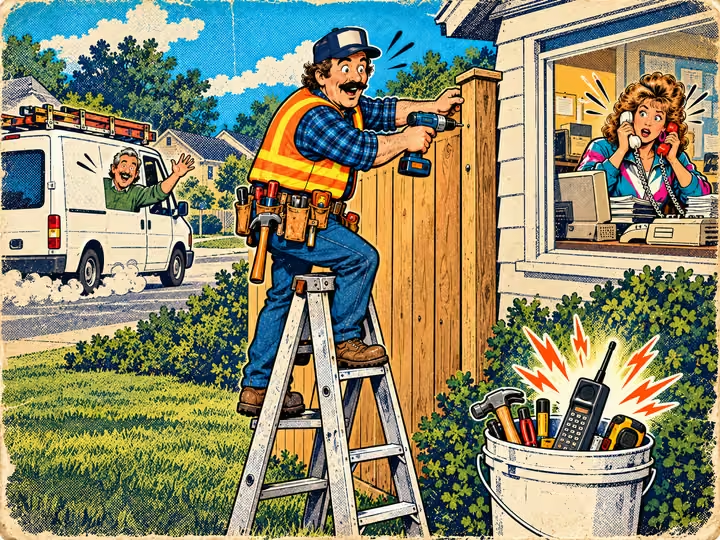

This article is for owners of home service companies: remodeling, fencing, roofing, cleaning, handyman, HVAC, anything that has to do with the house. It's about building your own system for getting jobs, so you stop going back to Yelp, Angi and Thumbtack and stop paying an agency for piles of cheap leads that never turn into work. If you're happy on those sites, keep working them. If you're tired of leads who just want the lowest number, read to the end. Along the way you get a 10-minute check that shows where your jobs leak, and at the end, a clear next step: hand the build to me or start with a free growth plan call.
In this article
- Sound familiar?
- A job is a chain with five links
- Check yourself in 10 minutes
- Why the usual fixes let you down
- What works instead of cheap leads
- 7 questions to ask any agency before you pay
- Who I am and why I do this
- Where to go from here
- How long until it works
- What changes
- Who this isn't for
- Questions owners ask
Chances are you do better work than a lot of the companies in your town. The customers who found you know it. But new ones keep calling somebody else: the guy with more Google reviews, the one who answered first, the one whose text actually made sense.
That's not bad luck, and it's not that "people only care about price." Those companies simply have a system in place for how a customer finds them, picks them and pays them. A lot of good contractors don't. They have skills, experience and a phone that's either dead quiet or ringing off the hook. Sounds harsh? Stay with me, I'll show you on numbers.
Sound familiar?
📞Word of mouth used to work. Now it's gone quiet
- Jobs came from friends and referrals. A good month is followed by an empty one, and you can't tell why.
- You're barely visible on Google: no Maps profile or an empty one, a handful of reviews, no website.
- You're subbing for a GC who charges the homeowner good money and pays you a small cut for doing the actual work.
🥊Burned by lead sites
- You tried Thumbtack, Yelp or Angi. You pay for the lead, and the same homeowner got a few more quotes and went with whoever was cheapest.
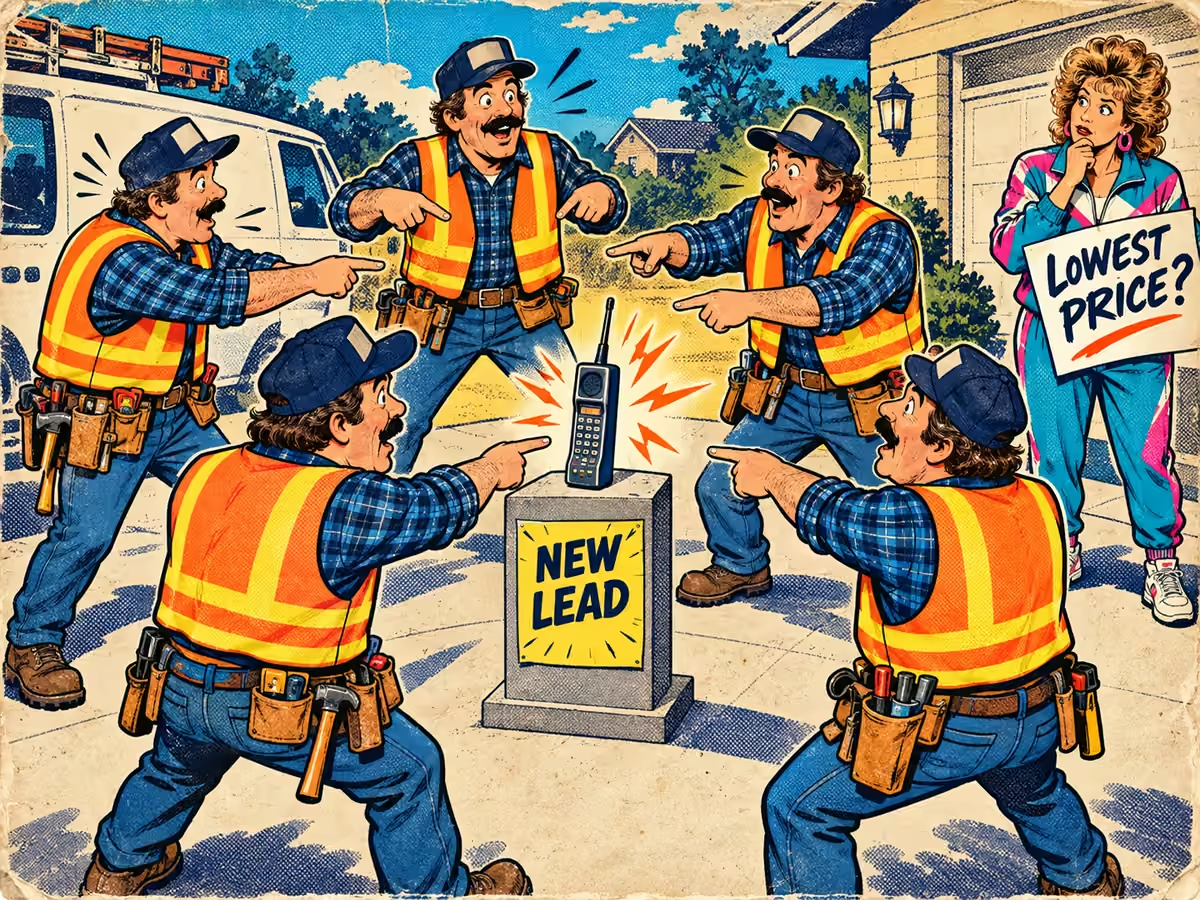
- Your card is on file, the charges keep coming, and part of the leads are outside your area, outside your trade, or people who never pick up. Getting a credit for a dead lead means arguing with support.
📄Burned by an agency
- You signed a 12-month contract. No results, and the only way out is a cancellation fee.
- The agency built your website and registered it to itself. Leave, and you lose the site, sometimes the domain too.
- The agency reports lots of leads, and cheap ones. In real life one asked for a price and vanished, another lives a hundred miles away, a third was looking for a job. Nobody can tell you how many paid jobs the ads actually brought in.
- Your account manager changes every couple of months, and you explain your business from scratch every time.

🕳️The leads come in, then leak out
- You're up on a job, a customer calls. You call back that evening, and they've already booked someone else. The worst part: you paid for that call with your ad money.
- Leads come in at night and on weekends, while you're with your family. By morning the homeowner has a deal with whoever answered first.
- You sent the quote. Silence. Following up feels pushy, not following up kills the deal. That pile of open quotes keeps growing.
- Your office manager, or your wife, is answering the phone, chasing invoices and juggling crew schedules all at once. A new lead's text sits under forty other messages until Thursday, and by then the homeowner has hired the company that texted back in five minutes.
- From the outside the business looks busy and successful. At the end of the month you're still doing the math on payroll and materials.

A job is a chain with five links
- The customer finds you on Google, on Maps, in an ad, through a referral.
- You respond fast to the call, text or message. You figure out whether this is your kind of job, answer the questions and move them to the next step.
- You book the estimate or the site visit.
- You send the quote and get to a decision: a yes or an honest no, not silence.
- You do the job and get the review, so the next customer has an easier time picking you.
A chain breaks at its weakest link. A company that's just starting loses at link one: nobody finds it. An established one loses at links two and four: the leads are there, but they disappear somewhere between the first call and the check.
Pouring more ad money into a broken chain is like opening the faucet wider over a leaky bucket. You won't end up with more water. You'll end up with a bigger water bill.
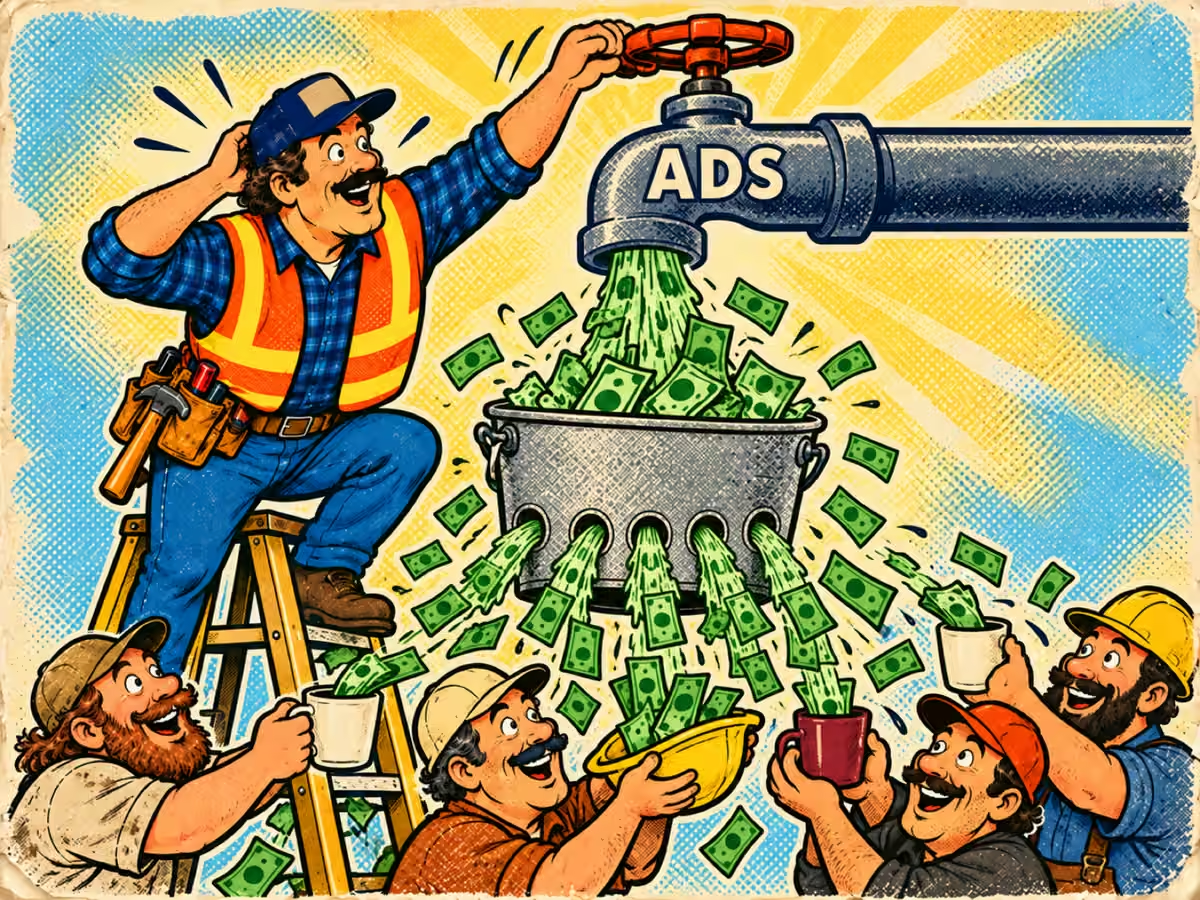
And the big question is who owns that chain. If your customers only come from a lead site, the chain belongs to the lead site: it decides what a lead costs and how many of your competitors get the same one. If the website and the ad account are registered to the agency, the chain belongs to the agency. A system you own means your Google profile, website, ads, customer list and reviews are in your name and stay with you, no matter who you work with.
Check yourself in 10 minutes
If the business is already running
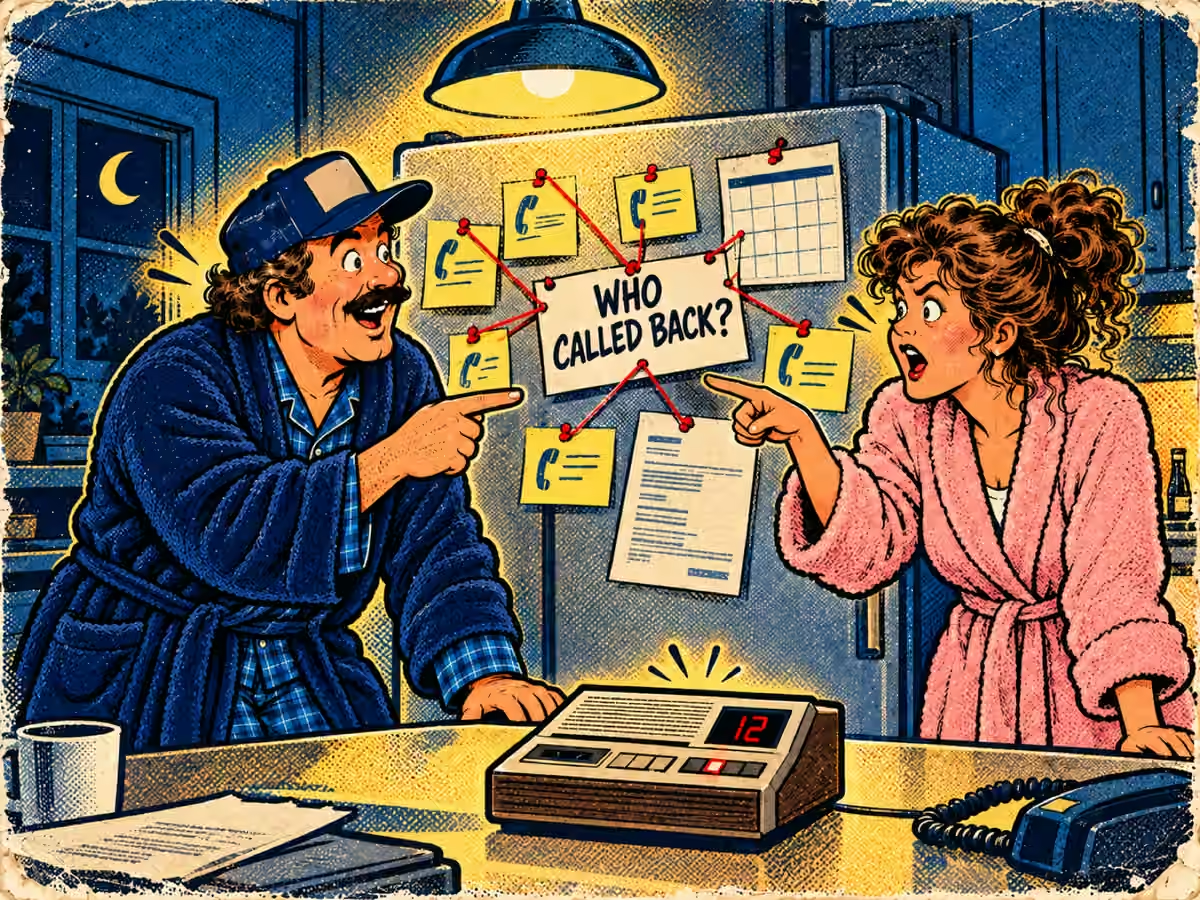
Pull up your last 10 calls and messages from customers. Next to each one, write down:
- Who answered, and when?
- What next step was the customer offered?
- Who was responsible for that step?
- How did it end: estimate, quote, payment or a no?
If several answers sound like "I'd have to ask the guys," "I think somebody called back" or "no idea," you just found where your money goes.
If your spouse, an office manager or a dispatcher takes the calls, do this together. Leads most often get lost in the handoff: "I thought you called them back."
If you're just getting started
- Someone in your town searches Google for what you do. Will they find you on Maps?
- How many Google reviews do you have, and when did the last one come in?
- How many people in your town search for your service every month? Do you know that number?
- You miss a call. What does the customer get: silence or a text?
- Can you text a customer back in under a minute in a way that gets them to book an estimate?
Every "I don't know" is a link that hasn't been built yet.
Why the usual fixes let you down
"I'll just spend more on ads"
In 2026 a lead from Google search ads in home and home improvement costs about $91 on average (LocaliQ data). Every missed call is that money. If leads are leaking, a bigger budget just buys bigger losses.
"I'll offer a discount and fill the calendar"
The job is $1,000, your costs are $700, you keep $300. A 20% discount leaves you $100. To make the same money you now need three jobs instead of one. Calendar's full, bank account isn't.

"I'll buy leads from lead sites"
On lead sites the same lead often goes to several companies at once, and price wins. In 2023 the Federal Trade Commission ordered HomeAdvisor, now part of Angi, to pay up to $7.2 million. Contractors were promised leads matched to their services and area, and got others too; the company also overstated how often its leads turned into jobs. You pay for the lead, compete on discounts and build a pipeline for the platform, not for yourself.
"I'll hand it all to an agency"
Agency management for ads alone runs $1,000–2,000 a month. A good agency saves you years. A bad one locks you into a 12-month contract, puts your website in its own name and chases the cheapest possible lead: the report shows lots of inquiries at a low price, and a handful of jobs. Cheap leads come from people shopping for the lowest number, or who were never going to hire anyone. An agency makes sense when you know what you're buying, and below are seven questions to ask before you pay.
"I'll get a CRM and everything will fall into place"
Software doesn't decide who follows up after the quote, and when. Without rules, a CRM quickly turns into an expensive storage unit for forgotten contacts. And some of these tools lock you into an annual plan, and then owners complain the software doesn't work and they can't cancel.
"I'll pad my reviews"
The FTC bans fake reviews, and Google can restrict a business profile for them. That's not a hack, it's a fast way to lose the one thing customers trust most.
What works instead of cheap leads
The market has trained everyone to measure success by cost per lead: the cheaper, the better. But a cheap lead is almost always someone who hasn't decided anything yet. They left their number with five contractors, asked for a price and went with whoever said the lowest number. A hundred of those at $15 is $1,500 and a week of calls into the void.
I do it the other way around. The ads and the website have to explain why your company is the one to pick: the work you've done, how your process goes, what's included in the price, what the warranty is, what customers say. Then the people who reach out aren't hunting for the cheapest guy, they want the job done right and they're ready to pay for it. You get fewer of those leads, and each one costs more. But they're the ones who book the estimate and sign the contract, not random tire-kickers. The number I watch is cost per job, not cost per lead.
Think of a sign on a storefront. You can hang one that says "Remodeling. Cheap." and everyone looking for cheap will walk in. Or you can put a finished kitchen you built in the window, with a price and a plain explanation of what it includes. Fewer people walk in, but the ones who do already want that kitchen.
7 questions to ask any agency before you pay
Whether you work with me, another agency or on your own, ask these before any money changes hands. A good agency will answer every one directly and in writing.
- Who will own the website, domain, ad account and customer list? The right answer is you, from day one. Ask what you'd take with you if you leave.
- Is there a 6- or 12-month contract, and what happens if I want to stop? A cancellation fee is a red flag.
- Am I the only one who gets the leads from my ads? If the ads run in your account and send people to your website, the leads are yours. If the agency "delivers leads" from its own site, ask whether it sells them to anyone else.
- How will you bring in leads that actually become jobs? "Lots of them, and cheap" is a bad answer. A good one: the ads and the website explain why people should pick you, and the report shows calls, estimates, quotes, jobs and the cost of each job.
- Who exactly will do the work, and who do I talk to? A person's name, not "your account manager." And ask how often account managers change.
- What does the setup fee cover? A list of work, on paper. Paying for setup is normal. Paying without knowing what for is not.
- What happens to a lead after it comes in? Who responds, how many minutes it takes, what the customer gets at night and after the quote. Most agencies don't touch this part, and it's exactly where the jobs get lost.
Who I am and why I do this

I’m Eddie A. For 12+ years I’ve worked in marketing and sales: projects in 50+ industries, ad budgets up to $60,000 a month, and $12M+ in revenue attributed to campaigns I managed — in the U.S., Canada, the UAE, Turkey, Europe and Kazakhstan. I’m based in Apopka, Florida, and run a registered LLC.
- 12+years in marketing and sales
- 50+industries I’ve run ads for
- $60Kmax monthly ad budget
- $12M+revenue from my campaigns
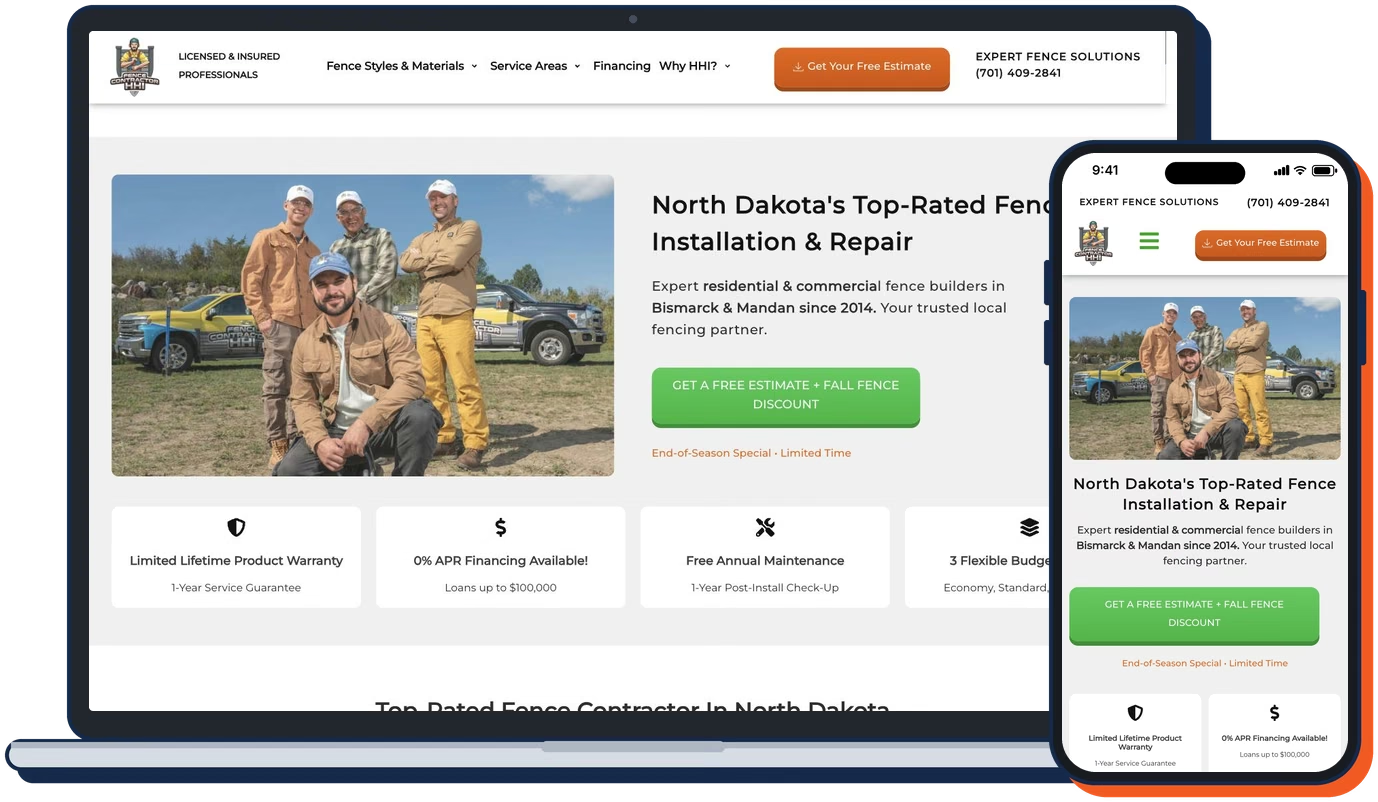
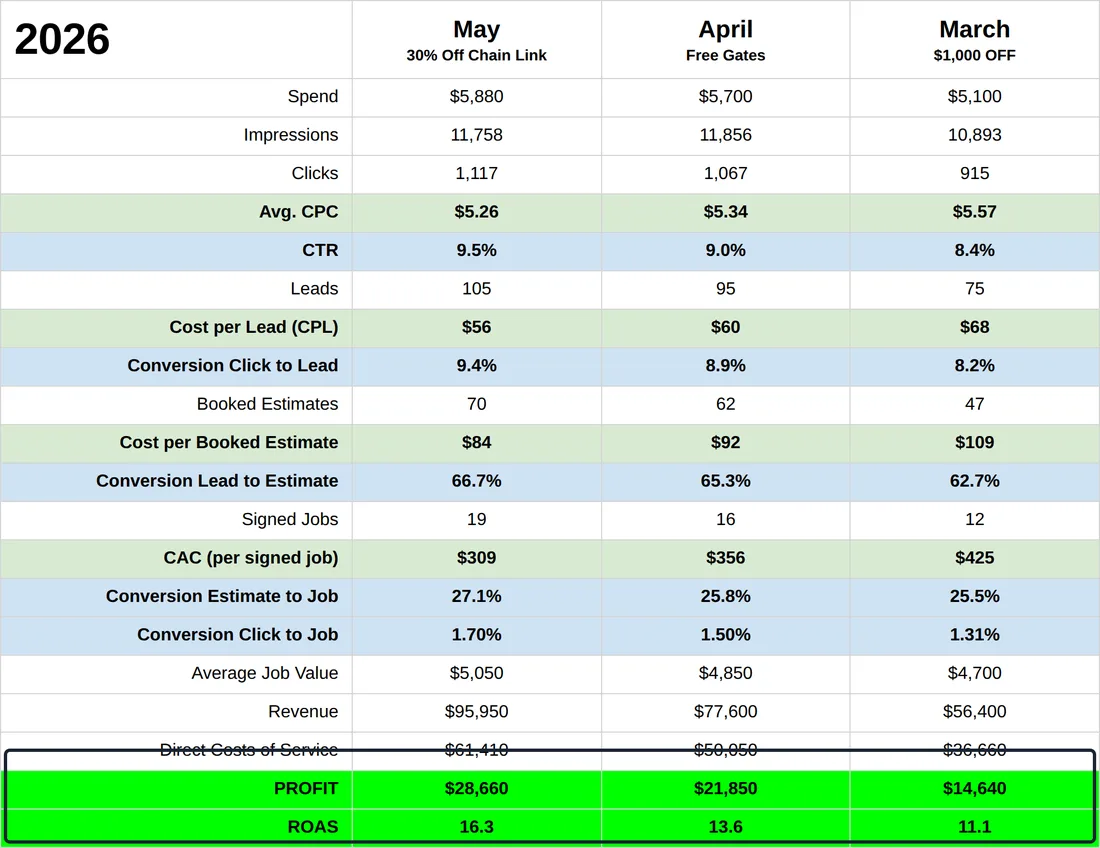
One example from home services: a fence company in North Dakota. In May 2026 a lead cost about $56, two out of three leads (67%) turned into a booked estimate, and each new customer cost $309 on an average job of about $5,000. There was no magic ad. The ads and the website showed why this company was worth choosing, every lead got a reply within minutes, every step had an owner, and no estimate was left without a next step.
I work alone — no account managers, no junior team. You always talk to me. I don’t just run ads: I build the sales side too — call scripts, follow-up messages, email templates — and I own how many leads turn into estimates and paid jobs.
Where to go from here

Done for you: work with me
A good fit if
- the business already makes steady money and you want to grow, not experiment;
- you’d rather be on jobs than learning ad platforms, websites and automations;
- you can put about $2,000 a month into marketing, ad spend included.
What I do
- Leads that turn into jobs. Your ads and website show why your company is worth the money — your work, your process, what’s included, your warranty, your reviews — so the people who reach out want results, not the lowest bid.
- Google and Meta ads — live in 3 days.
- A website or a page for your service — with a clear “book an estimate” button.
- No lead slips through — instant text and email after every lead, missed-call text-back, estimate booking, reminders after the quote.
- A sales system — call scripts, quote and email templates, rules for whoever answers the phone.
How I work
- No contracts. Pay by the week; stop any week.
- Everything is yours. Domain, website, ad accounts and customer list are in your name from day one.
- Reports in jobs: leads, booked estimates, quotes, paid jobs and what each job cost.
- You work directly with me. No account managers.
- No promised lead counts — I own the quality of the setup, the speed and honest numbers.
How long until it works
- Ads. The first campaigns go live within 3 days.
- The whole system. Website, CRM, missed-call text-back, follow-up messages and call scripts take about 4 weeks.
- Reports. Every week from the start: leads, estimates, quotes, jobs and cost per job. You see what's working long before the month is out.
What changes
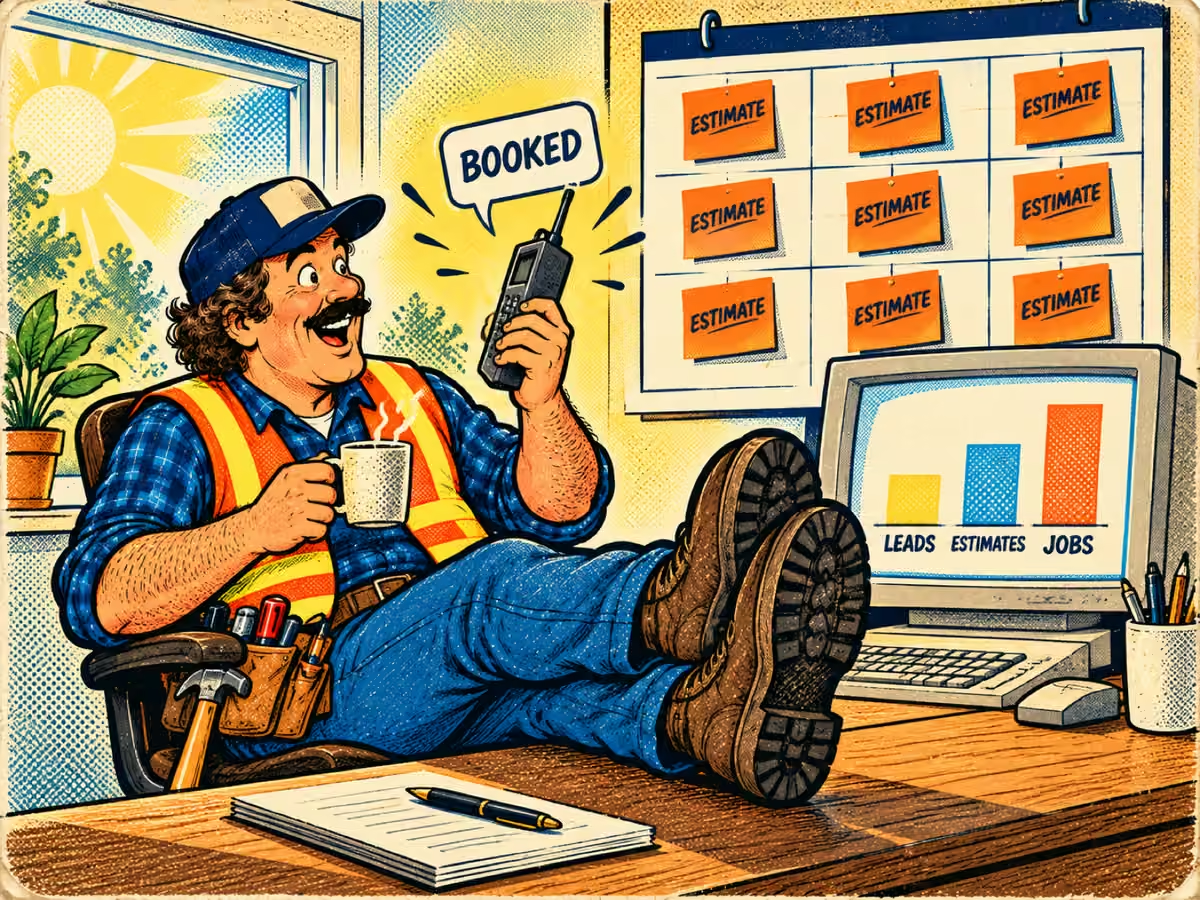
You open your calendar on Monday and know what work is ahead. You know how many inquiries came in, how many booked an estimate, how many paid and where the rest went. You can see which ads bring in jobs and which only bring in cheap leads. A call that comes in while you're on a roof no longer means a lost customer. Nobody has to dig through forty texts to find the new lead. And the website, the ads, the customer list and the reviews are yours, so nobody sends you a bill for them when you leave.
Promising you a dollar figure up front would be dishonest: it depends on your service, your prices, your town, your budget and what actually gets put in place. What I can promise is that I build the system myself, you work directly with me, and you see the numbers every week.
Who this isn't for
- If you want a guarantee of "50 leads a month." I don't give one, and I'd advise you not to trust anyone who does.
- If you're looking for a way to pad your reviews or a quick trick instead of a system.
- If your total marketing budget is under about $2,000 a month. Management starts at $220 a week, plus at least $1,000 a month in ad spend per channel, so the math gets tight. Start by fixing your Google profile, your reviews and how fast you answer, and come back when you're ready to scale.
Questions owners ask
I've already been burned by an agency or a lead site
That's why there's no annual contract here, everything is in your name from day one, and the weekly report counts jobs, not just leads. Want to stop? Tell me by Friday, next week isn't billed, and you get all access and files within 3 business days, no penalty.
I tried ads before and lost money
That's why ads aren't step one. First the market numbers and a way to handle every lead, then the launch, with a clear rule for when to stop a campaign that isn't paying off.
Who will actually run my account?
Me. No account managers, no handing you off to a junior after the first month. You work directly with me.
I don't have time for this
You don't need it. I build the system, you stay on your jobs. What really eats your time is chasing new leads to replace the ones that slipped through the cracks.
My trade is different
The steps are the same for everyone: found, answered, booked, quoted, decided. The ads, texts and call scripts I tailor to your service, your town and your prices.
Do you guarantee a number of leads?
No, and I'd be careful with anyone who does. What you get is full transparency: every week you see leads, estimates, quotes, jobs and cost per job, so you can judge the work by results.
Can you help with licensing, insurance or setting up the company?
That's not my field. You need an attorney and an accountant for that, and I can point you in the right direction. My job is customers and sales.
How much does it cost?
Running one ad channel starts at $220 a week (about $950 a month), plus your ad budget and a setup fee. You pay weekly, no long-term contract. All plans are on the pricing page.