This one is for fence company owners who are tired of paying for leads that don't turn into fences. Maybe you buy them from lead sites, maybe an agency runs your ads, maybe you just commented "FENCE" under one of my videos. Below is the whole system that turns a stranger's search into a signed contract: 15 parts, grouped into the 5 links every paid job goes through. For each part you'll see what it does and why it matters, plus real screenshots from a client's accounts. At the end there's a 2-minute check that shows which link is weakest in your company.
In this article
A fence line is a simple thing. Posts, rails, pickets, a gate. Leave out one post and nobody notices for a month. Then the wind comes, the line starts to lean, and the whole run looks like the cheapest job on the street. You can't fix it with nicer pickets.
Getting jobs works the same way. A new website alone won't do it. Ads alone won't do it. Answering faster alone won't do it either. Drop one link, and either the lead gets expensive, or the customer gets expensive, or the estimates never turn into contracts. Fifteen parts sounds like a lot? Most fence companies already have half of them. They just aren't connected, so the money leaks between them.
Sound familiar?
📱The lead is already shopping around
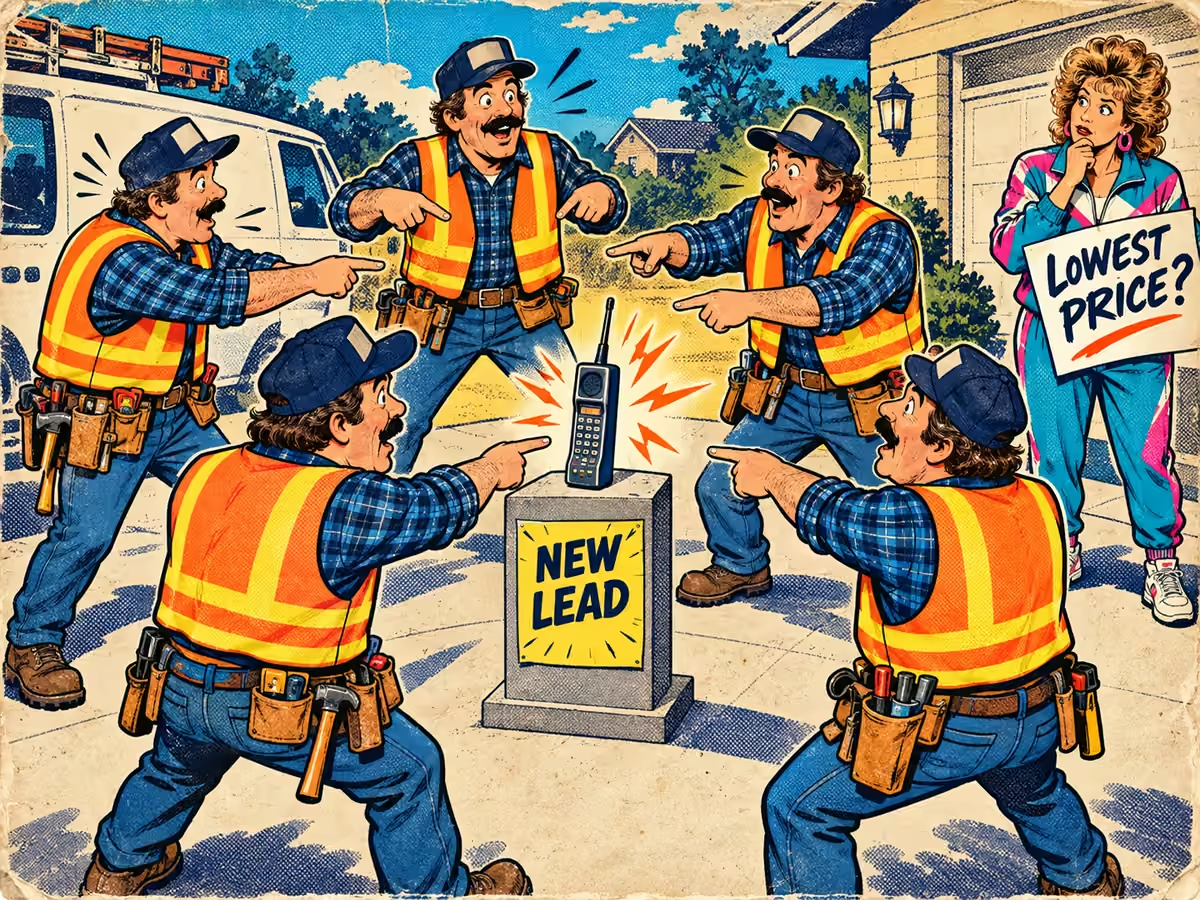
- You pay for a lead, call back twenty minutes later, and the homeowner says, "Two other guys already called me."
- You're digging post holes when the phone buzzes in your pocket. By the time your gloves are off, it's a missed call, and that evening nobody picks up.
- Half the "leads" want a price per foot over the phone and disappear the moment you say you need to see the yard.
📄Estimates that go nowhere
- You drive out, walk the property line for an hour, send the quote. Then silence. A month later there's a new fence in that yard. Not yours.
- You don't want to look desperate, so you don't follow up. Your phone is full of quotes nobody ever said yes or no to.
- The homeowner says, "We need to wait for the HOA," and that's the last you hear of them.
🌨️Feast in spring, nothing in winter
- In April you can't answer the phone. In December it doesn't ring, and your best installer takes a winter job somewhere else.
- You pay for ads every month, and nobody can tell you what one signed fence cost you. Not the agency, not you.
- And there's that quiet thought at night: maybe we're just too expensive. Even though every customer who hired you loves the work.
Why the usual fixes don't hold
"I'll just buy more leads"
It feels like the fastest fix: pay a lead site, get names today. The catch is that a shared lead goes to several contractors at once. You're not buying a customer, you're buying a spot in a phone race, and the homeowner picks whoever is cheapest or quickest. The lead sites have their own track record here, too: in 2023 the FTC ordered HomeAdvisor to pay up to $7.2 million over deceptive tactics in how it sold leads to contractors (FTC). And when you stop paying, the leads stop the same day. Nothing stays with you.
"A new website will fix it"
A good site matters, I build them. But a site is a storefront, not a salesperson. If nobody sends people to it, it's a nice storefront on an empty road. And if people do come, fill out the form and get a reply the next morning, the site did its job and the company dropped the ball anyway.
"I'll hire an agency to run ads"
Most agencies are paid to bring leads, so they chase cheap ones: "Fences. Best prices. Free estimate." That pulls in everybody collecting quotes, the wrong zip codes, people asking if you're hiring. The report looks great: lots of leads at a low price. Then you look at your calendar and there are no more fences on it than before.
What works instead: five links, one chain
Every paid fence job goes through the same five links. They find you. You answer first. They book the estimate. The estimate becomes a signed job. The finished fence brings the next job. A weak link anywhere costs you the jobs you already paid to attract.
And there's one idea running through all five: show why your company is worth the money. What fences you build, how the job goes from estimate to final walkthrough, what's included, what the warranty covers. Ads like that bring fewer bargain hunters and more people who want a good fence. Each lead may cost more. More of them become contracts, and the cost of a signed job goes down. That's the number I watch, not the price of a lead.
The 15 parts, link by link
Link 1. They find you
- Leads that are yours alone. Ads in your own Google and Meta accounts, paid with your card, so every lead comes only to you. Nobody else gets the same name and phone number. Keep the lead sites while your own channels ramp up, then decide what's still worth paying for.
- Ads on two fronts. Google catches people already searching "fence company near me" and "vinyl fence installation," split by city and fence type. Facebook and Instagram show your before-and-after fences to homeowners nearby who haven't started looking yet. Budget: at least $1,000 a month per channel. Below that, the data comes in too slowly to tell what's working.
- A Google profile that works like a storefront. Fresh job photos, regular posts, an answer to every question and every review. A lot of homeowners call straight from the map without ever opening your website, so the profile has to sell on its own.
Link 2. You answer first
- A reply in minutes, not that evening. Every form and every missed call gets a text back within seconds: "Got your request, here's a link to pick a time for your estimate." When you can't pick up, an AI receptionist answers, books the estimate and texts you a summary. Harvard Business Review audited how companies handle web leads and found most of them don't respond nearly fast enough (HBR). In fence, the homeowner who filled out three forms usually goes with whoever answers first and offers a time.
- Confirmations and reminders before the estimate. A confirmation right after booking, a reminder the day before and an hour before, a quick rebooking text if they don't show. Fewer drives to an empty house.
- A soft path for the "just looking" crowd. Plenty of people aren't ready to book this week. A simple fence pricing guide or a "how to pick a contractor" checklist keeps them on your list, so when they're ready, they call you and not the next ad they see.
Link 3. They book the estimate
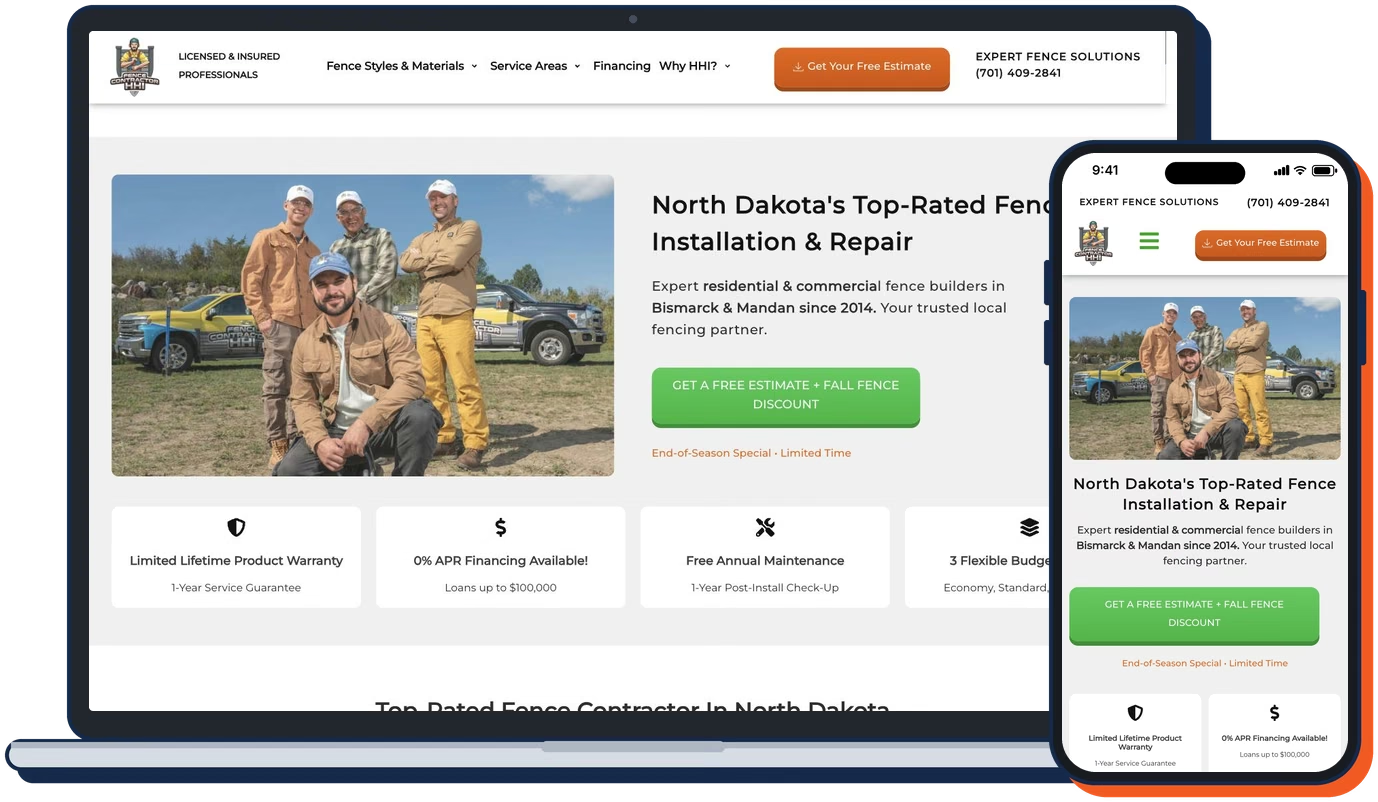
- A website with one job. Every page leads to one action: book a free on-site estimate. One button, a short form, a time picker. And copy that shows why your fence is worth more: materials, posts set in concrete, gates, permits, old-fence removal, cleanup, warranty.
- A page for every city and every fence type. Homeowners search "vinyl fence" plus their town. Google and AI answers hand those searches to whoever has an exact page for them, with local photos and real reviews, not copy-paste text and stock pictures.
- Real crews, not gloss. Phone videos of your crew on site, before-and-after shots, the install process. A homeowner wants a fence like their neighbor's, not a stock photo. The best posts go into paid ads.
Link 4. The estimate becomes a signed job
- Options on the spot, not "I'll email the quote tomorrow." Two or three versions by material, height and gates, ideally shown right in the yard. The question changes from "is this too expensive?" to "which one do we pick?" That's a completely different conversation.
- Follow-up until a clear yes or no. Every quote gets a next step: a reminder, an answer to the usual question, an offer to talk it through, even while the homeowner waits for HOA approval. Not pushy, just what a contractor who cares would do. Every lost deal gets a reason, so you fix the right thing.
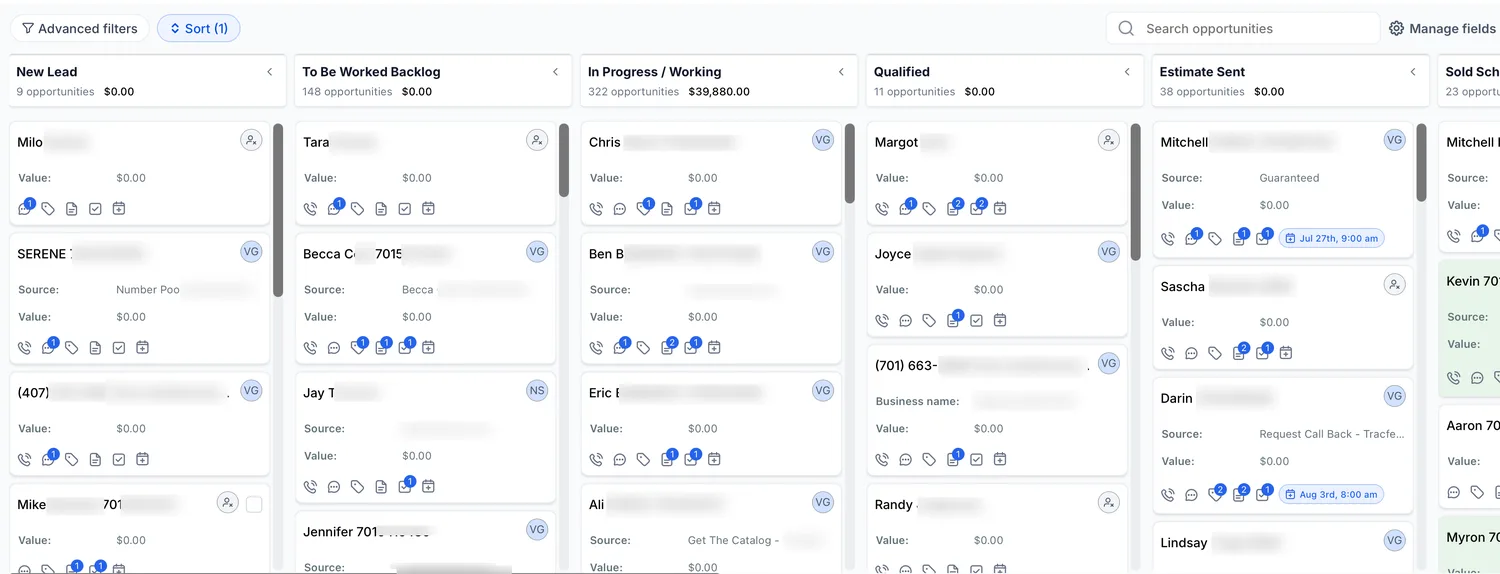
- From signature to payment on rails. Deposit, install date, final payment, all on one board. Money gets lost less in sales than in the chaos after the signature: a forgotten deposit, a final invoice nobody sent.
Link 5. The finished fence brings the next job
- Reviews on autopilot. Every customer gets a review request after the final walkthrough, and every review gets an answer, the bad ones too. Fresh reviews are what neighbors, Google and AI answers look at when someone asks who to hire.
- Neighbors, partners and past customers. A yard sign during the install. Partnerships with landscapers, pool builders and realtors. In the slow season, a message to past customers about gates, repairs or the backyard project they mentioned, so winter isn't zero.
- Four numbers every week. Ad spend, leads, booked estimates, signed jobs. Divide spend by jobs and you get the only number that matters: what one signed fence cost you. Without it, marketing is a lottery. With it, you can see which link is leaking.
What it looks like in real numbers
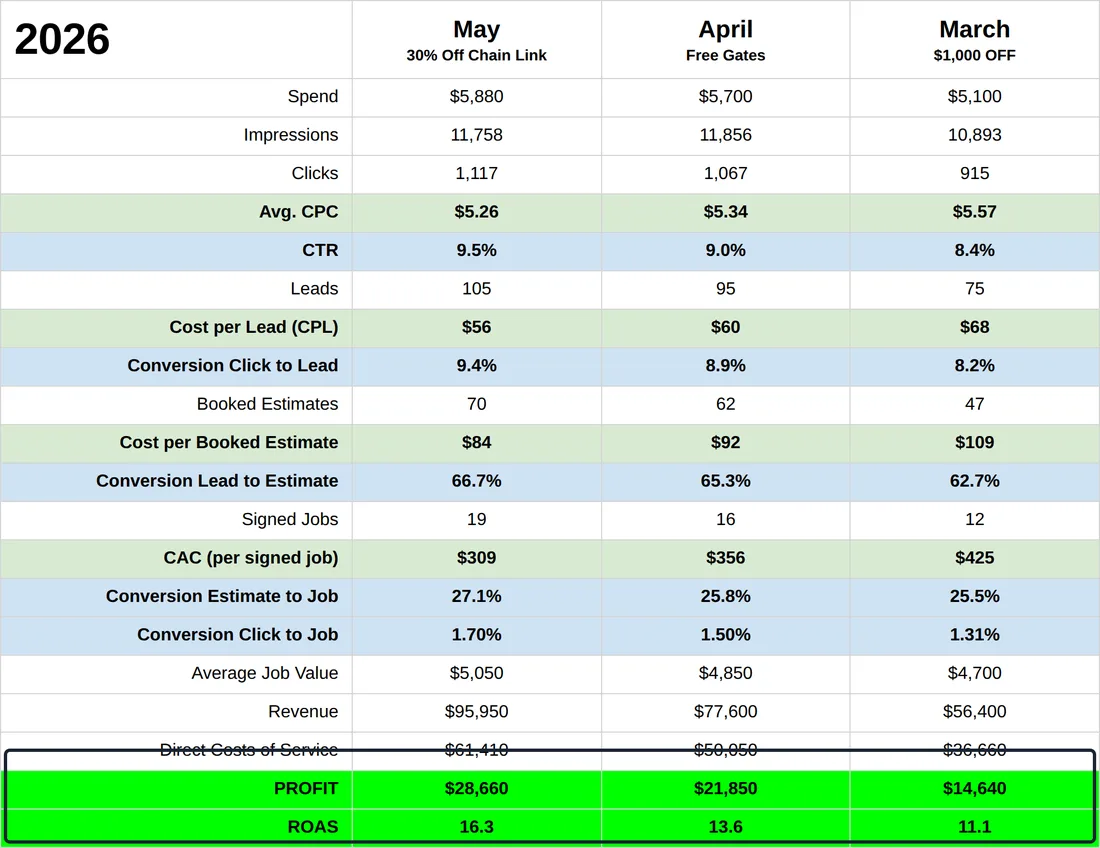
Here is May 2026 for my client, a fence installation company in North Dakota: 800,000 people and five-month winters. All five links working, every lead tracked from first call to signed contract.
- $5,880 in ads brought 105 leads at about $56 each.
- 70 booked estimates: two out of three leads let someone walk their property.
- 19 signed jobs, about one quote in four.
- $309 in ad spend per new customer, on an average job of about $5,050. In March it was $425.
- $95,950 in revenue and $28,660 in profit after direct costs.
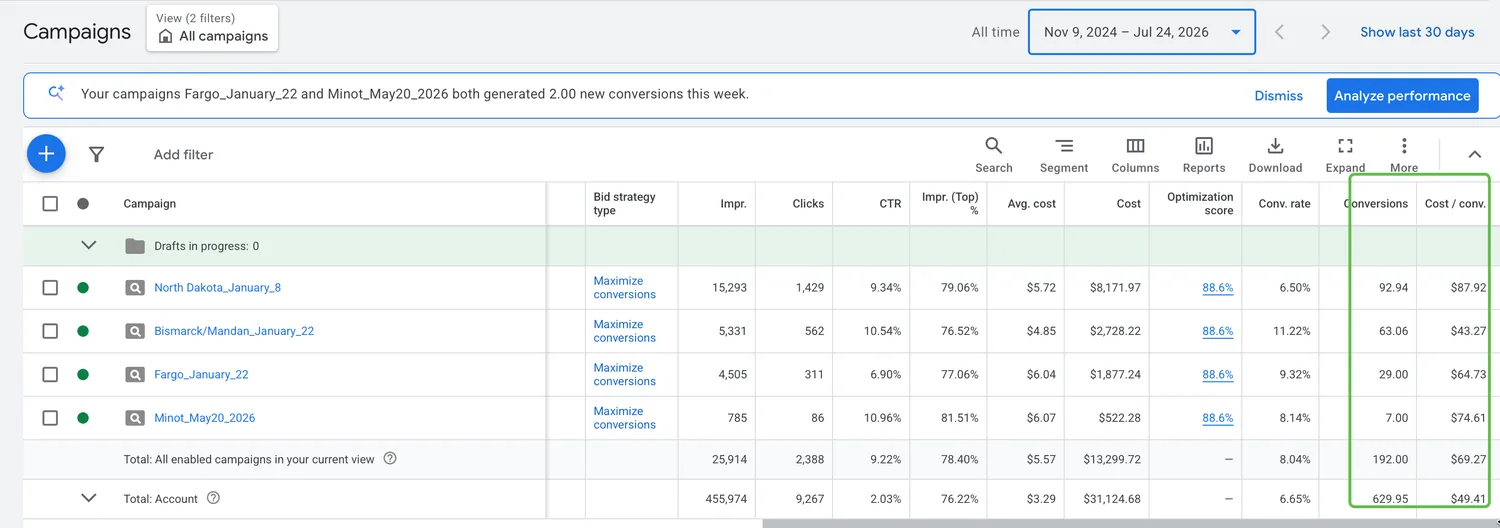
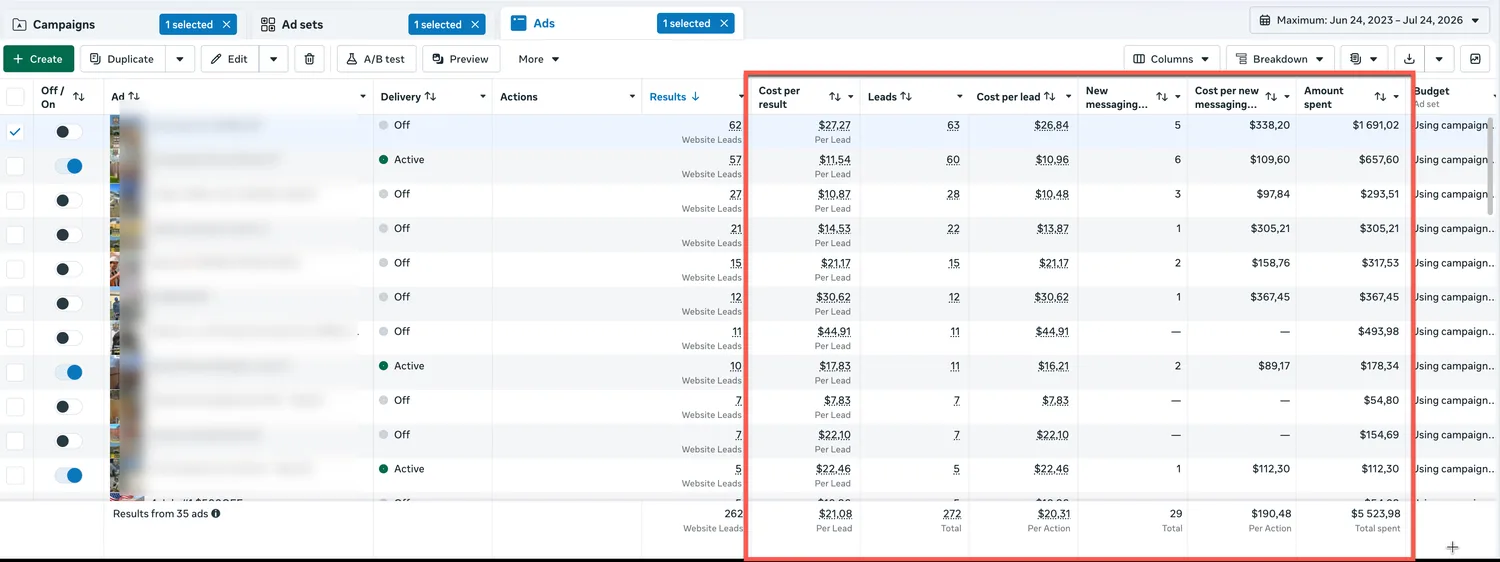
Over the life of the account, Google brought 630 leads at about $49 and Facebook and Instagram brought 272 at about $20, with the best ads under $11. The full line-by-line breakdown is in what a signed fence job really costs from ads. One honest note: this is one client in one market. Your city, season and average job will move the numbers. I won't promise you "19 jobs a month," and I'd be careful with anyone who does.
Find your weakest link in 2 minutes
Answer five questions about last month
- Do you know how many leads you got, and from where? If not, link 1 is running blind.
- How fast does a new lead hear from you, including evenings and weekends? If it's more than a few minutes, link 2 is leaking.
- Out of every 10 leads, how many booked an estimate? If it's fewer than half, look at link 2 and link 3: speed and what your ads and site promise.
- Out of every 10 quotes, how many signed? If it's fewer than two, the problem is the quote and what happens after you send it: link 4.
- How many jobs last month came from reviews, neighbors or past customers? If you don't know, link 5 is money you're leaving on the street.
The first question you can't answer from records, only from memory, is your weakest link. Start there. Buying more leads before it's fixed just pours more water into a leaky bucket.
Who I am and why I do this

I’m Eddie A. For 12+ years I’ve worked in marketing and sales: projects in 50+ industries, ad budgets up to $60,000 a month, and $12M+ in revenue attributed to campaigns I managed — in the U.S., Canada, the UAE, Turkey, Europe and Kazakhstan. I’m based in Apopka, Florida, and run a registered LLC.
- 12+years in marketing and sales
- 50+industries I’ve run ads for
- $60Kmax monthly ad budget
- $12M+revenue from my campaigns
One example from home services: a fence company in North Dakota. In May 2026 a lead cost about $56, two out of three leads (67%) turned into a booked estimate, and each new customer cost $309 on an average job of about $5,000. There was no magic ad. The ads and the website showed why this company was worth choosing, every lead got a reply within minutes, every step had an owner, and no estimate was left without a next step.
I work alone — no account managers, no junior team. You always talk to me. I don’t just run ads: I build the sales side too — call scripts, follow-up messages, email templates — and I own how many leads turn into estimates and paid jobs.
Build it yourself or have it built
You can assemble these 15 parts on your own. It usually takes six to twelve months of trial and burned budget, between jobs. Or I build it for you: ads start the day your page is ready, with instant replies and the AI receptionist working from the very first lead, and the full system takes about 4 weeks. Pay by the week, no contract, and everything in your name from day one.
Done for you: work with me
A good fit if
- the business already makes steady money and you want to grow, not experiment;
- you’d rather be on jobs than learning ad platforms, websites and automations;
- you can put about $2,000 a month into marketing, ad spend included.
What I do
- Leads that turn into jobs. Your ads and website show why your company is worth the money — your work, your process, what’s included, your warranty, your reviews — so the people who reach out want results, not the lowest bid.
- Google and Meta ads — live in 3 days.
- A website or a page for your service — with a clear “book an estimate” button.
- No lead slips through — instant text and email after every lead, missed-call text-back, estimate booking, reminders after the quote.
- A sales system — call scripts, quote and email templates, rules for whoever answers the phone.
How I work
- No contracts. Pay by the week; stop any week.
- Everything is yours. Domain, website, ad accounts and customer list are in your name from day one.
- Reports in jobs: leads, booked estimates, quotes, paid jobs and what each job cost.
- You work directly with me. No account managers.
- No promised lead counts — I own the quality of the setup, the speed and honest numbers.
Who this isn't for
- If you want a guaranteed number of leads. I don't give one. Ask anyone who does how many of those leads will turn into signed fences.
- If you only want to win on price and don't want to show homeowners what they're paying for.
- If nobody can run the estimates. Ads bring people to your door, but the contract gets signed in the homeowner's backyard. Crew and time first, budget second.
Questions owners ask
I already have a website and someone running ads. Do I need all 15 parts?
No. Start with the weakest link from the 2-minute check. Often the ads and the site are fine and the leak is in the reply speed or what happens after the quote. Fix that first, then look at the next link.
Who's going to answer all these leads? I'm on jobs all day.
You don't need a call center. Every lead gets an instant text, and when you can't pick up, the AI receptionist answers, books the estimate and texts you a summary. Then one person, you, your office or a salesperson I train, calls back within minutes.
Should I drop Angi and Thumbtack?
Not on day one. Keep them while your own ads ramp up. Once your own channels bring steady leads, compare the cost of a signed job from each source and decide what's still worth paying for.
How much does it cost to have it built?
The whole system is $790 a week plus a $5,900 one-time setup. Ad spend goes straight to Google or Meta from your card, at least $1,000 a month per channel. You pay by the week, no contract: tell me by Friday and the next week isn't billed. Every price is on the pricing page.
How fast will I see jobs?
Ads start as soon as your page is ready, and from the first lead the replies, CRM and AI receptionist are already working. The full system takes about 4 weeks. Signed jobs follow as estimates close, which depends on your season, your prices and HOA approvals. I won't promise a number before I've looked at demand in your city.
Do you guarantee results?
No. I'm responsible for ads that show why your company is worth it, for making sure no lead slips through, and for honest weekly numbers all the way to the signed contract. Your website, ad accounts and customer list are yours from day one, and you can stop any Friday.