
This one is for owners of home service companies whose customers are happy, but Google doesn't show it: 10 to 30 reviews, the last one six months ago, three photos of the truck on the profile. If you already have hundreds of fresh reviews and reply to every one, you can skip this. If a competitor who does worse work gets the calls because he has "200 reviews," read on. You'll see why reviews decide who gets the call, what fake reviews can cost you today, and a simple, honest routine that brings in reviews every week. At the end there's a 5-minute check and a clear next step.
In this article
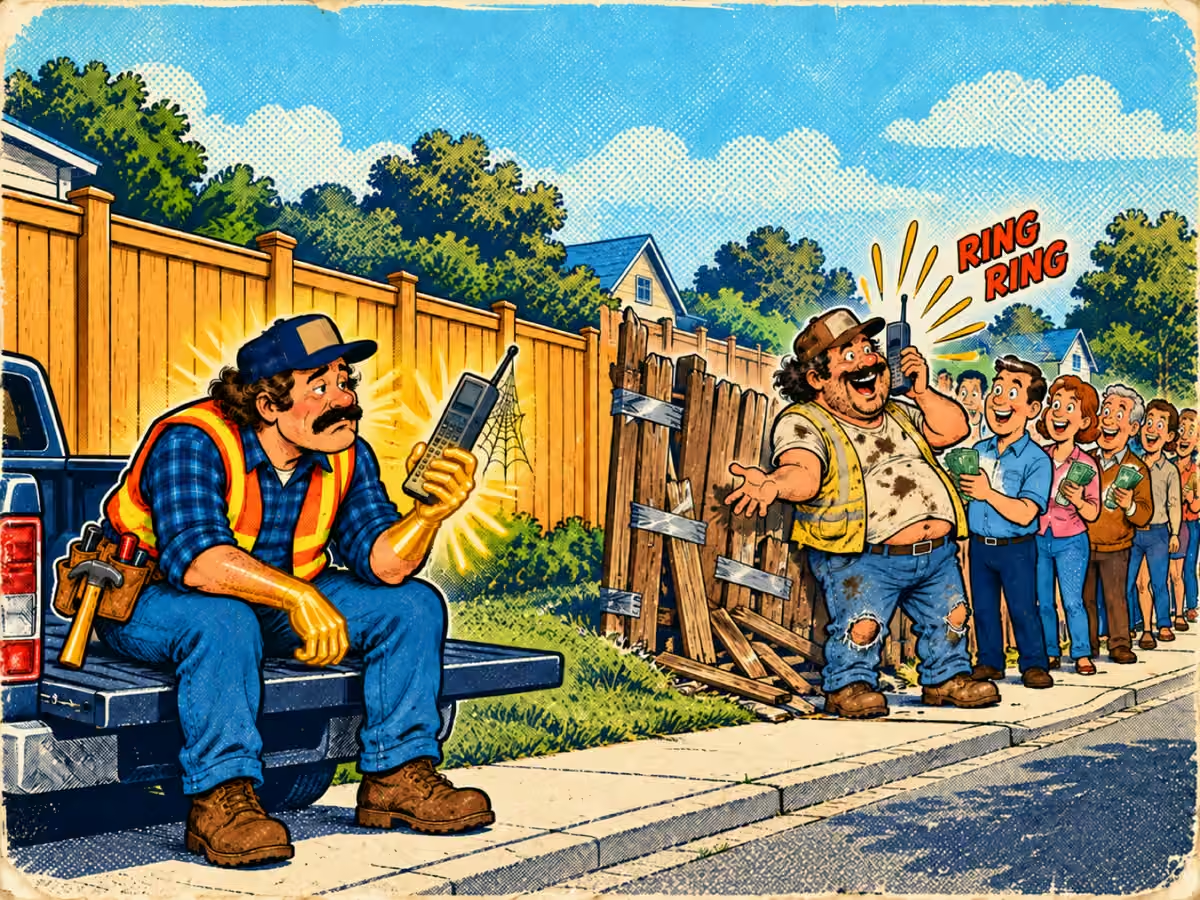
It's Tuesday night, and a homeowner in Orlando types "fence installation near me." Three companies show up on the map. The first has 4.9 stars and 213 reviews. The second, 4.8 and 187. You have 5.0 and 12. Who do you think she calls?
Not you. Even though you have the perfect score and build a straighter fence than both of them put together. Google doesn't know that, and she definitely doesn't. To her, 12 reviews means one of two things: you opened last month, or your five stars came from your mom, your wife and your buddy from the lumber yard.
The first thought is that the other guy bought his reviews. Sometimes he did. More often it's more boring than that, and more annoying: he just asks. Every customer, every time, with the same link. You don't. Sounds too simple? Give me five minutes and I'll show you on numbers why this matters more than your ad budget.
Sound familiar?
🤐Asking feels awkward
- You finish the job, the homeowner walks along the new fence saying "wow." Perfect moment to ask for a review. Instead you shake hands and leave, and in the truck you think, "Should've said something."
- Asking for a review feels like asking for a tip. You're a contractor, not a waiter.
- What if you ask and they leave three stars because the crew dropped a screw on the lawn?
🗓️You meant to, then forgot
- The customer said, "Sure, I'll write one!" They didn't. You didn't remind them, because by then it was the next job, a Home Depot run and a quote due tomorrow.
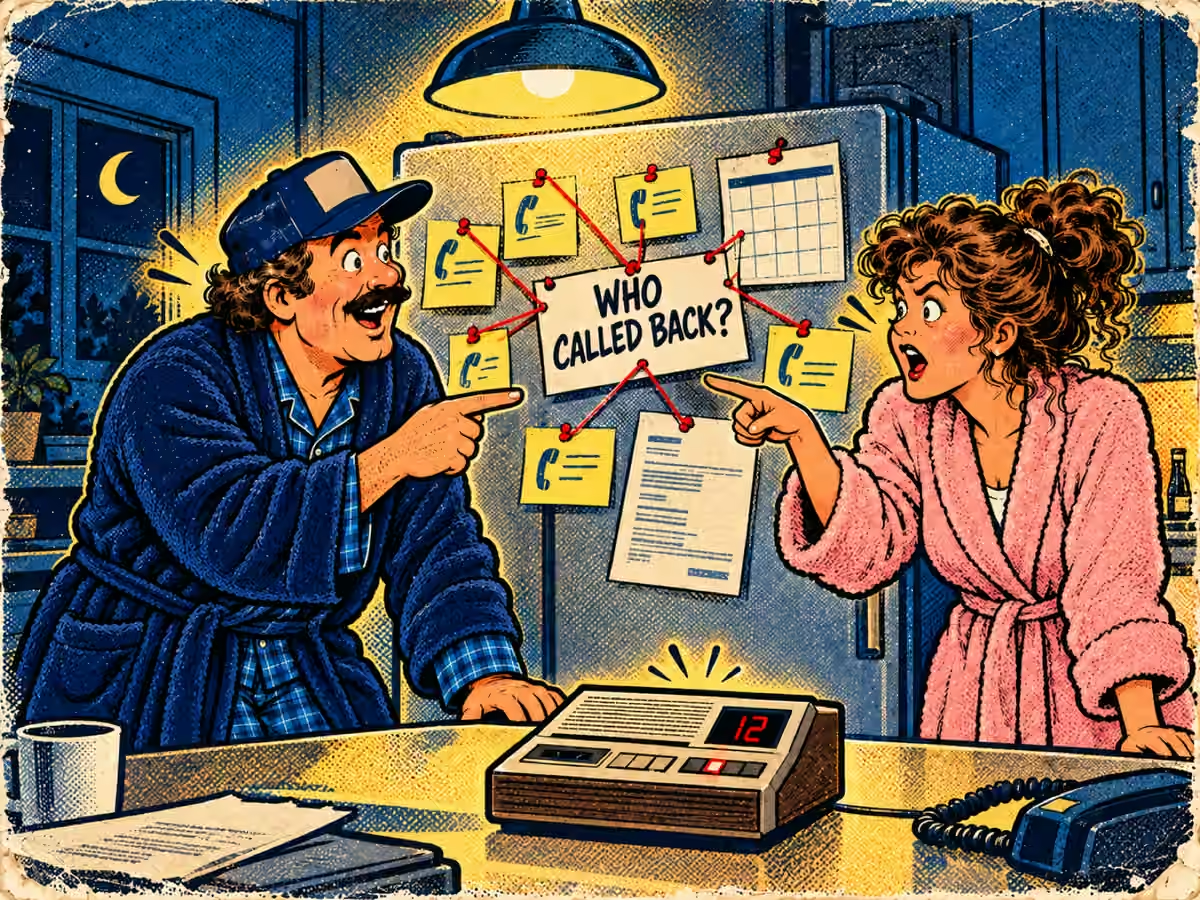
- Nobody has the review link: not you, not your office manager, not your foreman. Every time it's "just look us up on Google, it's somewhere on the right…"
- Your last review is from last spring. A new customer sees the date and wonders if you're still in business.

📉The competitor keeps pulling ahead
- The homeowner says, "We're deciding between you and the other company, they have so many reviews." So you drop your price to outbid someone else's reputation.
- You pay for the ad, someone clicks, opens your profile, sees 12 reviews and goes back to check the others. The click is already on your bill.
- An angry one-star review came in, and you either ignored it or answered it hot at midnight. Now it's the first thing new customers read.
- Your profile shows your logo and your truck. Not one job, even though your phone has hundreds of photos.
Why reviews decide who gets the call
BrightLocal's latest survey (February 2026, 1,002 U.S. consumers) doesn't leave much room for hope: 97% of people read reviews of local businesses, 47% won't use a business with fewer than 20 reviews, 74% look for reviews from the last three months, and 89% expect the owner to respond.
In contractor terms: almost half the people who find you on Google cross you off before they ever call, if you're under twenty reviews. Three out of four check how fresh they are, so two hundred reviews with the newest from 2023 work worse than forty from this season. And nearly everyone reads your replies, which means they're watching how you act when something goes wrong.
Here's the part most owners miss. Reviews aren't "stars for a rating." They're the only place where a stranger explains why you're worth what you charge: showed up on time, cleaned up, walked through the quote line by line, came back a month later to adjust the gate at no charge. When there are two hundred of those stories, the next customer shows up already sold. They don't ask for a discount. They ask when you can start.
With 12 reviews, you've got one weapon left: price. And you're back in the race where the cheapest bid wins and leads come from people who sent the same request to five contractors. You can buy plenty of those leads, through ads or on lead sites. Very few of them turn into jobs.
Why good contractors don't ask
Here's the irony: the better the contractor, the less likely he is to ask. Good work feels like it should speak for itself. It does, but only to whoever's standing next to the fence. The neighbor two blocks over never sees it, and Google can't grade a weld.
Then there's the awkwardness. Asking for a review feels like fishing for a compliment. But look at it from the customer's side: they're happy, they don't mind, it just didn't cross their mind. Everyone gets asked to rate everything from a haircut to a pizza delivery. The only person who feels weird about it is you.
And there's memory. You're juggling the crew, materials, quotes and seven phone calls. "Ask for a review" loses that fight every time. So the fix isn't being braver or more organized. The fix is getting the review out of your head and into your process, the same way signing the contract is part of the process.
Shortcuts that backfire
"I'll buy a batch and catch up"
It feels fair: the other guy probably cheated, so why can't you? But since October 2024 the FTC's rule on fake reviews has been in effect. It flatly bans buying or selling reviews from people who don't exist or never used your service, AI-written ones included (FTC announcement). Penalties run up to $53,088 per violation, and in December 2025 the FTC sent warning letters to ten companies.
Google moves faster than the FTC. For fake reviews it can block your profile from getting new reviews for a period, unpublish the ones you have, and put a warning on your profile telling customers fake reviews were removed. Picture that banner over your company in peak season.
"I'll give 10% off for a review"
Sounds harmless, you're not asking them to say anything nice, just saying thanks. But there are two sets of rules here. The FTC bans rewards tied to a review saying something positive or negative. Google goes further: any incentive, whether money, discounts or free services, in exchange for any review counts as fake engagement. Even if the customer leaves three stars, the discount is the violation. Gift cards, a drawing among reviewers, "free gutter cleaning for five stars": same thing.
"I'll only ask the happy ones"
This is the most popular setup: first ask "How did we do?", send the 9s and 10s to Google and route everyone else to a private form. Plenty of review tools work exactly like that. But Google explicitly prohibits discouraging negative reviews or selectively soliciting positive ones. Ask, absolutely. Just ask everyone.
And honestly, a couple of four-star reviews with a calm reply from you look more believable than a wall of perfect fives. A flawless rating raises the same question as 12 reviews: are these real?
"I'll get my wife, my crew and my buddies to post"
The FTC rule specifically targets reviews from employees and managers that don't disclose the connection, and limits soliciting them from their relatives. Your buddy who "did see the fence" is still an insider review. And under Google's rules, any review that isn't based on a real customer experience is fake engagement, with everything that means for your profile.
"Do good work and the reviews will come"
They will. Slowly. Without being asked, people usually review when something blew them away or made them furious. Everyone else is quietly satisfied.
An honest system in six steps
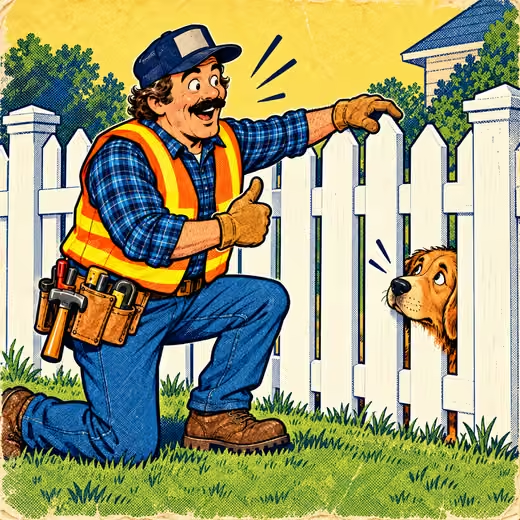
A review is a neighbor leaning over the fence telling the next customer, "Hire these guys, you won't regret it." Two hundred reviews is two hundred neighbors. The goal isn't to invent neighbors. It's to make sure every happy customer actually says it out loud. Here's how I set it up.
- The right moment. Ask when the customer is happiest: the day you hand over the job, while they're walking around the finished work, and right after payment. A month later, the feeling is gone. Done means every job has a clear point where the ask goes out, not "whenever I remember."
- A direct link and QR code. Google gives you a link and a QR code that open the review window directly. Save the link on your phone, your office manager's and your foreman's. Put the QR code on your business card, your quote, your invoice and a fridge magnet the customer keeps. Nobody should have to hunt for you on the map. One tap.
- A text after payment. Short, by name, from a real person, not "the team." A couple of days later, one gentle reminder to anyone who hasn't answered. Then stop. In the system I build, that text goes out automatically when the job is closed, so nobody has to remember anything.
- A neutral ask. Not "leave us five stars," and not "if you were happy." Just "Would you share how it went? An honest review helps your neighbors pick a contractor." And don't script what they write: no "please mention fence installation Orlando." Google prohibits that, and pressure on the spot too, so don't stand over the customer while they type.
- Photos of the work. Every job gets 3 to 5 before-and-after shots on your Google profile and your website. You can invite the customer to add their own photo to the review. A review with a picture of the new fence sells harder than any ad copy, because it shows exactly what your customers pay for.
- A reply to every review. Good ones: short and specific, not the same "Thanks!" for everyone. Bad ones: calm, no excuses, nothing personal. Acknowledge it, explain, offer to make it right. That reply isn't for the reviewer. It's for the next fifty customers.
Sample text messages and a reply to a bad review
- Text after payment: "Hi Linda, it's Mike from [Company]. Thanks again for having us out. Would you mind sharing how it went? An honest review helps your neighbors pick a contractor: [link]"
- Reminder 2–3 days later: "Hi Linda, quick follow-up in case my last text got buried. Here's the link if you have a minute: [link]. Thanks either way!"
- Reply to a two-star review: "Hi Tom, thank you for telling us. You're right that the crew ran late and didn't clean up around the post holes, and that's on us. I've called you to set up a time to fix it this week. — Mike, owner"
Why it works: you're not inventing anything or paying anyone. You simply stop losing the reviews your customers were already willing to write. The guy with two hundred reviews is doing exactly this, he's just been doing it longer.
Reviews and photos are your price tag
The market has trained owners to chase cheap leads: lots of them, low cost per lead. But a cheap lead is almost always someone who hasn't decided anything and sent the same request to five contractors. All they care about is the number, and you end up haggling to the last dollar.
I build it the other way around. Your ads, website and Google profile have to show why your company is worth the money, and reviews and photos are the best material for that. When a customer writes in their own words that you walked them through every line of the quote and came back to adjust the gate for free, that explains your price better than anything on your website. A gallery of forty real jobs shows the quality of your work before you ever show up for the estimate.
You may get fewer leads, and each one may cost more. But the people who reach out have already read twenty stories from your customers and want the same result. They book the estimate, sign the contract and ask for discounts less often. The number that matters is cost per job, not cost per lead, and reviews bring it down better than a bigger budget.
Check yourself in 5 minutes
Open Google Maps and search your service in your town
- How many reviews do the top three companies on the map have, and how many do you have?
- When did your last review come in? If it's been more than a month, you look stale to the 74% who check recent reviews.
- Of your last 10 finished jobs, how many customers did you actually send the review link to? Not hinted. Sent.
- Is the review link saved on your phone and on the phones of everyone who talks to customers?
- Have you replied to every review, including the bad ones?
- How many photos of your work went on your profile in the last month?
If question three is anything less than 10 out of 10, you just found the main leak. Now do the math: the leader has 200 reviews, you have 12, that's a gap of 188. If you finish 5 jobs a month and one in three customers leaves a review, that's under two a month, so matching the leader's total will take years. But the 20-review mark, where almost half of customers stop screening you out, is a few months away. And freshness, a new review every couple of weeks, you can have this season.
Who I am and why I do this

I’m Eddie A. For 12+ years I’ve worked in marketing and sales: projects in 50+ industries, ad budgets up to $60,000 a month, and $12M+ in revenue attributed to campaigns I managed — in the U.S., Canada, the UAE, Turkey, Europe and Kazakhstan. I’m based in Apopka, Florida, and run a registered LLC.
- 12+years in marketing and sales
- 50+industries I’ve run ads for
- $60Kmax monthly ad budget
- $12M+revenue from my campaigns
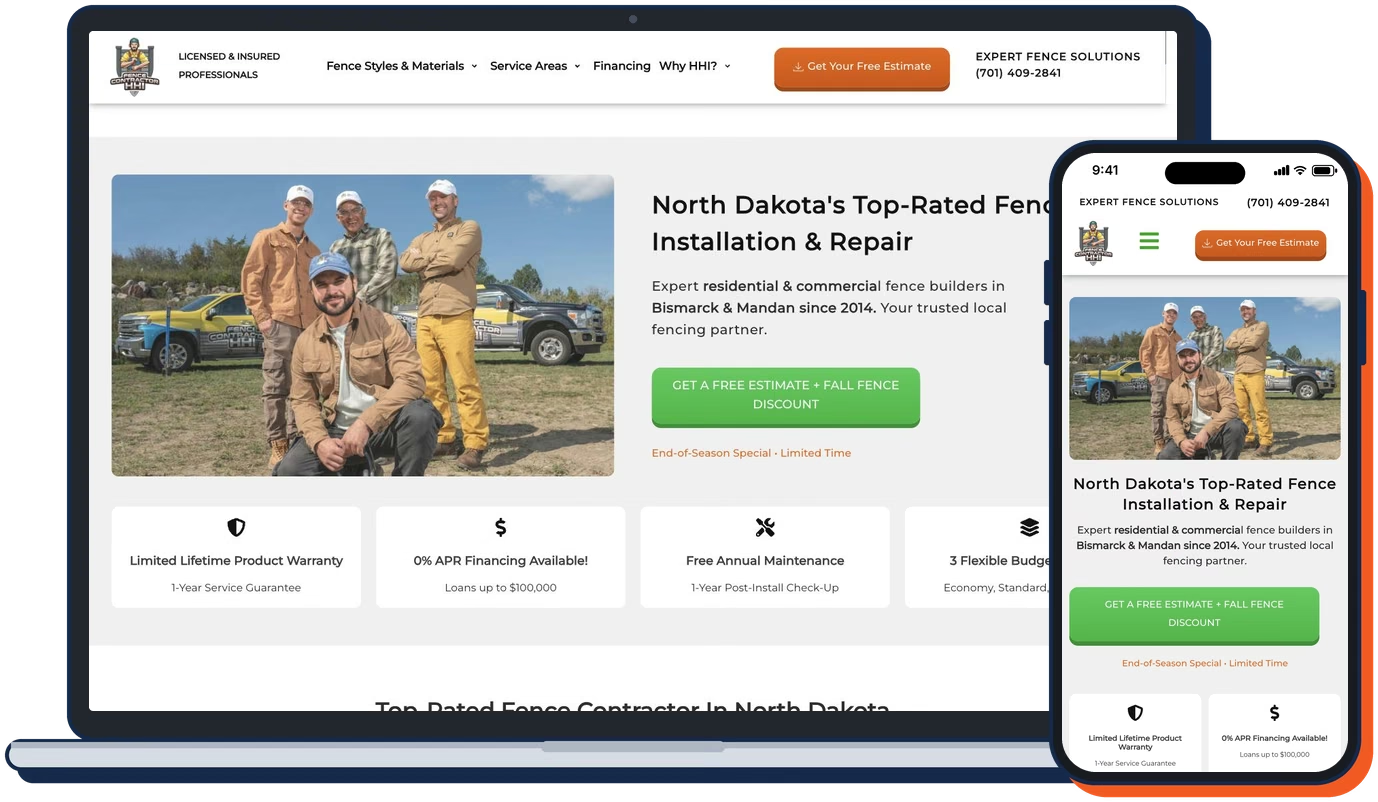
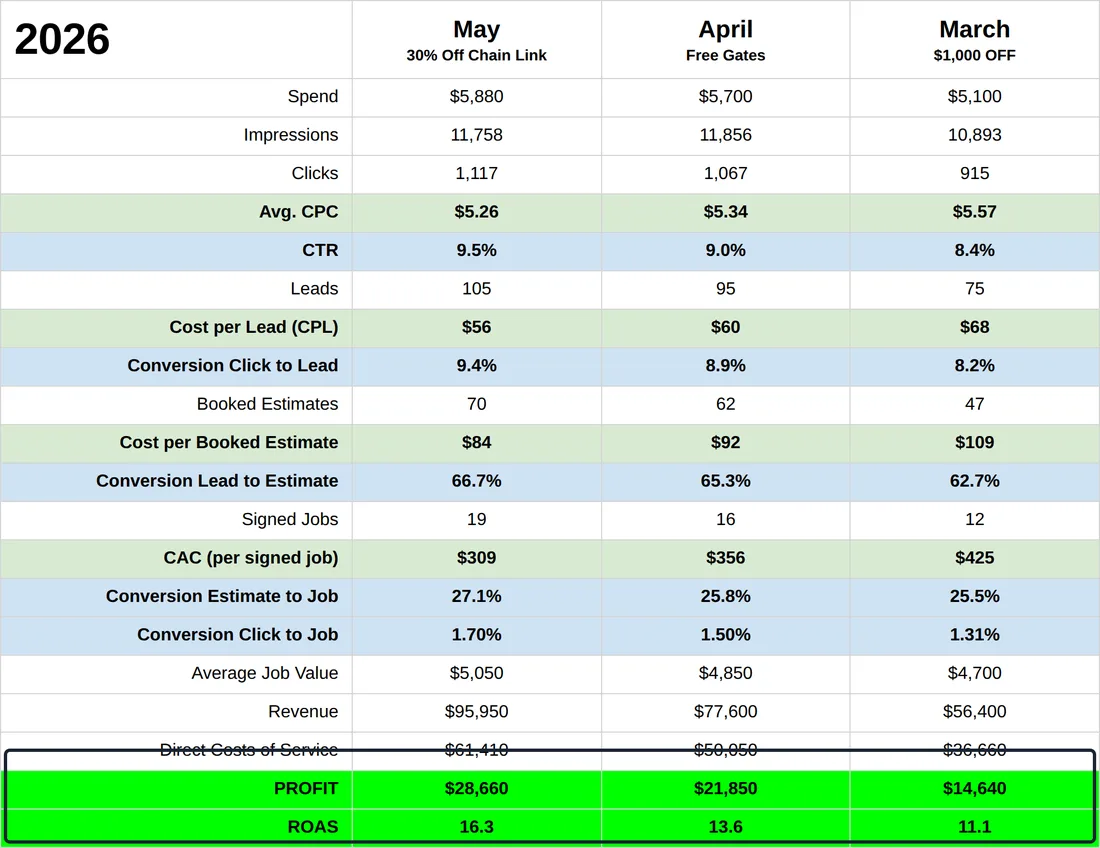
One example from home services: a fence company in North Dakota. In May 2026 a lead cost about $56, two out of three leads (67%) turned into a booked estimate, and each new customer cost $309 on an average job of about $5,000. There was no magic ad. The ads and the website showed why this company was worth choosing, every lead got a reply within minutes, every step had an owner, and no estimate was left without a next step.
I work alone — no account managers, no junior team. You always talk to me. I don’t just run ads: I build the sales side too — call scripts, follow-up messages, email templates — and I own how many leads turn into estimates and paid jobs.
Get a Google profile people trust
Your Google Business Profile is part of my Websites + SEO service: a website with SEO is $4,900, and after launch, SEO and profile management is $190 a week. On the profile and the site I put what shows your value: your work, your process, what's included in the price, your warranty. And I set things up so every customer gets asked for a review, not just the ones somebody remembered.
Done for you: work with me
A good fit if
- the business already makes steady money and you want to grow, not experiment;
- you’d rather be on jobs than learning ad platforms, websites and automations;
- you can put about $2,000 a month into marketing, ad spend included.
What I do
- Leads that turn into jobs. Your ads and website show why your company is worth the money — your work, your process, what’s included, your warranty, your reviews — so the people who reach out want results, not the lowest bid.
- Google and Meta ads — live in 3 days.
- A website or a page for your service — with a clear “book an estimate” button.
- No lead slips through — instant text and email after every lead, missed-call text-back, estimate booking, reminders after the quote.
- A sales system — call scripts, quote and email templates, rules for whoever answers the phone.
How I work
- No contracts. Pay by the week; stop any week.
- Everything is yours. Domain, website, ad accounts and customer list are in your name from day one.
- Reports in jobs: leads, booked estimates, quotes, paid jobs and what each job cost.
- You work directly with me. No account managers.
- No promised lead counts — I own the quality of the setup, the speed and honest numbers.
Who this isn't for
- If you need 100 reviews by Friday. That doesn't happen honestly. Don't trust anyone who promises it: your profile takes the hit for fake reviews, not theirs.
- If your customers aren't happy. A review system will show that fast. Fix the work first, then the reputation.
- If you finish two jobs a year. Reviews will come, just slowly. You need a steady flow of jobs first, and that's worth talking through on a free growth plan call.
Questions owners ask
My customers are older. They don't know how to leave reviews
That's what the direct link and QR code are for: one tap and the review window opens. A lot of older customers are happy to write one when they don't have to hunt for you on the map. You can help them with the steps, but never write it for them. The words and the rating have to be theirs.
What if I ask and they leave a bad review?
Sometimes they will, and that's fine. A calm reply to a three-star review with an offer to fix things shows new customers how you handle problems. A few of those among honest five-star reviews look more believable than a perfect score. And asking only happy customers is against Google's rules anyway.
I don't have time to reply to every review
Set up three or four reply templates for the usual situations: a thank-you, a small complaint, a serious one. Tailoring one to a specific review takes two minutes. Just don't paste the same "Thank you!" everywhere: customers notice identical replies.
Can I move my reviews from Yelp, Angi or Facebook to Google?
No. A Google review has to be written by the customer from their own account, and copying reviews over isn't allowed. You can send happy customers from other sites your Google link and ask if they'd share their experience there too, and you can show reviews from other sites on your own website with a link to the source.
An agency promised me 50 reviews in a month. Is that possible?
If you finish 50 jobs a month, maybe. If not, where would they come from? Bought reviews risk FTC penalties and Google restrictions on your profile, and it's your company that takes the hit, not the agency.
How long until I catch up with my competitor?
It depends on how many jobs you finish. Honestly matching 200 reviews in one season is close to impossible. But your first 20 reviews and a fresh one every couple of weeks are realistic this season if you ask every customer, and for a lot of homeowners, fresh matters more than the total.
What does it cost to have you do it?
The Google profile is part of my Websites + SEO service: a landing page is $1,500, a website $3,900, a website with SEO $4,900. After launch, SEO and Google profile management is $190 a week, with no annual contract. The profile, the website and every review stay in your name.