

This one is for home service owners who are thinking about running ads — or already ran some and still can’t tell if they worked. No ad-platform tutorials here. Just the logic every owner should have before spending the first dollar: how many people in your town search for your service, how many of them could become your customers, and what one job will cost you to land. At the end: the math on a real client report, a back-of-the-napkin formula for your business and what I check on a free 30-minute call.
In this article
- Sound familiar?
- From a Google search to a signed job: six numbers
- Let’s run real numbers
- Why a “cheap lead” is the wrong target
- Three common moves that cost the most
- Run your business on a napkin
- What I check on the free call
- Who I am and why I do this
- Your next step — with numbers in hand
- Who this isn’t for
- Questions owners ask
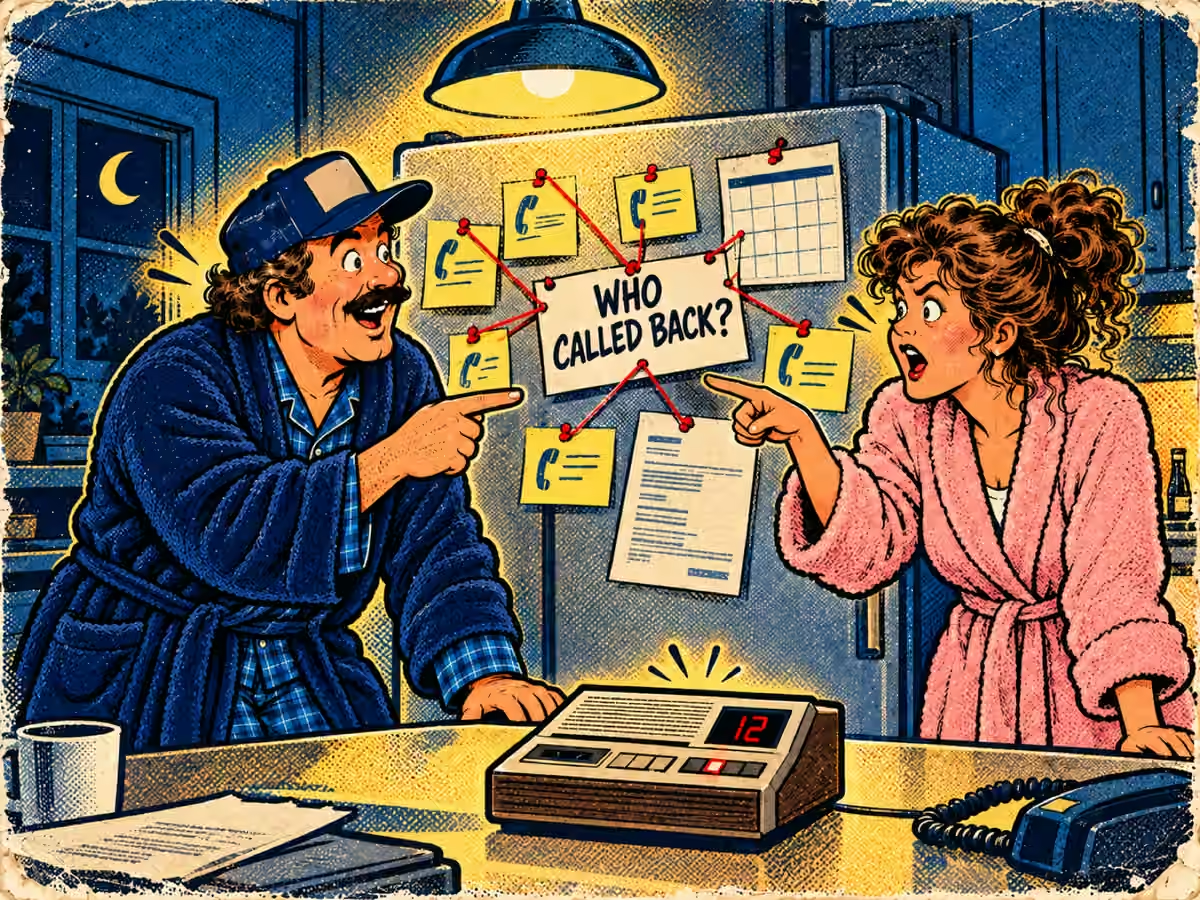
You wouldn’t order concrete without measuring the yard. You wouldn’t quote a roof without climbing up on it. But that’s exactly how most owners go into ads: “Let’s put $2,000 in and see what happens.” A month later the money’s gone and you know about as much as before. Was that a lot of leads or a few? Expensive or normal? Is there no demand in your town, or are the ads bad? Nothing to compare against.
“Numbers? I run a small business, not a corporation.” I get it. You don’t need analytics. You need six numbers and the calculator on your phone. Let me show you on a real report how it adds up.
Sound familiar?
💸Money gone, no answers
- You ran ads “as a test.” A month later: $2,000 spent, 14 leads. Good or bad? No idea.
- One agency promises 50 leads a month, another says 30, a third says “it depends.” Not one of them told you how many people in your town even search for what you do.
- A buddy in the trade tells you over coffee, “Ads don’t work, I tried.” You nod. You’ve got nothing to check it against.
🎣Leads, but no jobs
- $15 leads — you were thrilled for a week. Then you called them back: half don’t pick up, the rest were “just checking prices.”
- A lead costs $80, that feels expensive, so you shut the ads off. Even though those might have been the ads bringing in $5,000 jobs.

🤔Guessing every decision
- You don’t know if your town is 200 searches a month or 2,000. And that decides everything: the budget, the cost per lead, how many jobs are even possible.
- The phone goes quiet in winter, and you can’t tell if it’s the season, the competition or something you broke.
- Late at night at the kitchen table, you run the numbers on how many jobs it takes to cover the truck payment — and get a different answer every time.
If that sounds like you, it’s not because you “don’t get marketing.” Ads got sold to you like a lottery ticket: pay up and wait. But you can figure ads out ahead of time, the same way you put together a quote.
From a Google search to a signed job: six numbers
Every job that comes from ads goes down the same path. At each step some people drop off, and the whole calculation is just multiplying percentages. No secret sauce.
- Searches — how many times a month people in your town search for your service: “fence installation,” “roof repair near me” and the like. Google has this data, and you can see it before you launch.
- Your share — you’re not the only one out there. Not everyone who searches will see you, and not everyone will click. A realistic share depends on budget, competition and how much clearer your ad is than the next guy’s.
- Leads — how many of the people who land on your page call or fill out the form.
- Booked estimates — how many leads turn into an on-site visit.
- Signed jobs — how many quotes get signed.
- Cost per job — total ad spend divided by signed jobs. This is the number that matters. Not cost per click, not cost per lead.

It’s like figuring a fence: length of the yard → number of panels → number of posts → bags of concrete → price. Nobody orders concrete by eyeballing it. Same with ads: once you know the length of the yard — demand — and your percentages at each step, your budget stops being a bet at the casino.
Let’s run real numbers
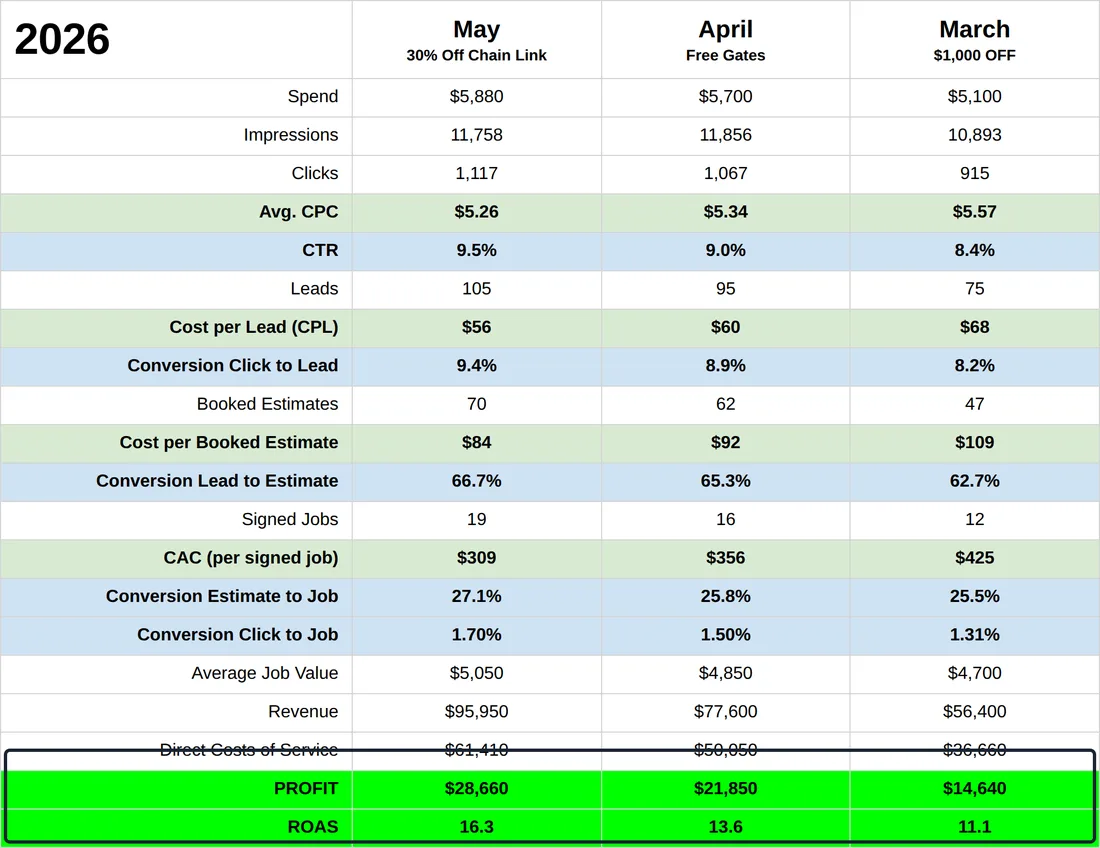
Here’s an actual client report — a fence company in North Dakota, May 2026:
Leads — 105, at $56 each.
Booked estimates — 70: two out of three leads (67%) turned into an estimate, $84 per estimate.
Signed jobs — 19: 27% of quotes got signed.
Cost per job — $309. Average job — $5,050.
Revenue — $95,950; profit after direct costs — $28,660.
For reference: across the market, a lead from search ads in the Home & Home Improvement category costs about $91 in 2026 (LocaliQ data). A market average is a reference point, not a forecast: in your trade and your town it can be higher or lower.
Now let’s apply those ratios to your town. The search count and the share below are made up for the example. We look at your real ones on the call.
45 leads × 67% booked ≈ 30 estimates.
30 estimates × 27% signed ≈ 8 jobs.
At $56 a lead, like in the report, 45 leads cost $2,520. Cost per job ≈ $315.
8 jobs at a $5,000 average — about $40,000 in revenue.
Now the same math for a small town where your service gets 300 searches a month. 3% is 9 leads, about 6 estimates and one or two signed jobs. You could pour $5,000 into ads there and the demand still wouldn’t grow. The extra money would just buy worse and worse leads. In a town like that you widen your service area, add related services, or go where demand gets created instead of caught: social media.
And one more thing: demand moves month to month. The same Google data shows how many people searched for your service in each month of last year. If January gets a third of May’s searches, a quiet winter doesn’t mean you broke something — it’s the season. Then it makes sense to move your budget with demand and spend the winter on reviews, your page and your quotes, so that by spring every lead has a real shot at turning into a job.
That’s the whole point of running the numbers. You find the ceiling before you hit it — not three months and $6,000 later.
Why a “cheap lead” is the wrong target
Most agencies and lead sites chase cheap leads: “lots of leads, low cost” looks great in a report. But a lead isn’t a job. Look at two scenarios with the same budget.
Scenario B — “pricier, but real.” $3,000, leads at $56 like in the report — about 54 leads. 67% booked — 36 estimates. 27% signed — about 10 jobs. Cost per job — about $300.
In scenario B each lead costs almost three times more, and each job costs less than half. And you made almost three times fewer calls.
Where do scenario B leads come from? Not from “secret settings.” Your ads, website, Google profile and quote show why your company is worth the money: the work you’ve done, how the job goes, what’s included, your warranty, what customers say. Then the people who reach out want the job done right, not the lowest bid. There are fewer of them. But they book the estimate and sign the quote.
It’s like a restaurant sign. “Lunch for $5” draws a line out the door, and nobody in that line is booking their daughter’s wedding with you. A menu with real photos and honest prices brings fewer people — the ones who came to eat, not just get out of the rain.
Three common moves that cost the most
“I’ll turn them on and see”
Sounds reasonable: why calculate when you can test? But without expectations there’s nothing to test against. 14 leads for $2,000 is a flop if your town has 3,000 searches and a decent start if it has 300. Without the math you’ll kill ads that work or keep feeding ads that don’t.
“I’ll ask the agency how many leads I’ll get”
An agency that promises an exact lead count doesn’t know your town better than you do — it knows what you want to hear. An honest answer sounds different: “Here’s the demand, here’s a realistic cost per lead, here’s how many jobs that can produce with your booking and close rates, and here’s when we stop and re-check.” Ask for the math, not a promise.
“I’ll spend what my competitor spends”
Your competitor has a different average job, different reviews and a different close rate. If he signs one quote in three and you sign one in ten, the same budget makes him money and loses you money.
Run your business on a napkin
Five minutes and a calculator
- Your average job, and what’s left of it before marketing — after materials, crew and other direct costs.
- How many signed jobs a month you need to hit the income you want.
- What share of your quotes get signed. Don’t know? Use 27% from the report for now, and honestly count your last three months.
- What share of your leads book an estimate. Two out of three is a strong number. New companies usually run lower.
- How many leads you need: jobs ÷ close rate ÷ booking rate. For example, 8 jobs ÷ 0.27 ÷ 0.67 ≈ 44 leads.
- What you can afford to pay per job. If you keep $1,500 from a job, $300 per job is great; $900 means you’re working for almost nothing.
Now compare that to your town. If you need more leads than local demand can give you, widen the area or add services. If the cost per job you can afford is lower than what’s realistic, raise your booking and close rates first, then the budget. In that situation, more ad spend just loses money faster.
What I check on the free call
If you’d rather not do the math yourself, that’s what the free growth plan is for. 30 minutes where I run these numbers for your service and your town.
- Demand. How many people search for your service in your town and the ones around it — from Google’s data.
- Cost per lead and per job. Roughly what a lead will cost and what a job will cost at your booking and close rates.
- Your Google profile. What a homeowner sees before calling, and why they might pick someone else.
- Where the chain breaks. Lead replies, estimate booking, the quote, follow-up.
- A 4-week plan. It’s yours to keep, even if we never work together.
What you won’t get: a 12-month package or a promise of “50 leads a month.” If the numbers say ads won’t pay off for you yet, I’ll tell you that.

Who I am and why I do this

I’m Eddie A. For 12+ years I’ve worked in marketing and sales: projects in 50+ industries, ad budgets up to $60,000 a month, and $12M+ in revenue attributed to campaigns I managed — in the U.S., Canada, the UAE, Turkey, Europe and Kazakhstan. I’m based in Apopka, Florida, and run a registered LLC.
- 12+years in marketing and sales
- 50+industries I’ve run ads for
- $60Kmax monthly ad budget
- $12M+revenue from my campaigns
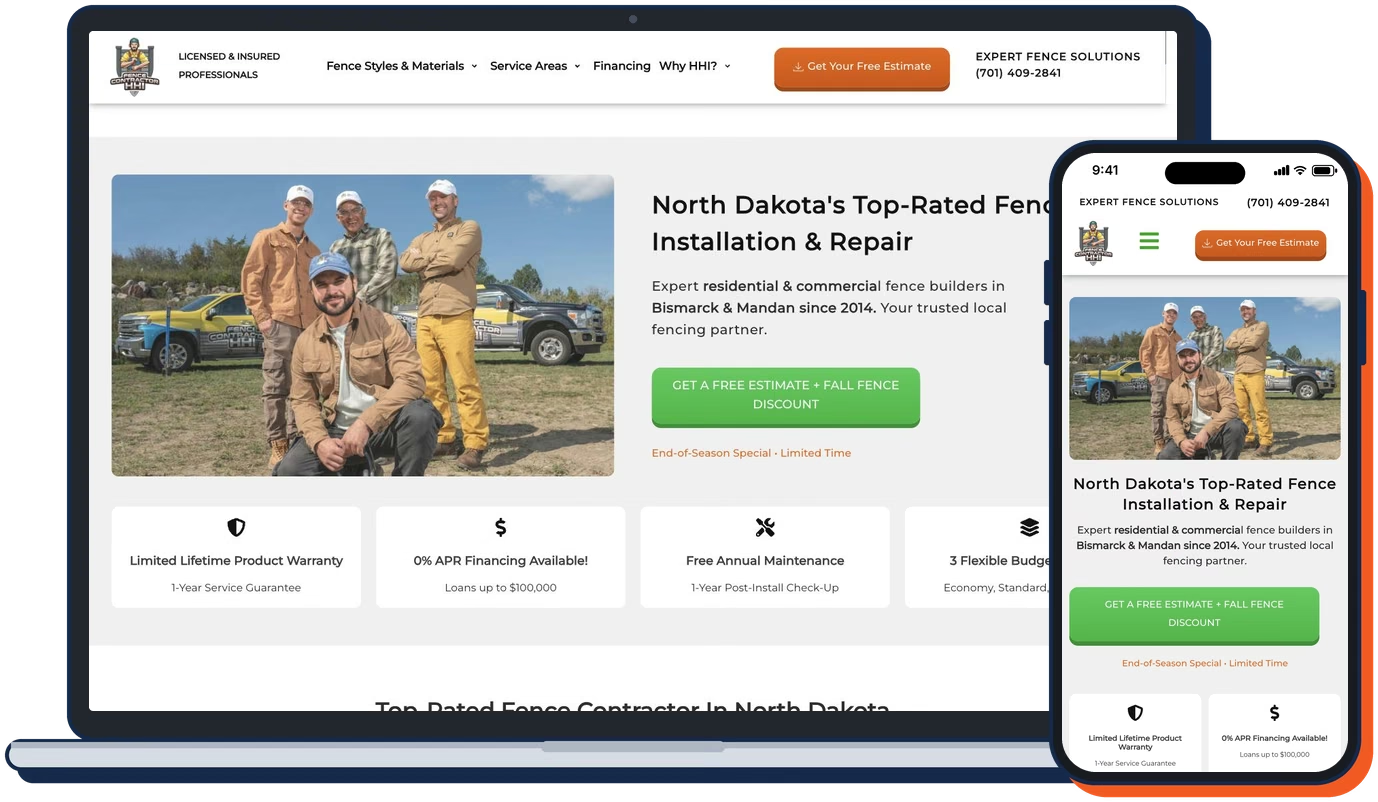
One example from home services: a fence company in North Dakota. In May 2026 a lead cost about $56, two out of three leads (67%) turned into a booked estimate, and each new customer cost $309 on an average job of about $5,000. There was no magic ad. The ads and the website showed why this company was worth choosing, every lead got a reply within minutes, every step had an owner, and no estimate was left without a next step.
I work alone — no account managers, no junior team. You always talk to me. I don’t just run ads: I build the sales side too — call scripts, follow-up messages, email templates — and I own how many leads turn into estimates and paid jobs.
Your next step — with numbers in hand

Done for you: work with me
A good fit if
- the business already makes steady money and you want to grow, not experiment;
- you’d rather be on jobs than learning ad platforms, websites and automations;
- you can put about $2,000 a month into marketing, ad spend included.
What I do
- Leads that turn into jobs. Your ads and website show why your company is worth the money — your work, your process, what’s included, your warranty, your reviews — so the people who reach out want results, not the lowest bid.
- Google and Meta ads — live in 3 days.
- A website or a page for your service — with a clear “book an estimate” button.
- No lead slips through — instant text and email after every lead, missed-call text-back, estimate booking, reminders after the quote.
- A sales system — call scripts, quote and email templates, rules for whoever answers the phone.
How I work
- No contracts. Pay by the week; stop any week.
- Everything is yours. Domain, website, ad accounts and customer list are in your name from day one.
- Reports in jobs: leads, booked estimates, quotes, paid jobs and what each job cost.
- You work directly with me. No account managers.
- No promised lead counts — I own the quality of the setup, the speed and honest numbers.
Who this isn’t for
- If you want a guaranteed lead count. I don’t give one. I give you the math, a stop rule and an honest weekly report.
- If cost per lead is the only number you care about. I track cost per job — and sometimes I’ll suggest paying more per lead.
- If you won’t track your estimates and quotes. Without your own rates, any calculation stays a guess.
Questions owners ask
Where do your demand numbers come from?
From Google’s data on how many times a month people search for your service in your town and nearby. It’s not an exact lead forecast, but it shows the scale: are we talking 200 searches or 2,000.
I’m in a small town. Do ads even make sense?
Sometimes they don’t — and it’s better to find that out before you launch. Then we widen the service area, add related services or go to social media, where demand gets created instead of caught.
Why would you pay more per lead than other agencies?
Because I track cost per job, not cost per lead. A $56 lead that books an estimate two times out of three beats a $20 lead where, say, one in five books.
Do you guarantee a number of leads?
No. I stand behind the quality of the setup, the speed and honest numbers: a weekly report with leads, booked estimates, quotes, jobs and cost per job. Plus a stop rule we agree on up front.
I’ve already wasted money on ads
That’s why the numbers come first: demand, a realistic cost per lead, your booking and close rates. If the math doesn’t work, it’s more honest to fix lead follow-up and quotes before adding budget.
What does the call cost?
Nothing. 30 minutes: demand for your service, your Google profile and a 4-week plan. The plan is yours to keep, even if we never work together.
What if I want you to run it after the call?
Managing one ad channel starts at $220 a week, plus your ad spend and a setup fee. No contracts — pay by the week and stop any week. Ads go live in 3 days.