
This one is for home service owners who don't have a problem getting estimates — they have a problem getting signatures. You drive out, measure, price it, send the quote, and a handful sign. The rest say "let me think about it" and vanish. Below: why homeowners go quiet after a quote, how to build a quote that doesn't get compared on price alone, and how to follow up so it feels like help, not pressure. Halfway through there's a five-minute math check on how much money is sitting in your pile of unsigned quotes. At the end, two options: have me build it, or take the plan and build it yourself.
In this article
- Sound familiar?
- What actually happens after you send the quote
- Why the usual fixes don't bring them back
- A quote that sells for you
- How to follow up without being pushy
- The after-the-quote system in five steps
- How much money is sitting in your pile of quotes
- Who I am and why I do this
- Get quotes that turn into signed jobs
- Who this isn't for
- Questions owners ask
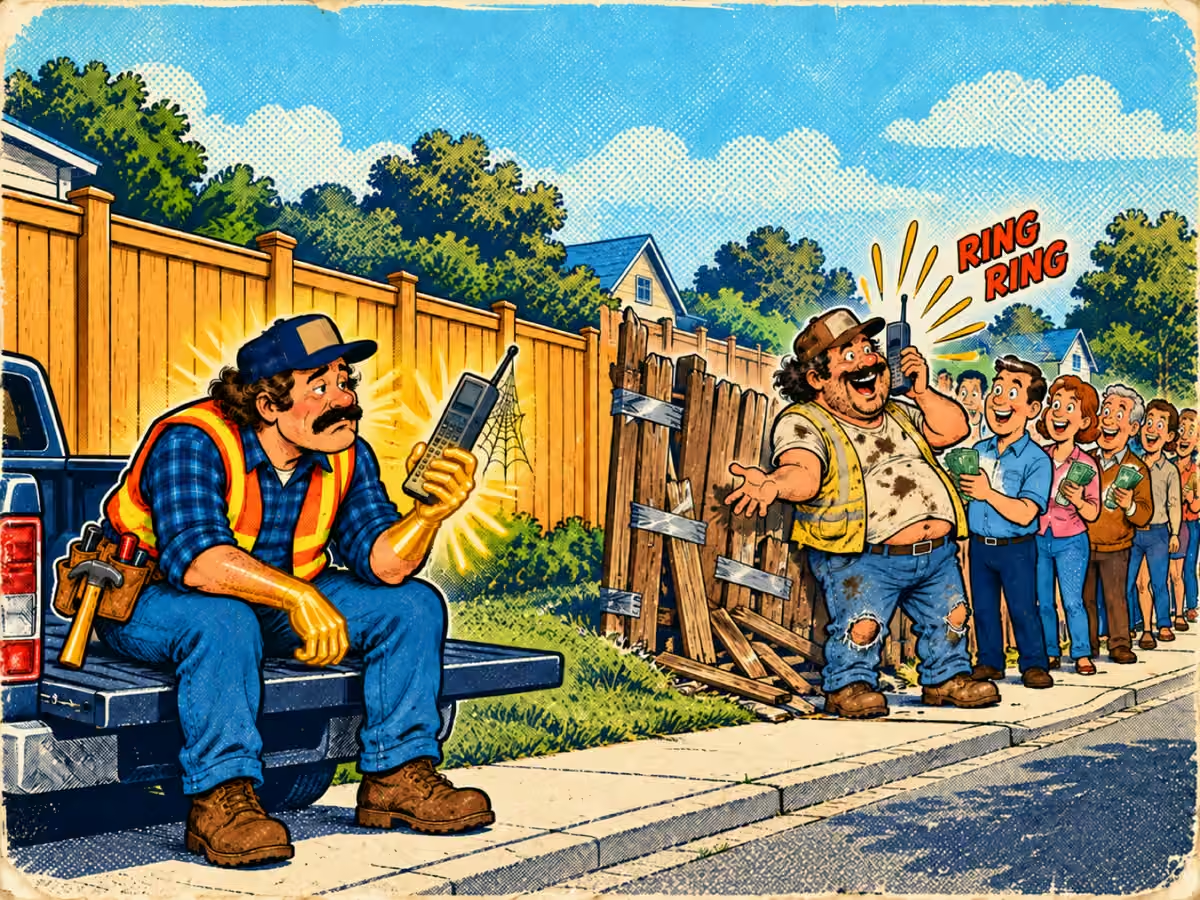
Tuesday, 7 p.m. You're standing in a homeowner's driveway. You've measured everything, shown samples, answered every question. She nods: "This looks great. Send us the quote — my husband and I will talk it over." You grab dinner at a gas station, and you're at the kitchen table pricing materials until eleven. The quote goes out first thing in the morning. Then — nothing. A week later you can't remember which house that was. A month later you drive by and see somebody else's crew in the backyard.
It's easy to assume they found someone cheaper. Sometimes they did. But far more often they didn't go anywhere. They never decided, they put it off, they forgot — and then they signed with whoever reached out at the right moment. Sounds like a convenient excuse? Give me a few minutes and I'll show you exactly where these jobs slip away, and what they're worth using your own numbers.
Sound familiar?
🧾The quote went out. Then silence
- On site they were fired up: "We need this done before the end of the month." You sent the quote that same day — no reply, not even a "thanks, we'll pass."
- You open the text thread and your last message is two weeks old. Nothing under it.
- The estimate took half a day with the drive, the quote took an evening. Five of those evenings a week, and one signs.
😬Following up feels pushy
- You start typing "so, did you decide?" and delete it. You don't want to be that guy.
- If you do send something, it's one "just checking in" — and after that, a second message feels embarrassing.
- Somewhere in your head: "If they want it, they'll call." They don't.
💲They only compare the price
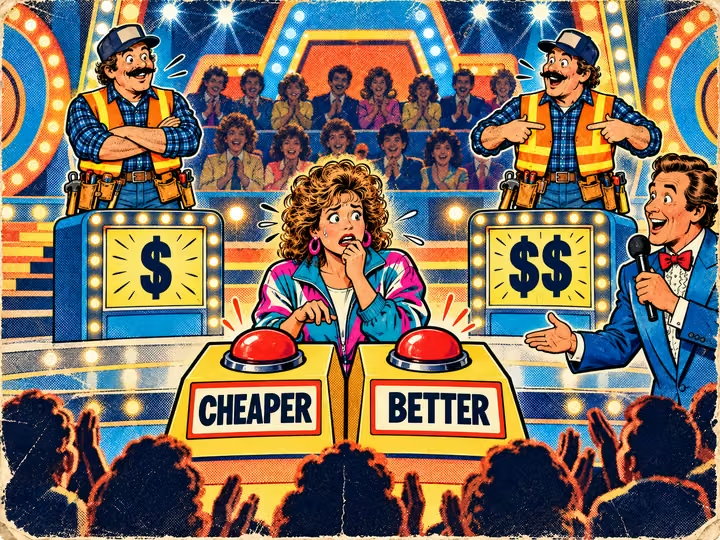
- Your quote is one line and one number. The homeowner lays it next to two others, sees three numbers, and picks the smallest.
- You hear "the other guy was $2,000 less," and you know why: shallower posts, cheaper material, no warranty. But nothing on your quote shows that.
- So you knock the price down to save the job — and spend the next month working for almost nothing.
🗂️The pile of dead quotes
- Email, texts, a notebook in the truck — dozens of quotes, and for most of them you don't know if it's a yes, a no, or "still thinking."
- In busy season there's no time to go back to them. By winter it's too late: they had the work done in spring by someone else.
- Somewhere in that pile are a few good jobs. You just don't know which ones.
If this hits home, it's not because you're bad at sales or too expensive. You do the hardest part — the site visit, the pricing, the face-to-face conversation — and then drop the deal one step from the finish line, because there's no clear process after that. Most contractors work this way. They treat the quote as the last step, when it's really the halfway point.
What actually happens after you send the quote
Look at it from the homeowner's side. There are three quotes on the kitchen counter. One says $9,800 and "Install 180 ft cedar fence." The next says $11,400 and almost the same line. The third says $12,600. None of the three contractors explained what makes his work different. The homeowner isn't a fence, roofing or HVAC expert. So how are they supposed to choose? Right — by price. Or not at all: "let's hold off for now."
Then real life gets in the way. One spouse wants another bid, the other is traveling for work, the kids have a tournament, the job is crazy this month. Two weeks later your quote is buried in their inbox under coupons and newsletters. They didn't say no. They just stopped thinking about it. And the first contractor who politely reaches out with something useful gets the job — often not the cheapest one.
So the problem has two halves. First, the quote doesn't help anyone decide; there's nothing in it but a price. Second, after the quote there's no next step — not for the homeowner, and not for you.
Why the usual fixes don't bring them back
"If they want it, they'll call"
It sounds dignified: we don't chase customers. But the homeowner isn't chasing you either. They're waiting for the choice to become obvious on its own. While you both wait, a third contractor calls, texts a photo of a similar job and offers a start date. Pride gets expensive when there's half a day of driving and an evening of pricing behind it.
"I'll offer a discount to close it"
A discount after the fact tells the homeowner one thing: there was padding in the price. Now they negotiate further, and the money comes out of your profit, not out of the lumber bill.
"I'll call everybody back on Friday"
Friday comes and you're on a job until dark: the crew ran late, the supplier dropped off the wrong panels, there's a Home Depot run you didn't plan. In busy season there's no such thing as a free Friday hour. A manual process holds up while you're slow and breaks exactly when you're busiest — which is also when you have the most quotes out.
"I just need more leads"
This is the most expensive mistake on the list. If your ads bring in people shopping for the lowest price, they'll collect five quotes after your visit too and go with the cheapest. Plenty of agencies and lead sites chase exactly that kind of lead, because cheap leads make a report look great. But every one of them is another drive, another evening of pricing and another quote for the pile.
A quote that sells for you
Think about how you bought your truck. The salesman didn't say "here's a truck, $52,000, let me know." He walked you through three trims: the work truck, the mid-level one, and the one with leather, a tow package and a heated steering wheel. You probably took the middle or the top one — and didn't feel ripped off. Because you weren't deciding whether to buy. You were deciding which one. And you could see what you were paying for.
Quotes work the same way. With one number, the homeowner makes a yes-or-no call — and usually puts it off. With three clear options, they decide which of the three. That's a completely different conversation: you're not selling anymore, you're helping them choose.
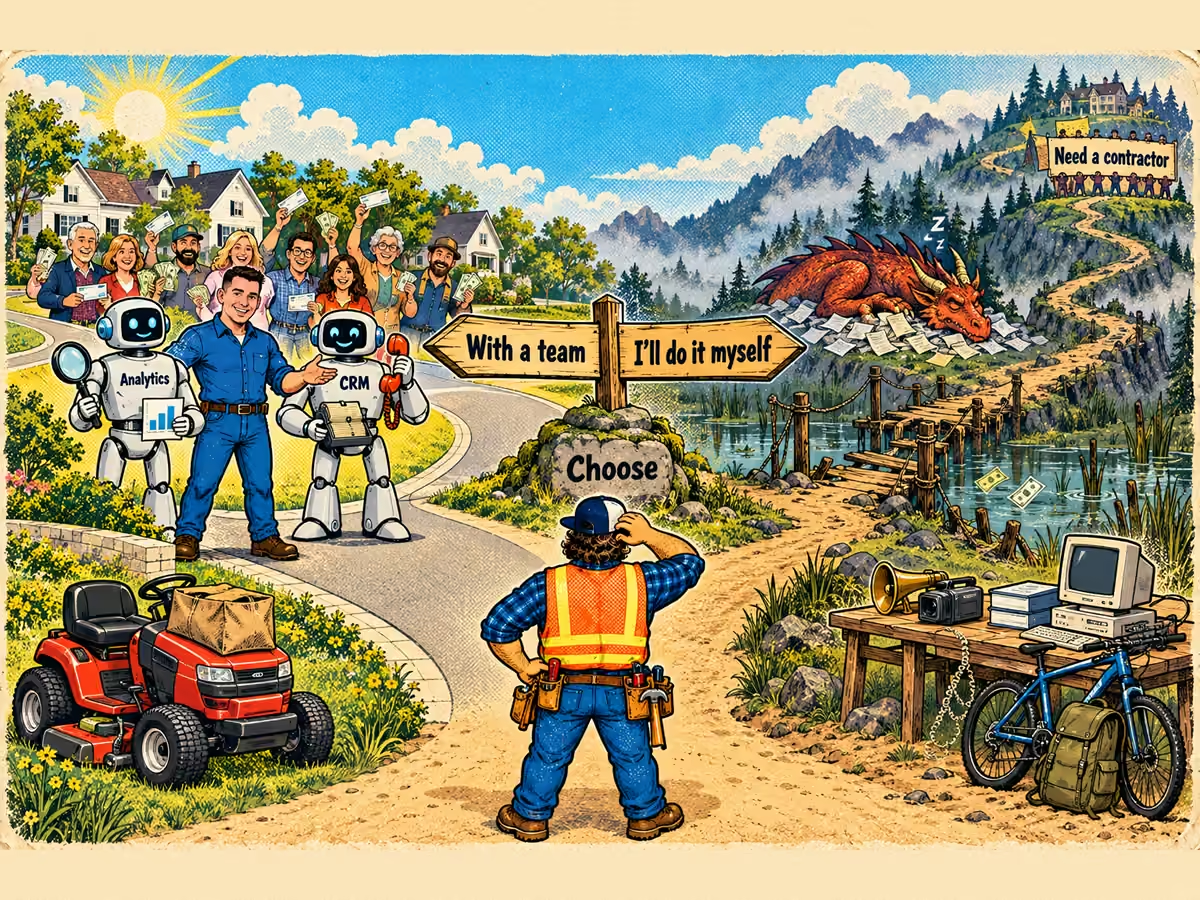
Here's what I put into a quote that actually works:
- Three options — good, better, best. For example: "solid and no-frills," "what most of my customers choose," and "built to last for decades." The difference is in materials, warranty, timeline or extra work. Not three identical quotes with different prices — three real choices.
- What's included, in plain English. Not "180 LF," but "tear-out and haul-away of the old fence, concrete for every post, a self-closing gate, and full cleanup when we're done." Now they compare what they get, not just the bottom line.
- How the job will go. When you start, how many days it takes, who will be on site, what the homeowner needs to do. Uncertainty scares people more than price.
- Your warranty. What exactly you stand behind, and for how long. If the other guys don't offer one, that's your strongest argument — and right now you're not even mentioning it.
- Proof. Photos of two or three similar jobs, a link to your Google reviews. People trust their own eyes more than your words.
- An expiration date and a next step. "This price is good for 14 days. To lock in a start date, reply to this text or tap the button." If they've decided, they should know exactly what to do.
This is the core idea behind everything I build: jobs don't come from cheap leads. They come from every step — the ad, the website, the call, the quote — showing why your company is worth the money. Then the comparison stops being about price and starts being about who the homeowner trusts. You may get fewer of those people, but they're the ones who sign.
How to follow up without being pushy
Being pushy isn't about how many messages you send. It's about sending messages with nothing in them. "So, did you decide?" is annoying because it only helps you. A text with a photo of a similar fence, an answer to the question they were too shy to ask, or an opening in your schedule — that's help. You can send it a third time without feeling awkward.
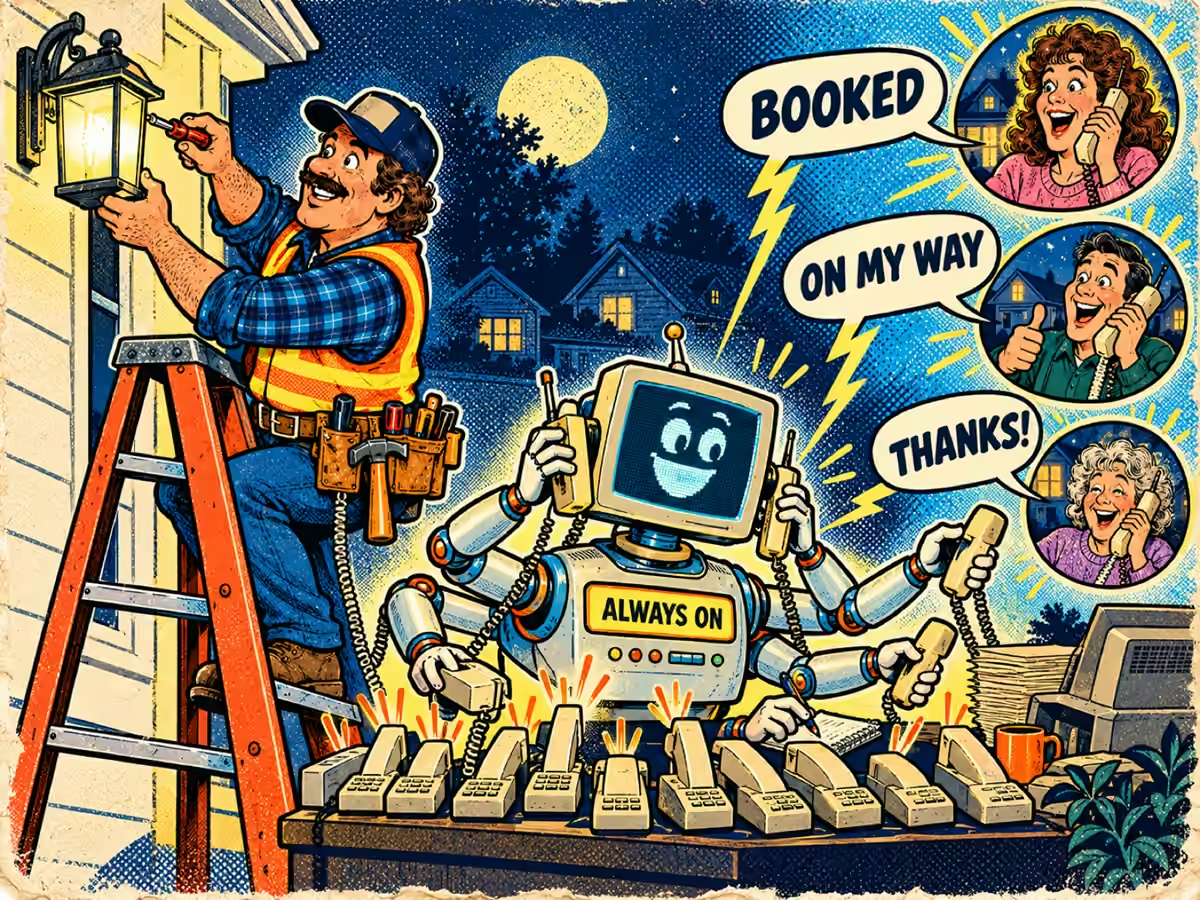
Second rule: the follow-up goes out on its own. Not because you're lazy, but because in busy season you physically won't remember twenty open quotes. The system sends messages on schedule and stops the moment the homeowner replies. And it only texts people who gave you their number and agreed to hear from you. Here's what a sequence can look like.
Sample follow-up sequence after a quote (timing and wording adjusted to your trade)
- Day of the estimate. A quote with three options and a short note: thanks for your time, here's what we discussed, here's the quote, here's how to lock in a date.
- Day 1–2. "Happy to answer any questions" plus a photo of a similar job in their neighborhood.
- Day 3–5. A call from a real person — you, or whoever owns quotes. Not "so, what do you think," but "I wanted to make sure the difference between the options was clear."
- About a week. Something useful: how to prep the yard, what to look for in any quote, or how many weeks out you're currently booked.
- About two weeks. An honest close-the-loop text: "I don't want to keep bugging you. If the project's on hold or you went with someone else, just reply and I'll close your file. If you come back to it, the quote's yours." This message often gets more replies than everything before it.
- After that — every month or two until they say no: a seasonal reminder or a job you just finished nearby.
Notice step three. Automation doesn't replace the phone call — it sets it up. The texts keep you on the homeowner's radar, and a real conversation handles the questions people don't put in writing: "what about the tree roots along the fence line?" or "can we split the payment?"
The after-the-quote system in five steps
- Quote the same day as the estimate — while they still remember you and the conversation. Every day of waiting cools them off a little more.
- Three options with the value spelled out — what's included, how the job goes, warranty, photos, reviews. They choose which one, not whether.
- Follow-up that sends itself — on schedule, something useful in every message, and it stops once they reply.
- Every quote has an owner and a next-step date — who calls, when, and what happens if the homeowner goes quiet. It lives in the CRM, not in your head.
- Numbers once a week — quotes sent, signed, still waiting, and honestly closed as a no. You see exactly where deals get stuck.
None of these steps takes a born salesman. It's process, not charisma. And it works the same whether you run every estimate yourself or have an office pricing the jobs.
How much money is sitting in your pile of quotes
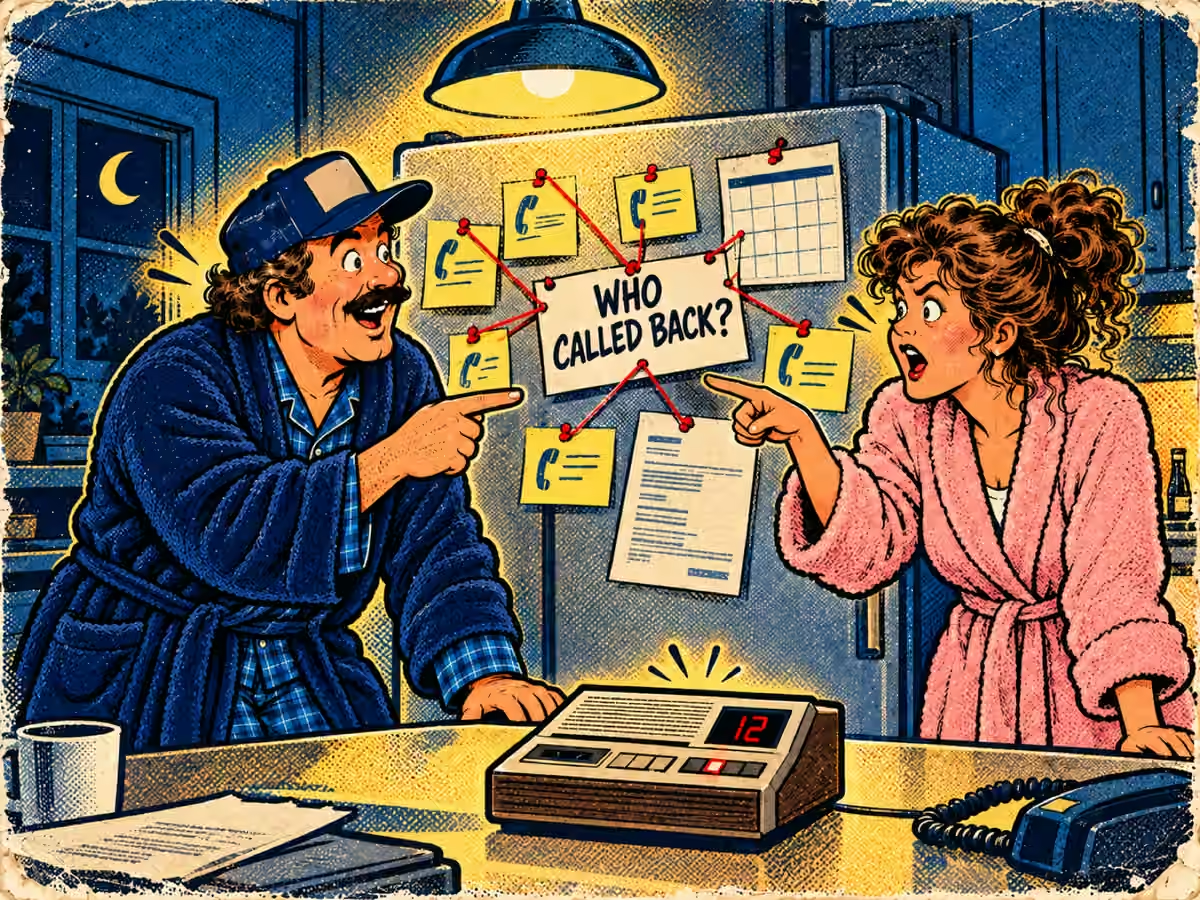
The 5-minute math
- How many quotes did you send in the last three months? Count all of them, including the ones that "will never sign."
- How many turned into signed jobs? Divide — that's your close rate.
- How many have no answer at all — not a yes, not a no?
- On average, how many times did you follow up after a quote? Zero and one are valid answers.
- What's your average job size?
Now take the quotes with no answer and imagine just one in ten of them turned into a job. Multiply by your average ticket. Say you have 60 unanswered quotes and an $8,000 average job: six jobs is $48,000 in revenue you've already paid for in gas, time and late nights. You don't need a single new ad for it.
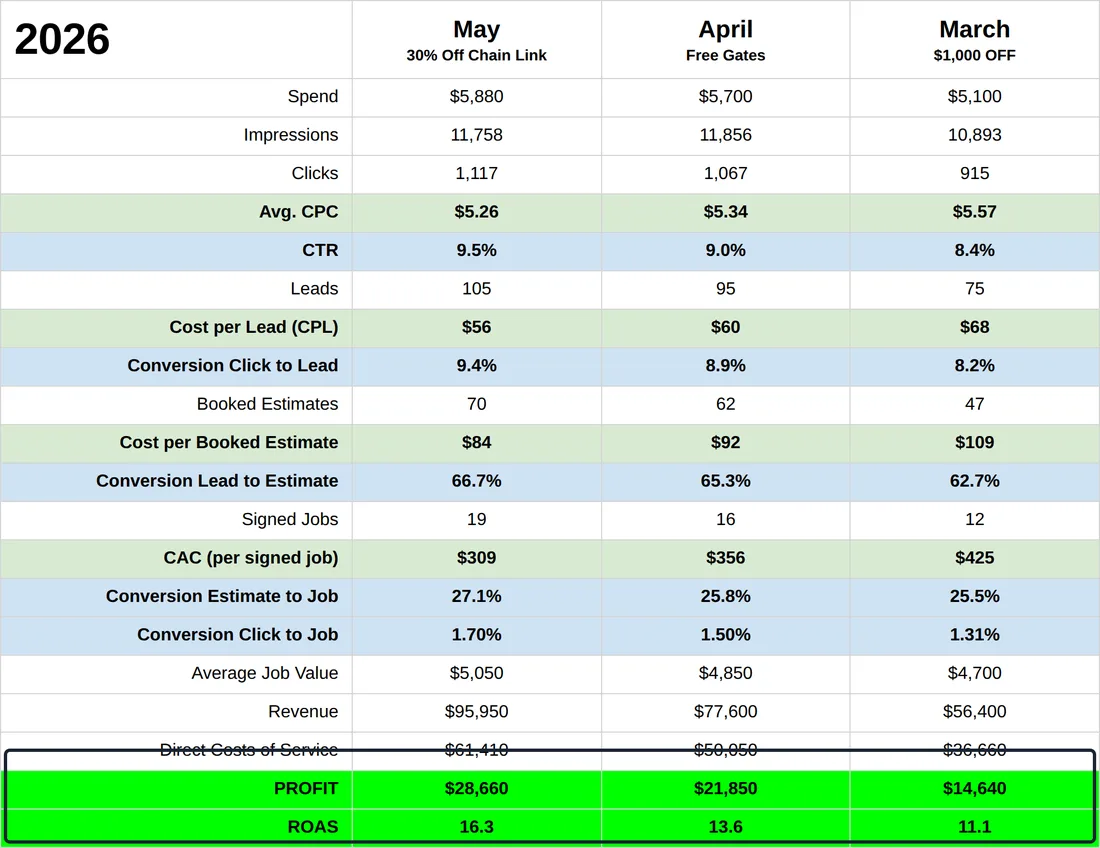
For reference — a real example, not a promise. A fence company in North Dakota, one of my clients, signed 19 of 70 estimates in May 2026: 27% of quotes became jobs, at an average ticket of about $5,050. Every trade and every market has its own normal. But if you're closing one quote in ten and you have no idea what happened to half of the rest, that's where your money is leaking.
Who I am and why I do this

I’m Eddie A. For 12+ years I’ve worked in marketing and sales: projects in 50+ industries, ad budgets up to $60,000 a month, and $12M+ in revenue attributed to campaigns I managed — in the U.S., Canada, the UAE, Turkey, Europe and Kazakhstan. I’m based in Apopka, Florida, and run a registered LLC.
- 12+years in marketing and sales
- 50+industries I’ve run ads for
- $60Kmax monthly ad budget
- $12M+revenue from my campaigns
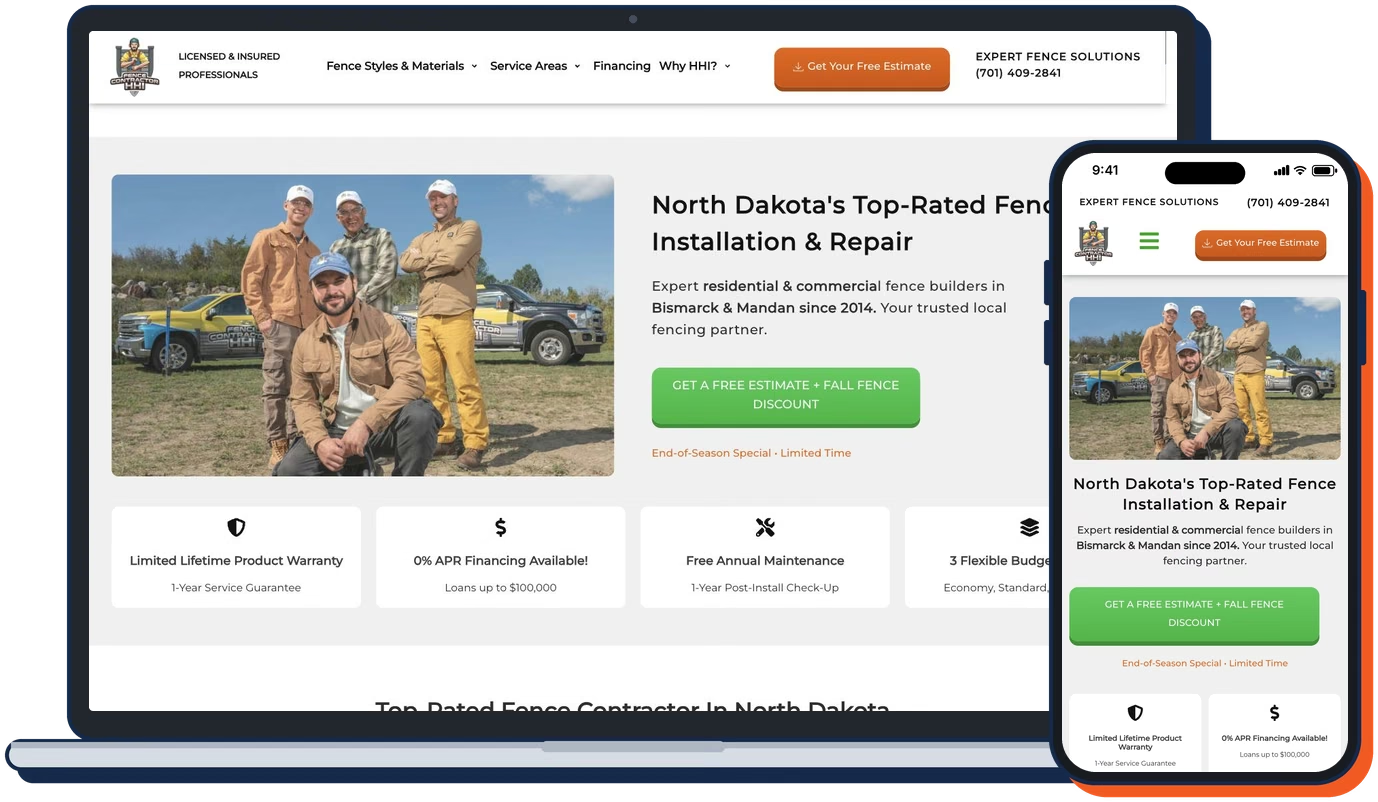
One example from home services: a fence company in North Dakota. In May 2026 a lead cost about $56, two out of three leads (67%) turned into a booked estimate, and each new customer cost $309 on an average job of about $5,000. There was no magic ad. The ads and the website showed why this company was worth choosing, every lead got a reply within minutes, every step had an owner, and no estimate was left without a next step.
I work alone — no account managers, no junior team. You always talk to me. I don’t just run ads: I build the sales side too — call scripts, follow-up messages, email templates — and I own how many leads turn into estimates and paid jobs.
Get quotes that turn into signed jobs
Done for you: work with me
A good fit if
- the business already makes steady money and you want to grow, not experiment;
- you’d rather be on jobs than learning ad platforms, websites and automations;
- you can put about $2,000 a month into marketing, ad spend included.
What I do
- Leads that turn into jobs. Your ads and website show why your company is worth the money — your work, your process, what’s included, your warranty, your reviews — so the people who reach out want results, not the lowest bid.
- Google and Meta ads — live in 3 days.
- A website or a page for your service — with a clear “book an estimate” button.
- No lead slips through — instant text and email after every lead, missed-call text-back, estimate booking, reminders after the quote.
- A sales system — call scripts, quote and email templates, rules for whoever answers the phone.
How I work
- No contracts. Pay by the week; stop any week.
- Everything is yours. Domain, website, ad accounts and customer list are in your name from day one.
- Reports in jobs: leads, booked estimates, quotes, paid jobs and what each job cost.
- You work directly with me. No account managers.
- No promised lead counts — I own the quality of the setup, the speed and honest numbers.
Who this isn't for
- If you want a magic line that makes everyone sign. There isn't one. There's a process that loses fewer quotes along the way.
- If you're not running estimates yet. Then start with where your customers come from: your Google profile, your website and your ads. Follow-up can't save quotes you never get to write.
- If you only want to compete on price. Then three options and talking about value will just get in your way — and honestly, that race doesn't last long.
Questions owners ask
Homeowners hate getting texts after a quote
They hate empty ones like “so, did you decide?” A text with a photo of a similar job, an answer to a common question, or an opening in your schedule reads as help. And an honest “should I close your file?” two weeks later often gets a reply when nothing else did.
My customers only care about price anyway
Some do, and you don't need to talk them into anything. But people also pick on price when there's nothing else on the quote to look at. Show what's included, how the job will go and what you guarantee, and you'll start getting customers who compare on substance.
Every job I do is custom. How do I offer three options?
The options don't have to be cookie-cutter. The difference can be material, warranty, timeline or extra work: with or without tear-out, with or without a gate. What matters is that the homeowner chooses between clear options instead of between yes and no.
I don't have time to text and call everyone
That's why the follow-up goes out automatically and stops as soon as the homeowner replies. What's left for you is one call around day three to five, and only to people who haven't decided. That's less time than one more drive to a new estimate.
What does it cost to set this up?
Call scripts are $790, scripts plus automatic follow-up are $1,990, and a done-for-you sales system is $2,500 (50% upfront). Ad management is separate and paid weekly, no long-term contract. Full pricing is on the pricing page.
Will you guarantee I'll close more quotes?
No. Your close rate depends on your price, your trade, your market and how you run the estimate. What I own is that no quote is left without a next step, and that every week you see how many quotes went out, how many signed and how many are still waiting.
Who will I actually be working with?
Me. I work alone, with no account managers and no hand-off to a junior after the first month. Your website, ad accounts and customer list are in your name from day one.