
This article is for home service owners who run their own Instagram and Facebook: you film your jobs, post the videos and every so often hit "Boost." If your videos get views and hearts but your phone doesn't ring with estimate requests, read to the end. You'll see why likes don't turn into jobs, the six kinds of videos that actually bring in customers, a shot list for every job and how ads put your best videos in front of homeowners who live nearby. At the end, a clear next step: hand this part to me or start with a free growth plan call.
In this article
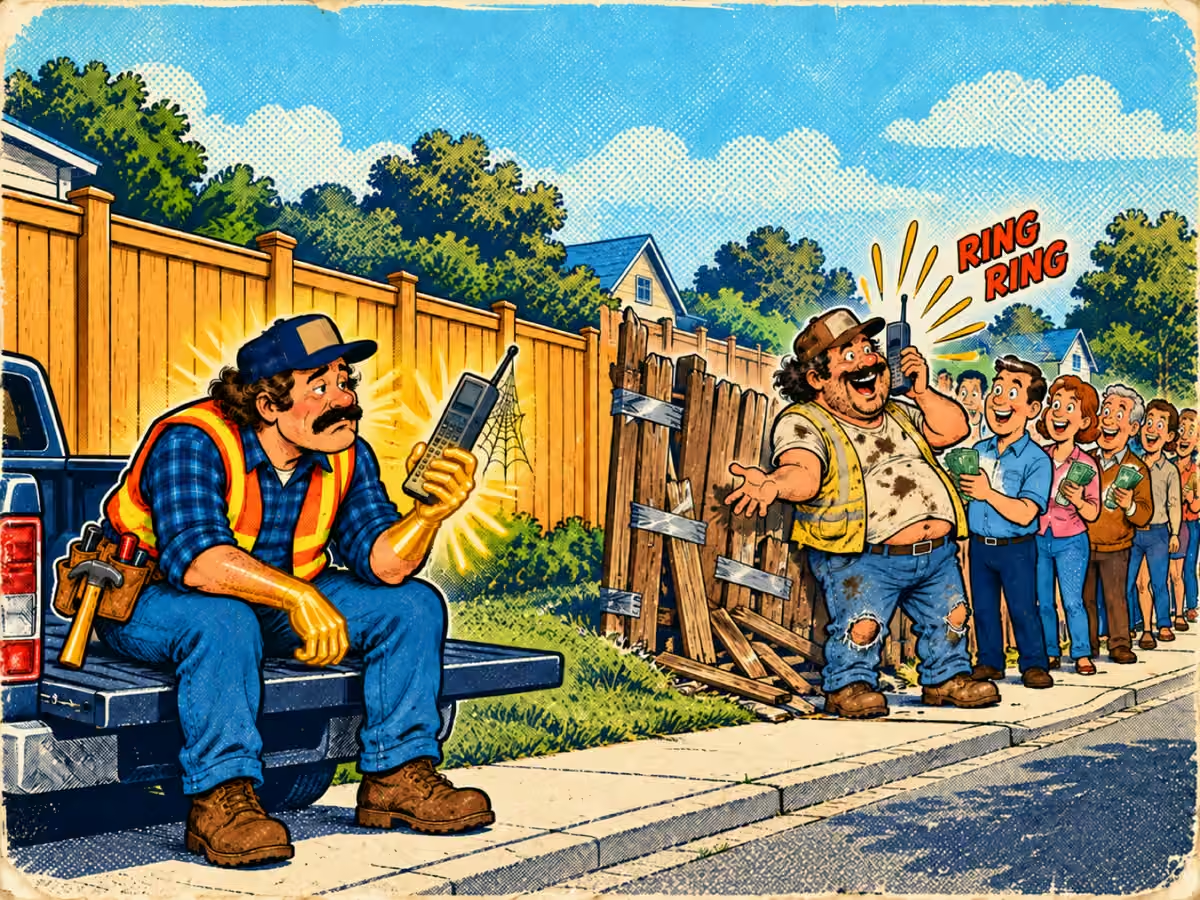
Tuesday, 10 PM. You're finally home, your wife's watching a show, and you're on the couch editing a clip from today's job: the crew setting posts to an upbeat track, and at the end the homeowner's dog solemnly sniffs the new fence. By morning it has 2,300 views and 140 hearts. Your cousin comments "🔥", a buddy from Texas writes "looks great, man." Calls asking "can you come out and quote me one of those?": zero.
Next week, same thing. A month later you start to think social media is for influencers and real jobs come from somewhere else. Hold that thought. Social media works. Likes and booked estimates are just two different currencies, and there's no exchange counter between them. Not buying it? Stick with me. Below I'll show you why it happens, what to film instead and what the numbers look like when the right videos reach the right people.
Sound familiar?
📱Views, but no calls
- A job video gets a few thousand views and two DMs: one asks "how much per foot," the other asks if you're hiring.
- Your most popular post of the year is a guy on your crew dropping a board on his foot. Everybody laughed. Nobody booked.
- Your followers are family, friends, contractors from other states and a couple of competitors checking which materials you use. Homeowners in your area who need a fence this spring? Barely any.
⏳Hours that go nowhere
- An hour every evening on editing, music, captions and hashtags. Over a month that's a couple of full workdays.
- You boosted a post for $50 and got 300 more likes and zero calls. Tried $100. Same thing, just pricier.
- A competitor posts three videos a month, never dances, and his estimates are booked out for the season. You can't figure out what he's doing differently.
😶And the part nobody says out loud
- Sometimes you post something just so the account doesn't look dead. And you know it does nothing.
- It feels like social media takes a talent you don't have: talking to a camera, being funny, jumping on trends. You know how to build fences, not how to dance.
- The thought creeps in more and more: "Social media just doesn't work in my trade."
Why the usual advice doesn't book estimates
"You've got to jump on trends"
The logic makes sense: more views, more chances someone hires you. But trends get watched by the whole country. A homeowner in your county who needs a fence this summer is a drop in that ocean. Worse, the platform remembers who liked your videos and shows the next ones to the same crowd: people who like funny clips, not people shopping for a contractor. It's like handing out roofing flyers at a stadium two states over. Huge crowd, and not one of them needs a roof from you.
"I'll just post every day"
Volume doesn't fix content. If a video doesn't answer "why should I trust you with my yard and my money," then thirty of those a month is thirty times not answering it. It's a store that started opening more often while the shelves stay empty. The hidden cost is burnout: by month three of daily posting, most owners just quit.
"I'll hit Boost and the calls will roll in"
The platform does exactly what you pay for. If the goal of the boost is engagement, it finds people who love tapping hearts and sends them your way. You asked for likes, you got likes. What you want to ask for is leads. But there's a trap there too, and that's the next point.
"The cheaper the lead, the better"
Plenty of agencies and lead sites think this way: lots of leads at a low cost in the report means everything's great. But a cheap social media lead is often someone who was scrolling, tapped an ad, and the form filled in their name and number on its own. They don't remember submitting anything. Or they're collecting quotes from five contractors. Or they live a county over. Or they're looking for a job.
"I'll hire a cheap social media person"
You'll get a pretty feed: stock photos, "Happy Fourth of July," quotes about the dream home. Looks tidy, but a stock photo can't sell your fence, because it isn't your fence. Somebody sitting in an office can't film your jobs, and without footage from your jobs there's nothing to show.
Entertain, or show your value
A homeowner deciding on a $5,000 fence or a $40,000 kitchen isn't looking for a laugh. They're nervous. Will the crew even show up? Will they tear up the lawn? Will the price jump halfway through? Will the fence lean in two years? A video that answers those worries sells. A video that doesn't is entertainment, no matter how good it looks.
An entertaining video answers "is this funny?" A value video answers "can I trust these people with my house?" Think of a restaurant with an open kitchen: you see the cook, the clean counter, the fresh ingredients, and suddenly the prices on the menu make sense. You know what you're paying for.
That's also the filter that matters most. When your ads and videos show why your work is worth the money, the people who reach out want the job done right, not the lowest bid. You may get fewer leads, and each one may cost more. But those are the ones who book the estimate and sign. Here are six kinds of videos that do it:
- The process. How you do what others cut corners on: post hole depth, concrete, level, waterproofing. Homeowners don't know how it's supposed to be done. Once you show them, they start measuring everyone else against you.
- Before and after. Shot from the exact same spot. The easiest video in the world to understand. No explanation needed.
- What's included. Materials laid out before you start, the warranty, cleanup, haul-away, who pulls the permit. Everything the low bidder "forgets" to mention.
- The crew. Faces, shirts, a word about how long each guy has been doing this. People are letting you into their backyard and want to see who's coming.
- Reviews. A happy homeowner on camera, if they're up for it, or a screenshot of a Google review. Real ones only: since 2024 an FTC rule explicitly bans fake reviews and paying for reviews with a required sentiment. Not a risk worth taking.
- The answer to "too expensive." Calmly, without trashing anyone: why your price is what it is and where the cheaper guy saves money. Someone who's seen that video doesn't haggle the same way at the estimate.
None of these require dancing, jokes or a gift for talking to a camera. The work does the talking. A short line of text on screen covers the rest.
What to film on every job
You don't need a camera guy or lights. You need a phone, vertical video and 10–15 minutes across the whole job. Here's a shot list worth printing out and keeping in the truck:
- Arrival — a wide shot of the property from the street, as is. Ten seconds, no talking.
- The problem, up close — the rotted post, the cracked slab, the rusted hinge, the old tile. Whatever you were called out for.
- Materials — laid out before you start. That's "what's included," made visible.
- The work — three or four short clips through the day. Always include the step that separates good work from a hack job.
- The crew — five seconds: faces, on the job.
- Cleanup — a clean yard at the end of the day. Homeowners care about this a lot more than contractors think.
- After — from the same spot as the first shot.
And if the homeowner's happy, ask for 15 seconds on camera or a Google review. Never pay for reviews.
One rule above all: on the job you film, you don't edit. Turning seven clips into a video is a separate job, and it definitely shouldn't happen at 10 PM on the couch. One job gives you three or four finished videos: before/after, process, what's included, crew. Ten jobs a month and you have more material than most companies collect in a year.
How ads put your videos in front of the neighbors
Regular posts mostly reach your followers and random people. Ads work differently: you decide who sees the video. For example, adults who live in the area you actually serve. The same before/after clip your relatives watched in your feed gets seen, as an ad, by a family three miles from your last job.
- Pick 3–5 videos — not the ones with the most likes, the ones that show your value.
- Show them to people in your service area — where you'll actually drive, not "the whole state."
- Send people to a short form or page where they answer a couple of questions: what they need, their address, their timeline. That screens out the randoms before anyone picks up the phone.
- Respond in minutes — a text right after the lead comes in, a call, a booked estimate. A lead you answer tomorrow belongs to someone else.
- Every week, look at estimates and signed jobs — not likes, and not just cost per lead. Turn off the weak videos, keep the strong ones.
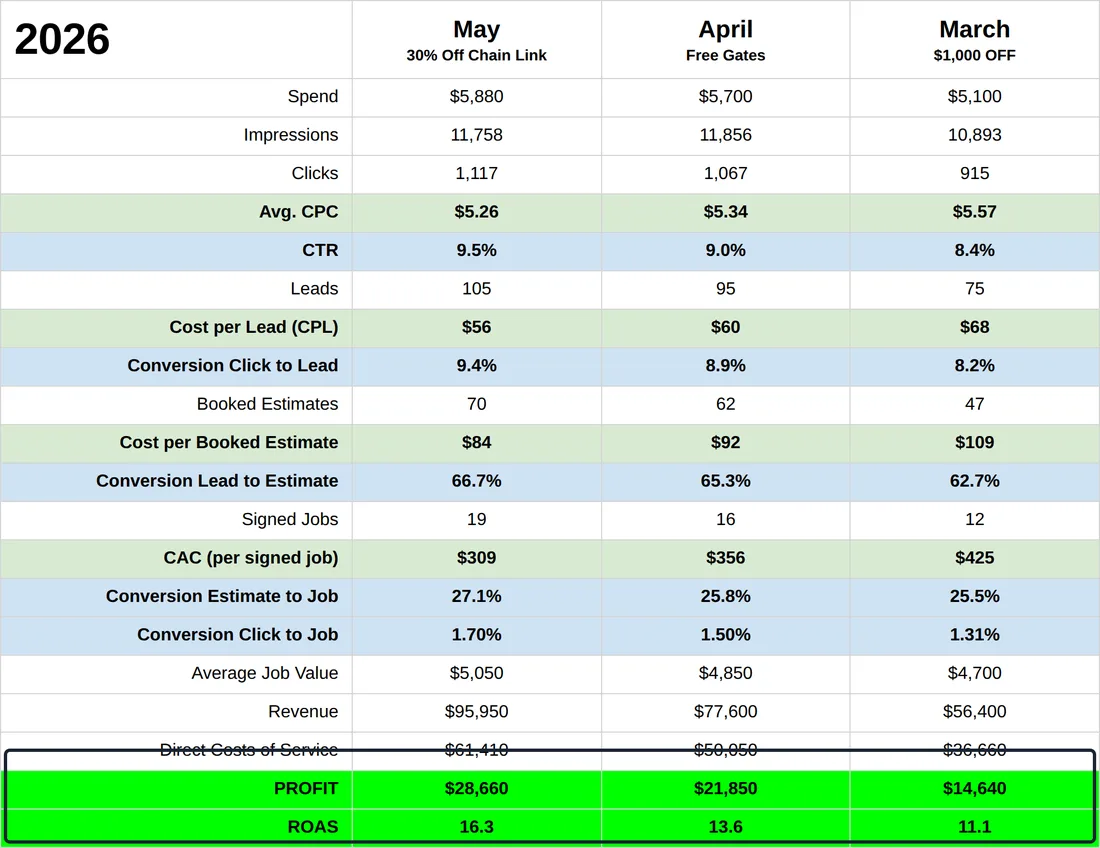
Here's what that looks like in numbers. For a fence company in North Dakota, the one I talk about below, Facebook and Instagram ads overall brought in 272 leads at about $20 each on average. The best ads brought leads in under $11.
And this is where it's easy to draw the wrong conclusion: "If some leads cost $11, let's make them all like that." No. Cost per lead is the price of admission, not the price of a job. An $11 ad can bring people who were just asking, and a $25 ad can bring the ones who book the estimate. So I decide what stays on by estimates and signed contracts, not by the prettiest number in the ad account. Across all of this client's ads in May, two out of three leads (67%) booked an estimate, and each signed customer cost $309 on an average job of about $5,050. Those are the numbers worth watching.
Check your last 10 posts
Five questions for every post
- Would a stranger get what you do, and in what town, within three seconds?
- Can you see a result, a before and an after?
- Is there any hint of what's included in the price and why it's what it is?
- Can you see the people who'll show up in the customer's yard?
- Is it clear what to do next: where to message or call to book an estimate?
Count every "yes" across the ten posts; the max is 50. Under 20, your account entertains, and the likes are honestly confirming it. Between 20 and 35, the value is there but it's buried: start by filming every job with the shot list above. Over 35, your videos are fine and the question is who sees them. That's where ads in your area come in.
Who I am and why I do this

I’m Eddie A. For 12+ years I’ve worked in marketing and sales: projects in 50+ industries, ad budgets up to $60,000 a month, and $12M+ in revenue attributed to campaigns I managed — in the U.S., Canada, the UAE, Turkey, Europe and Kazakhstan. I’m based in Apopka, Florida, and run a registered LLC.
- 12+years in marketing and sales
- 50+industries I’ve run ads for
- $60Kmax monthly ad budget
- $12M+revenue from my campaigns
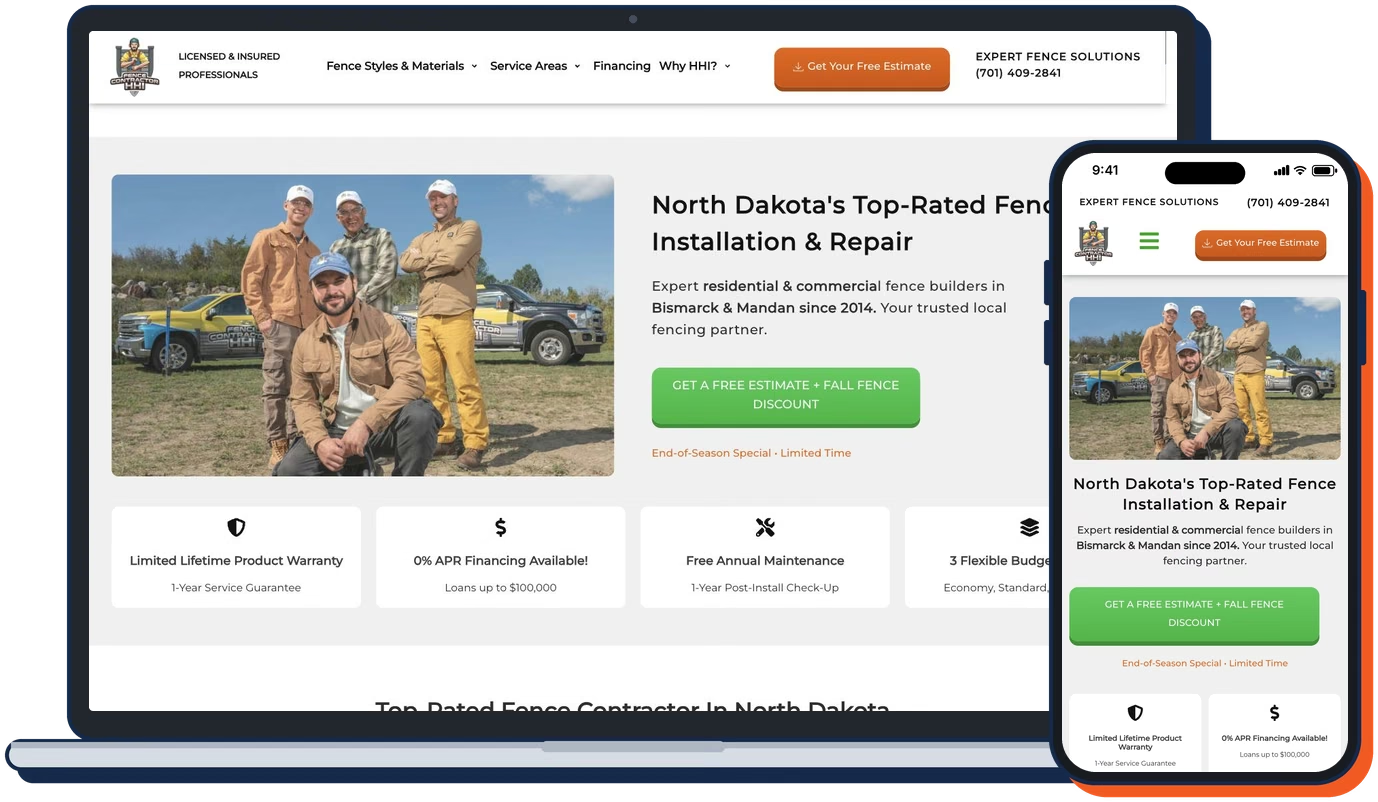
One example from home services: a fence company in North Dakota. In May 2026 a lead cost about $56, two out of three leads (67%) turned into a booked estimate, and each new customer cost $309 on an average job of about $5,000. There was no magic ad. The ads and the website showed why this company was worth choosing, every lead got a reply within minutes, every step had an owner, and no estimate was left without a next step.
I work alone — no account managers, no junior team. You always talk to me. I don’t just run ads: I build the sales side too — call scripts, follow-up messages, email templates — and I own how many leads turn into estimates and paid jobs.
Where to go from here
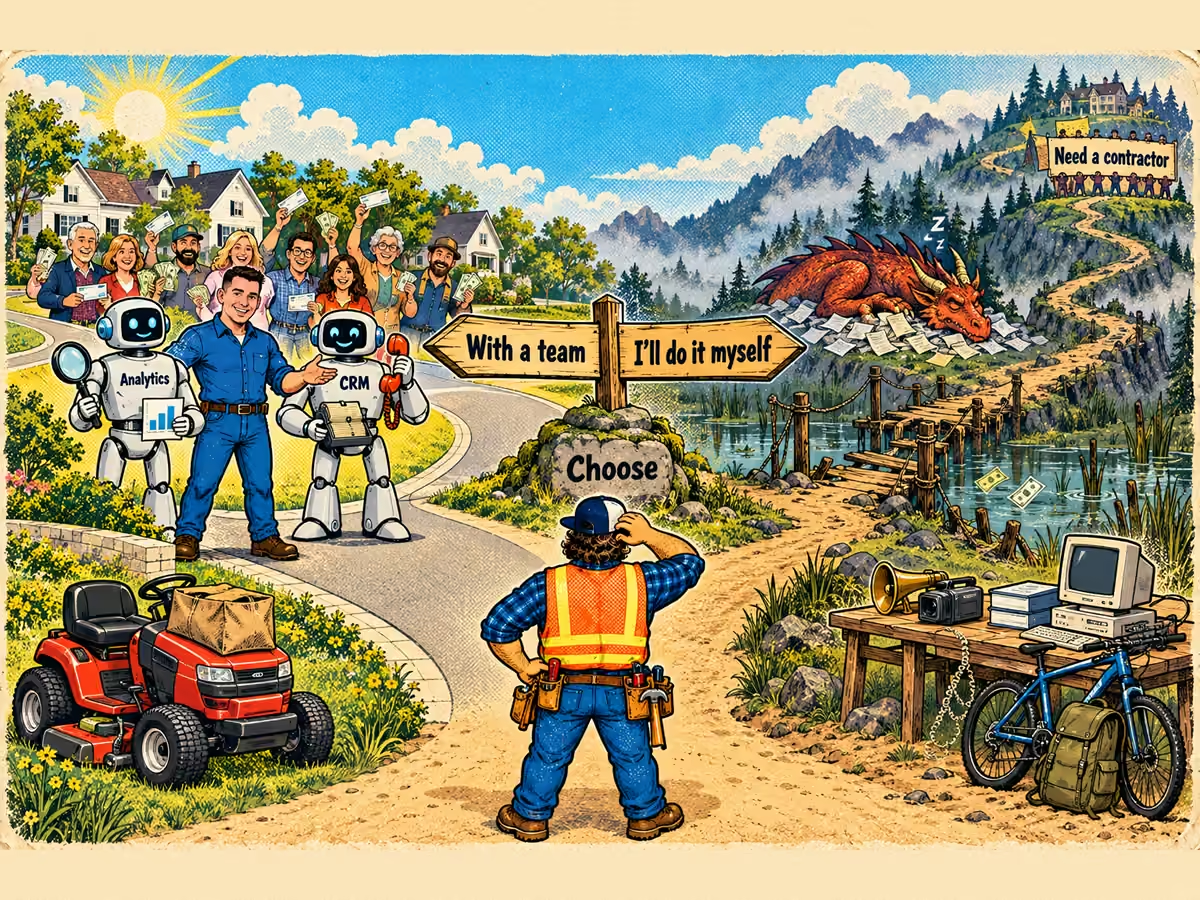
Either way, you're the one filming on the job. Without your footage there's nothing to show. The question is who handles the rest: picks the videos, writes the captions, runs ads to your area and counts estimates every week instead of likes.
Done for you: work with me
A good fit if
- the business already makes steady money and you want to grow, not experiment;
- you’d rather be on jobs than learning ad platforms, websites and automations;
- you can put about $2,000 a month into marketing, ad spend included.
What I do
- Leads that turn into jobs. Your ads and website show why your company is worth the money — your work, your process, what’s included, your warranty, your reviews — so the people who reach out want results, not the lowest bid.
- Google and Meta ads — live in 3 days.
- A website or a page for your service — with a clear “book an estimate” button.
- No lead slips through — instant text and email after every lead, missed-call text-back, estimate booking, reminders after the quote.
- A sales system — call scripts, quote and email templates, rules for whoever answers the phone.
How I work
- No contracts. Pay by the week; stop any week.
- Everything is yours. Domain, website, ad accounts and customer list are in your name from day one.
- Reports in jobs: leads, booked estimates, quotes, paid jobs and what each job cost.
- You work directly with me. No account managers.
- No promised lead counts — I own the quality of the setup, the speed and honest numbers.
Who this isn't for
- If you want to become an influencer and grow followers for the sake of followers. This is about booked estimates, not fame.
- If you won't spend 10–15 minutes filming on the job. Without your footage, no ad and no marketer can help.
- If your ad budget is under $1,000 a month. That's too thin to put your videos in front of the neighborhood. Start with regular posts using the shot list.
- If you want a guarantee of "X leads a month." I don't give one, and I'd advise you not to trust anyone who does.
Questions owners ask
I'm not comfortable talking on camera
You don't have to. In the videos that bring in jobs, the work does the talking: the process, before and after, the materials, the crew. A short line of text on screen covers the rest.
I don't have time to film
It takes 10–15 minutes across the whole job with a seven-shot list. No editing on site. When you work with me, picking the videos, writing captions and running the ads is my part.
My customers don't want to be filmed
Ask before the job starts, and don't show the house number or anyone's face without permission. The process, the materials and close-ups can almost always be filmed. Nobody can tell whose yard it is.
Why don't you guarantee a number of leads?
Because it depends on your market, the season, your prices and how fast you respond. A lead-count guarantee pushes you to chase cheap leads, and what I'm after is booked estimates and signed jobs. Every week you get a report: leads, estimates, quotes, jobs and cost per job.
I already paid a social media person and got nothing
That's why there's no contract here. You pay by the week. Want to stop? Tell me by Friday and you don't pay for the next week. Your accounts and ad account are in your name from day one. And the scoreboard is estimates and jobs, not likes.
I'm not a fence company
Roofing, concrete, kitchens, painting, cleaning and landscaping all have a before and after, a process, a price with things included and a crew. The shots change, the logic doesn't.
How much does it cost?
Social media management starts at $220 a week plus a setup fee. Ad spend is paid by you, directly, at least $1,000 a month per channel. All plans are on the pricing page.