
This one is for owner-operators of home service companies — fencing, roofing, remodeling, HVAC, plumbing, electrical, landscaping — who are on the job themselves. No office, no dispatcher, just a phone in your pocket while your hands are full. As you read, you’ll put a dollar figure on your missed calls, and you’ll see how every caller can get a reply within a minute, even when you’re on a roof. At the end: how to set it up, or have me do it.
In this article
- Sound familiar?
- What does one missed call actually cost you?
- Why it’s minutes, not evenings
- What owners usually try — and where it breaks
- What works: a reply within a minute , even when you’re busy
- How it fits together
- 5 rules for the first reply
- Call yourself right now
- Who I am and why I do this
- Your next step: stop handing calls away
- What it costs
- Who doesn’t need this
- Questions owners ask
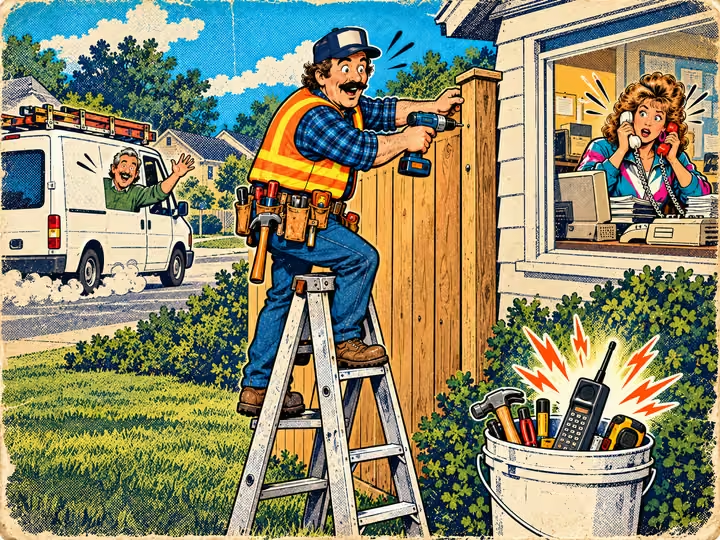
Tuesday, 11:40 a.m. You’re on a ladder with a drill in one hand and a panel in the other. Your phone buzzes in your pocket. Climbing down means five minutes, gloves off, crew waiting. You tell yourself you’ll call back at lunch. At lunch the supplier calls, then the homeowner you’re working for, and you get to that number around 5:30. The woman on the other end is polite: “Thanks, we already booked someone.”
She’s not a tire-kicker. She needed a gate fixed before the weekend, called the number from an ad — your ad, the one you paid for — got voicemail, and dialed the next company on the list. They picked up. That’s the whole story.
Sounds minor. One call. Give me five minutes and we’ll put a yearly number on that “one call.” You probably won’t like it.
Sound familiar?
🪜On the job
- The phone rings while you’re on a roof, under a sink or cutting tile. Answering means stopping work. Not answering means losing the customer.
- Sometimes you pick up anyway: saw running, wind howling, “yeah, yeah, I’ll call you back” — and you can hear how unprofessional it sounds.
- The homeowner you’re working for gives you a look: am I paying you to build my deck or to take calls?

🌙Nights and weekends
- Leads come in at 8:30 p.m., right when you finally sit down to eat, and Saturday morning at your kid’s game. Answer, and you’re working again. Don’t, and by Monday they’ve hired someone else.
- At night you scroll through missed calls and can’t tell which number is a customer, which is a supplier and which is a robocall about your car’s extended warranty.
- You call back — no answer. You text — nothing. Are they busy, or did they already hire the other guy?

💸The money
- You pay for ads, and calls from those ads roll to voicemail. There are hardly any voicemails, though. People don’t leave messages — they call the next number.
- Your agency reports “calls,” and you can’t say how many of them you even heard.
- The worst part: you’re good at this. If she’d waited, she’d have gotten the best fence on the block. But the job didn’t go to the best contractor. It went to whoever picked up first.
If this is you, you’re not lazy or disorganized. You’re one person with two hands, running a business that behaves as if there were a receptionist up front. There isn’t one. So voicemail takes your calls.
What does one missed call actually cost you?
Grab your phone and open last week’s call log. This takes five minutes, and after that nobody will call it “minor” again.
Your 5-minute math
- How many calls from unknown numbers did you miss last week? Only ones that could have been customers. Call it A.
- How many of those actually became customers? You called back, talked, booked an estimate. Usually the answer is “a couple.” The rest are B — lost calls per week.
- Out of 10 people you actually talk to, how many book an estimate? If 6, write 0.6. That’s C.
- Out of 10 estimates, how many sign? If 3, write 0.3. That’s D.
- Your average job size — E.
Lost revenue per week = B × C × D × E. Multiply by the weeks you work in a year — or just your busy season if your trade is seasonal.
If that number is bigger than your monthly ad spend, you’re paying for ads twice: once in cash, and again in jobs the ads brought in that you never heard about.
Your numbers will be different. But I doubt anyone does this math honestly and then says, “Eh, let them call someone else.”
Why it’s minutes, not evenings
There’s an older study that explains pretty well what happens to your lead while you’re up that ladder. In 2011, Harvard Business Review published an audit of 2,241 U.S. companies: researchers sent each one a web lead and timed the response. Only 37% replied within an hour, and 23% never replied at all. Companies that reached out within the first hour were nearly 7 times as likely to get a real conversation with the decision maker as those that responded an hour later.
Fair warning: those were companies from many industries, not just home services, and the leads were web forms, not phone calls. But the logic holds. Someone with a leaking roof isn’t building a spreadsheet of five contractors and waiting to hear from each one. They want the problem off their plate, and they hand it to the first person who answers like a human being. I doubt people have gotten more patient since 2011.
What owners usually try — and where it breaks
“I’ll call back when I get off the roof”
Feels responsible: you’re not ignoring anyone, you’re calling back. It breaks on timing. Two hours later, they’ve already talked to whoever answered and booked an estimate. You’re calling someone who has stopped looking. The hidden cost isn’t just the lost job — it’s ending your day making callbacks into the void instead of being home.
“That’s what voicemail is for”
The logic is fine: if they need you, they’ll leave a message. Check for yourself. Open your voicemail and compare the number of messages with the number of missed calls. The gap is people who didn’t feel like talking to a beep and just dialed the next contractor. Voicemail is a “Closed” sign on your shop door in the middle of a business day.
“I’ll hire an answering service”
Better than silence: a live voice, a polite “I’ll pass that along.” But the operator doesn’t know your prices, your service area or what you actually do, so they take a message — and that message still lands on your phone at 9 p.m. The customer isn’t booked, they’re “passed along.” And while you’re getting around to calling, they hear the same “I’ll pass that along” at the next company and go with whoever offers a time first.
“I’ll just answer every call, even on the job”
Heroic, and bad for everybody. It’s unsafe on a ladder, the crew stands around, and the homeowner who’s paying you watches you discuss someone else’s fence. The call itself goes badly too: you’re shouting over a saw, not writing anything down, sounding like a guy with no time. And a homeowner choosing a contractor for an $8,000 job is listening to exactly that.
“More cheap leads — some of them will stick”
A lot of agencies and lead sites run on this: the more leads and the cheaper they are, the better the report looks. But a cheap lead is usually someone who gave their number to five contractors and will pick whoever quotes lowest. If you’re also missing calls, you’re paying for leads that rarely turn into jobs — and losing even the ones that could have. More water into a leaky bucket gets you a bigger water bill, not a fuller bucket.

What works: a reply within a minute, even when you’re busy
You don’t need to answer every call. You need every caller to know, within a minute, that they were heard, someone’s on it, and here’s the next step. Think of the sign on a shop door. “Closed,” and people walk next door. “On a job, back at 5 p.m. — book your estimate here,” and people book, because you just made their life easier.
In my system that takes three layers.
Instant text after every lead. Someone fills out a form on your site or ad, and a minute later they get a text from your company, by name, with a clear next step. Not “Thanks for contacting us,” but “Hi Sarah, this is Mike with [Company]. To set up your free estimate, does tomorrow morning or Thursday afternoon work better?”
Missed-call text-back. You can’t pick up, and the system texts the caller for you: “Sorry, I’m on a job right now. Text me what you need, or pick a time for a call.” The person who was already reaching for the next number gets a reply and usually stays with you. And instead of a bare number in your call log, you have a conversation: who, what they need, where.
AI receptionist. A voice assistant that answers 24/7: at 11 a.m. when you’re on a roof, at 9 p.m., on Sunday. It answers common questions, asks what needs doing and where, and books the estimate straight into your calendar. What it doesn’t do: transfer the call to a live person. If the customer wants to talk to the owner, you call back someone who’s already booked and expecting you — not a cold number.

Now the part most people selling auto-replies skip. Speed is only half of it. The other half is what the customer actually gets. If the first text says “a representative will contact you,” you just said nothing faster. The reply has to show why your company can be trusted with their home: photos of your work, what the estimate includes, your warranty, your reviews. Then you’re not just the fastest to answer — you’re the most convincing, and you get picked because they believe you, not because you’re cheapest.
It’s the same principle I use for ads: don’t chase cheap leads, bring in people who want the job done right, and show them your company’s value at every step. Those leads cost more — which makes it hurt even more when voicemail eats one.
How it fits together
- Every lead in one place. Calls, texts, website forms and ad messages land in one app, not five. At night you see a list of people and what they need, not a wall of missed calls.
- The first minute is automatic. Instant text on every lead, text-back on every missed call. Nobody moves on to the next number while you’re busy.
- Someone always answers. The AI receptionist picks up days, nights and weekends and books estimates into your calendar.
- First-reply rules. What to say, what to text, how to handle “how much?” and how to show you’re worth the money — written so anyone can use them.
- Reminders before and after. Customers get a reminder before the estimate and follow-ups after the quote. Quotes don’t die in silence.
- Numbers every week. How many called, how many got a reply within a minute, how many booked and signed. Not “I feel like we miss some,” but a number.
Each step is simple on its own. The hard part is making them work together instead of becoming one more app you have to check. That’s why I build it as one system, not a pile of subscriptions.
5 rules for the first reply
You can use these tomorrow, no software required.
- Say who you are and name the company. “Hi, this is Mike with [Company].” A nameless “got your message” reads like spam.
- Answer what they asked. They asked about a gate repair — don’t send a full fence price sheet.
- One next step, with two time options. Not “when works for you?” but “tomorrow morning or Thursday afternoon?” Picking from two is easier than coming up with one.
- One reason to choose you. A link to photos of similar jobs, a line about your warranty or what the estimate includes. They’re comparing you to others right now — give them something to compare.
- Don’t claim what isn’t happening. Don’t text “your quote is being prepared” before you’ve seen the job. If they catch it, trust is gone before you pull into the driveway.
Call yourself right now

The 10-minute test
Ask a friend to call your business number during the day while you’re busy, and to fill out your website form at 9 p.m. Then answer:
- What did they hear when you didn’t pick up?
- Did they get any message at all within 5 minutes?
- Did the reply make it clear what happens next, and when?
- Did they see a single reason to pick you over someone else?
- How many hours until someone actually reached them?
If the first two answers are “ringing” and “no,” you’re losing part of the leads you pay for right now. If the fourth is “no,” you’re also losing the ones you do reach — they’ll pick on price.
Who I am and why I do this

I’m Eddie A. For 12+ years I’ve worked in marketing and sales: projects in 50+ industries, ad budgets up to $60,000 a month, and $12M+ in revenue attributed to campaigns I managed — in the U.S., Canada, the UAE, Turkey, Europe and Kazakhstan. I’m based in Apopka, Florida, and run a registered LLC.
- 12+years in marketing and sales
- 50+industries I’ve run ads for
- $60Kmax monthly ad budget
- $12M+revenue from my campaigns
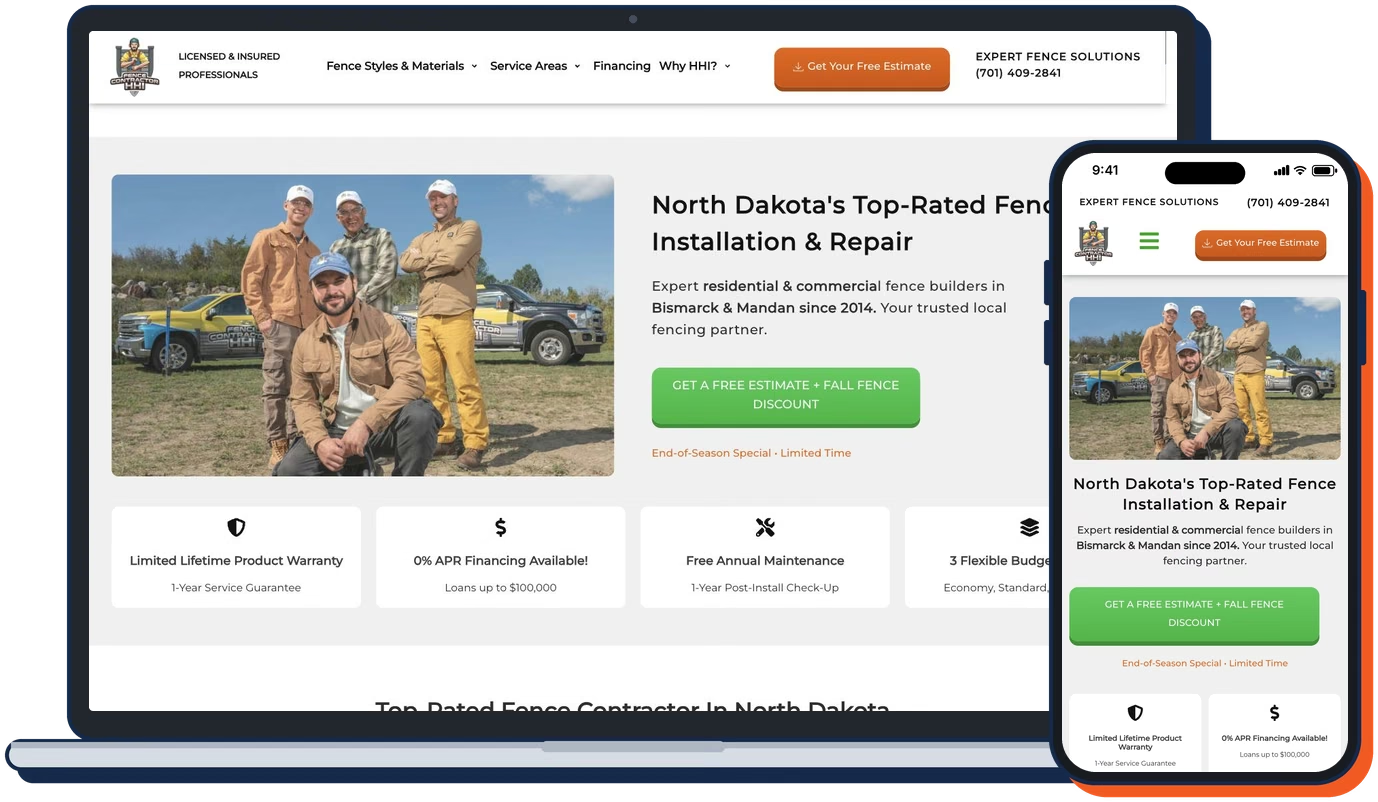
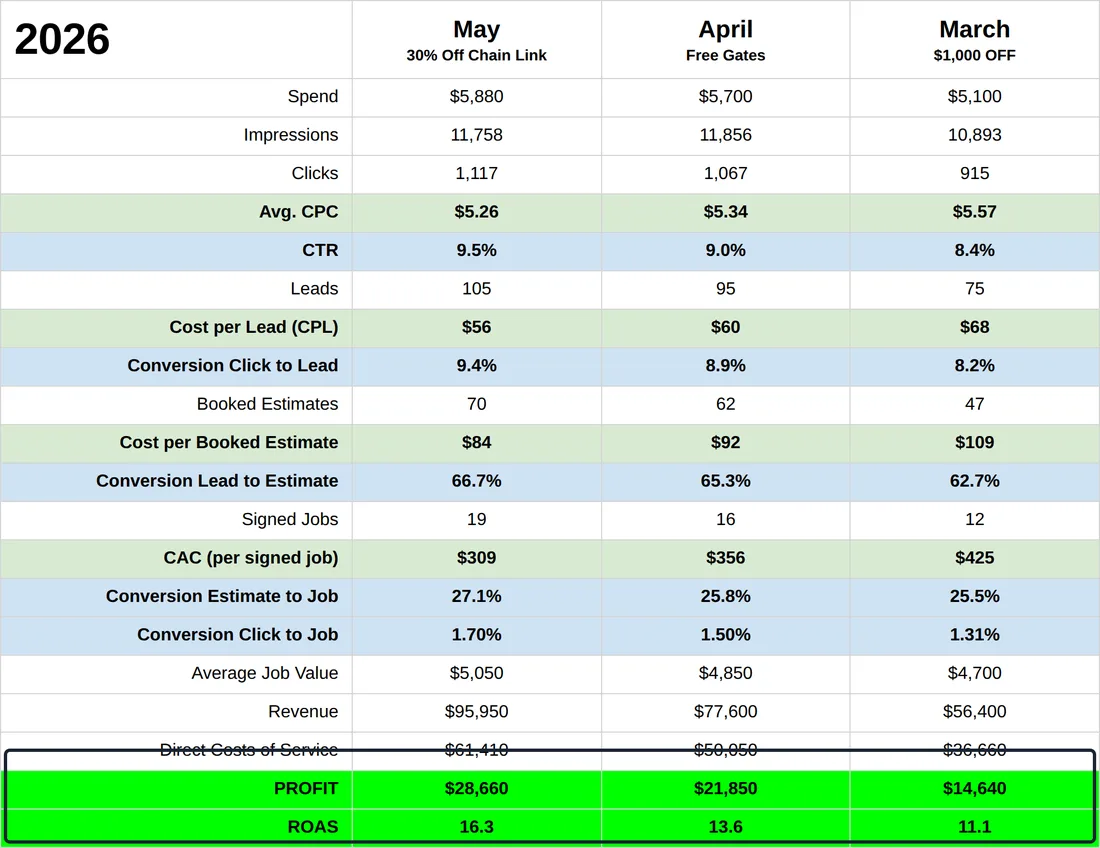
One example from home services: a fence company in North Dakota. In May 2026 a lead cost about $56, two out of three leads (67%) turned into a booked estimate, and each new customer cost $309 on an average job of about $5,000. There was no magic ad. The ads and the website showed why this company was worth choosing, every lead got a reply within minutes, every step had an owner, and no estimate was left without a next step.
I work alone — no account managers, no junior team. You always talk to me. I don’t just run ads: I build the sales side too — call scripts, follow-up messages, email templates — and I own how many leads turn into estimates and paid jobs.
Your next step: stop handing calls away

Done for you: work with me
A good fit if
- the business already makes steady money and you want to grow, not experiment;
- you’d rather be on jobs than learning ad platforms, websites and automations;
- you can put about $2,000 a month into marketing, ad spend included.
What I do
- Leads that turn into jobs. Your ads and website show why your company is worth the money — your work, your process, what’s included, your warranty, your reviews — so the people who reach out want results, not the lowest bid.
- Google and Meta ads — live in 3 days.
- A website or a page for your service — with a clear “book an estimate” button.
- No lead slips through — instant text and email after every lead, missed-call text-back, estimate booking, reminders after the quote.
- A sales system — call scripts, quote and email templates, rules for whoever answers the phone.
How I work
- No contracts. Pay by the week; stop any week.
- Everything is yours. Domain, website, ad accounts and customer list are in your name from day one.
- Reports in jobs: leads, booked estimates, quotes, paid jobs and what each job cost.
- You work directly with me. No account managers.
- No promised lead counts — I own the quality of the setup, the speed and honest numbers.
What it costs
- Missed-call text-back — $25 a week. The cheapest way to stop giving calls to competitors.
- Lead tracking and auto-replies — $69 a week: every lead in one place, instant texts, reminders before the estimate and after the quote.
- The full version with an AI receptionist — more; I’ll give you the exact price on a call. Plus a one-time setup from $450.
- Terms: pay by the week, no contracts. Your customer list and every conversation are in your name and stay with you.
Compare that with your math above. If one saved job a month covers all of it with room to spare, the question isn’t price anymore. It’s how many more weeks you want to keep handing calls away.
Who doesn’t need this
- You have someone in the office who picks up every call and books estimates within minutes. Then you need a handle on your quotes, not auto-replies.
- You get a couple of calls a month. First you need ads or a Google Business Profile; a reply system comes after.
- You want a robot that “sells” and closes deals over the phone. Its job is to answer, book and not lose anyone. You do the selling, at the estimate.
Questions owners ask
Customers hate talking to robots
They hate useless robots: “press 1,” “leave a message.” An AI receptionist answers the question and books the estimate — that’s more than voicemail ever did. If someone wants to talk to you personally, you call back when you’re free, and they’re already booked instead of gone.
Will the AI transfer the call to me if the customer insists?
No, it doesn’t transfer calls to a live person. Its job is to answer, book the estimate and keep the customer from walking while you’re busy. You talk to them personally when you call back.
I’d rather call back myself — people like talking to the owner
They do, and nothing replaces that. The auto-reply covers the first minutes while you’re on the ladder; your call covers the rest. The question isn’t whether you call yourself — it’s whether the customer is still around when you do.
This sounds expensive
Missed-call text-back is $25 a week. Run the formula from this article and see what one lost job costs you. One saved job a month usually covers the whole system several times over.
My trade is different — customers ask complicated questions
Complicated questions get answered at the estimate anyway. The first reply has a simpler job: show you heard them, find out what and where, and set a time. I write the texts and scripts around your service and your area.
Do I need to change my phone number or my software?
We figure that out on the call, based on what you’re using now. The rule that doesn’t change: your customer list and every conversation are in your name and stay with you, even if we stop working together.