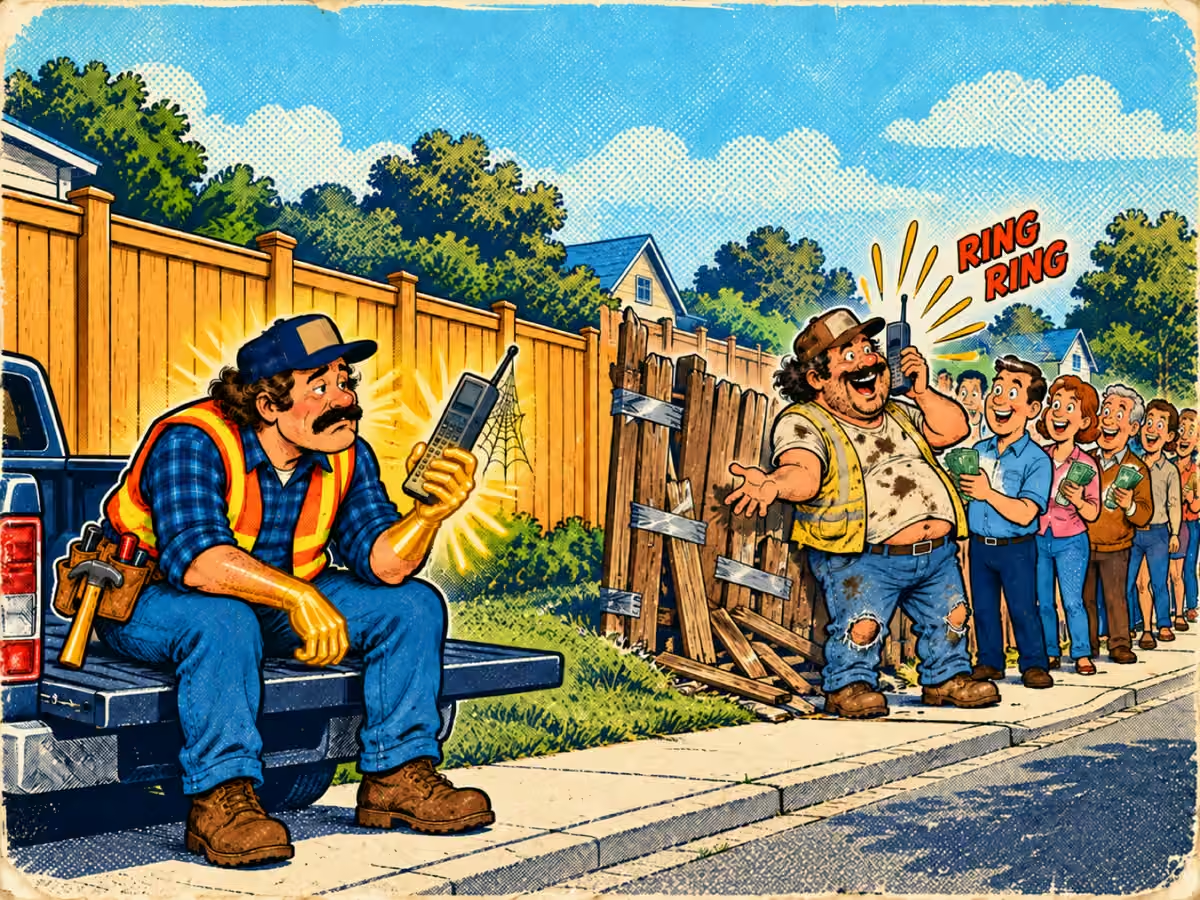

This one is for owners of remodeling companies: kitchens, baths, whole-home remodels. If your ads bring in leads, you go out, design, price everything, send detailed proposals, and only a handful ever sign, read on. I'll break down why remodeling deals drag on for months, why the lowest bid wins whenever your value isn't visible, and what it takes for a homeowner to remember you six weeks after the walkthrough. At the end there's a 10-minute check of your open proposals and a clear next step.
In this article
- Sound familiar?
- Remodeling is a marathon, not a sprint
- Kitchens, baths, whole homes: where the contracts slip away
- Why the usual fixes don't save the deal
- What works instead of cheap leads
- A 6-step system for a long sales cycle
- Check your open proposals in 10 minutes
- Who I am and why I do this
- Turn proposals into signed contracts
- Who this isn't for
- Questions owners ask
Tuesday, 8 p.m. You spent two hours in a couple's kitchen in a nice neighborhood: measured everything, talked through the island, showed them photos of similar jobs on your phone. They loved it. You gave up your weekend to put together a $48,000 proposal with materials, timeline and demo all spelled out. Sent it Monday. The reply: "Thanks so much, we'll talk it over and get back to you."
Six weeks later, nothing. You don't know if they went with someone else, pushed the project to next year, or just can't remember which of the four contractors pitched that island. Sound familiar? Below is why this happens to so many remodelers, and why it isn't because you're too expensive. Sounds like a pep talk? Stick around, there are numbers.
Sound familiar?
📌The "just looking" leads
- The form says "full kitchen remodel." At the appointment you find out the budget is $5,000 and they're "just gathering ideas for now."
- A couple scrolls through two hundred saved photos with you and asks what it would cost, "ballpark." You give them a range and never hear from them again.
- Your agency is thrilled that leads got cheaper. Meanwhile you're on week three of driving out to meet people who aren't starting anything this year.

🃏Your proposal is one of four
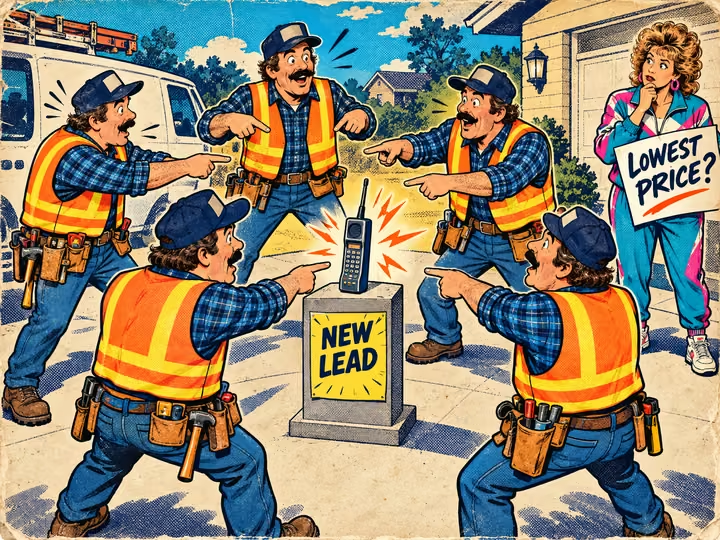
- The homeowner is upfront: "We're getting three more bids." You already know how it ends. Whoever has the smallest number at the bottom wins.
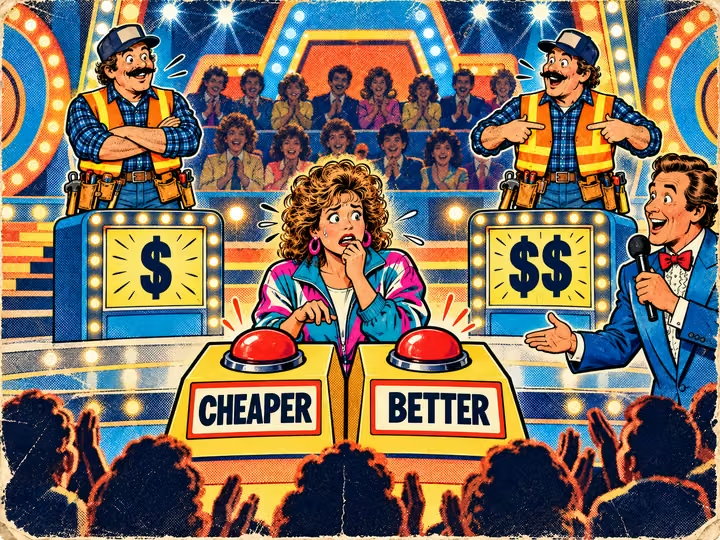
- Your $52,000 proposal is detailed and honest. The other guy's is $41,000, two lines and "everything included." The homeowner can't see what the extra $11,000 buys, so they pick what they can understand: less.
- You cut your price to stay in the game, then spend three months on the job making almost nothing.
⏳Radio silence after the proposal
- Proposals go out, answers don't come back. "Just checking in" feels lame, and nothing better comes to mind.
- Two months later the homeowner resurfaces: "We're finally ready!" But you've forgotten the details, and they've talked to two more companies in the meantime.
- Worst of all, you don't know how many live proposals you have right now or what they add up to. That could be your next quarter.
Remodeling is a marathon, not a sprint
A $40,000 kitchen is a new-car-sized purchase. Nobody buys a car from the first dealer after one test drive. They look around, compare, talk it over with their spouse, run the budget, wait for the bonus, come back. A remodel works the same way, just slower.
The numbers back it up. According to the 2026 U.S. Houzz & Home Study, the median spend on a kitchen renovation is $24,000, and homeowners spend about 9.5 months planning a kitchen project and about 8.4 months planning a primary bath (Houzz). Nine and a half months. And plenty of contractors stop following up a week after sending the proposal, if they follow up at all.
One more thing worth knowing. Official consumer guides tell homeowners exactly what you see in the field. Virginia's Department of Professional and Occupational Regulation, for example, tells consumers to get written estimates from at least three contractors and not to automatically choose the lowest bidder, but to ask why the prices differ (Virginia DPOR). Homeowners are literally being taught to compare. The only question is whether your proposal gives them anything to compare besides the bottom line.
Kitchens, baths, whole homes: where the contracts slip away
- Kitchens. The most emotional project in the house. People have been saving photos for years and are scared of getting the cabinets or the countertops wrong. They need to see what it will look like and understand how the family survives a few weeks without a kitchen. Answer that before the appointment, on your page and in your ads, and half the "we'll think about it" goes away.
- Baths. Smaller project, same fears: leaks, tile, timeline, "what if it's our only bathroom." What sells here is a clear day-by-day plan and photos of bathrooms you've finished, not the word "quality."
- Whole-home remodels. Two people decide, sometimes a lender too. Get both spouses to the meeting: if only one heard the walkthrough, the other sees just the number at the bottom and says "too much." Timeline, permits, where the family lives during the work: you should have ready answers for all of it.
- Who actually decides. On almost every project it's not the person who filled out the form, it's the household. So your follow-ups after the proposal should be easy to forward to a spouse: photos, options, a clear next step.
Why the usual fixes don't save the deal
"I just need more leads"
Makes sense: more leads, more contracts. But remodeling clicks aren't cheap. In Miami, a click on "general contractor" searches can cost $30–40. Even if one click in ten turns into a lead, that's hundreds of dollars per lead. If that lead then dies in silence after the proposal, doubling the budget just doubles the number of proposals nobody followed through on.
"I'll be the lowest bid"
A discount feels like the shortest road to yes. But you're competing with the guy who's willing to work for nothing, or the guy who'll make it back later in "unforeseen conditions" change orders. On a $50,000 kitchen, 10% off is $5,000 straight out of your profit, not out of some overhead line. And the homeowner who hired you for the lowest price will haggle over every cabinet pull until the final walkthrough.
"I sent the proposal, the ball's in their court"
Sounds professional: I don't chase. In reality, during nine months of planning the homeowner will see a dozen more contractors, a hundred photos in their feed and a few opinions from the neighbors. If you go quiet, a month later they don't remember you, they remember "the guy with the island." The decision really is theirs. But when they make it, they need to remember you.

"I'll grab the cheap $15 leads from social"
Cheap remodeling leads are almost always "what does a kitchen cost, roughly?" Ads that promise a "free estimate" and nothing else attract exactly those people. Cheap on the way in, very expensive in your time: every appointment is a drive, two hours on site and an evening on a proposal.
What works instead of cheap leads
To win on something other than price, the homeowner has to see the difference before they line up the bottom numbers. That means your ads, your page and your proposal have to show why your company is worth the money: the projects you've done, how the job runs week by week, what's included, who'll be on site, the warranty, what past clients say. Then the people who reach out are looking for a contractor they can trust with their house, not the lowest number. You get fewer of those leads, and each costs more. But they show up to the appointment, take the proposal seriously and sign.
It's like picking a surgeon. Nobody shops for the cheapest one. People look for the one whose experience they can see and who explains what happens before, during and after. For a lot of families, a kitchen remodel is surgery on the house they live in.
A 6-step system for a long sales cycle
- Ads and pages that show your work and your process. Before-and-afters of your own jobs, how demo week and install weeks go, what's included in the price, who'll be in the house. Someone who saw all that and still reached out is already leaning toward you, not "whoever."
- A fast reply and a short conversation. A text within minutes, a call the same day that follows a script: what they want, when they're hoping to start, what budget they have in mind. Not an interrogation, just enough that you know who you're dealing with before you get in the truck.
- A design consultation on site. Not "measure and leave," but a meeting where the homeowner sees ideas and samples and can picture their kitchen. That's where trust grows fastest.
- A proposal with options. Two or three, good, better, best, with a clear difference in materials and scope. If you offer financing, show that option too: a monthly payment lands differently than one big number. Now they're choosing between your options, not between you and the next bid.
- Weeks of useful follow-up. Not "just checking in," but things that help them decide: photos of a similar project, an answer to the usual timeline question, how to live without a kitchen for three weeks, what to pick for countertops. Every message is a reason to remember you and take a step.
- A review and photos after the final walkthrough. Every finished job goes into your portfolio, and the next homeowner has an easier time picking you at step one.
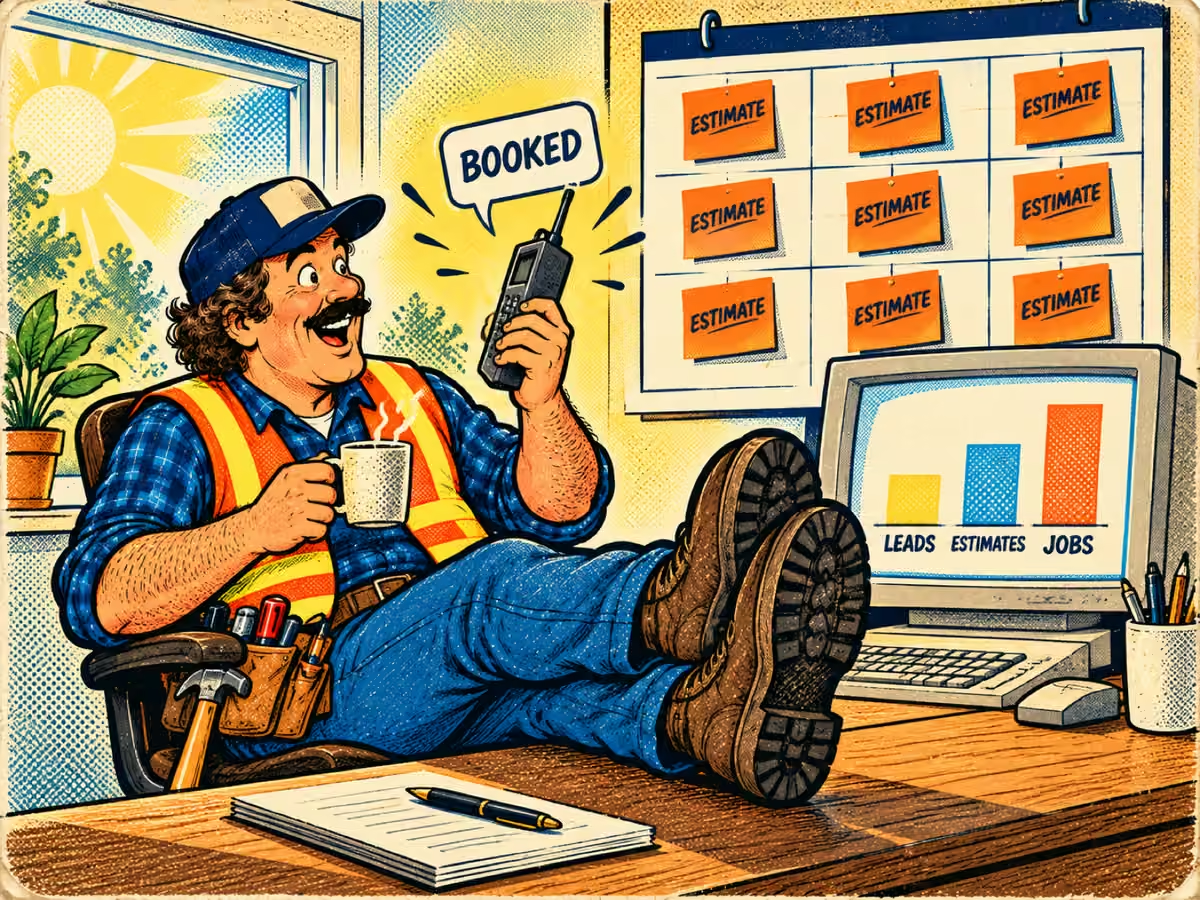
I'm not going to lay out the exact messages, timing and triggers here: that gets tailored to your service and your market. The principle is what matters. Every step has someone doing it, and no proposal is ever left without a next step.
Check your open proposals in 10 minutes
Pull up every proposal from the last three months
- How many did you send, and what's the total dollar amount?
- How many got an answer, a yes or an honest no?
- How many times did you reach out after sending each one, and what did you say?
- Does your proposal have at least two options, or just one number at the bottom?
- Can someone see at least three of your finished projects, with photos, on your website or in your ads?
- Do you know when each "still thinking" homeowner plans to start?
Add up the proposals with no answer. That's money sitting on your desk right now. If fewer than half got a response and you followed up once or not at all, the problem isn't your ads. You're running a long sale like a short one.
Who I am and why I do this

I’m Eddie A. For 12+ years I’ve worked in marketing and sales: projects in 50+ industries, ad budgets up to $60,000 a month, and $12M+ in revenue attributed to campaigns I managed — in the U.S., Canada, the UAE, Turkey, Europe and Kazakhstan. I’m based in Apopka, Florida, and run a registered LLC.
- 12+years in marketing and sales
- 50+industries I’ve run ads for
- $60Kmax monthly ad budget
- $12M+revenue from my campaigns
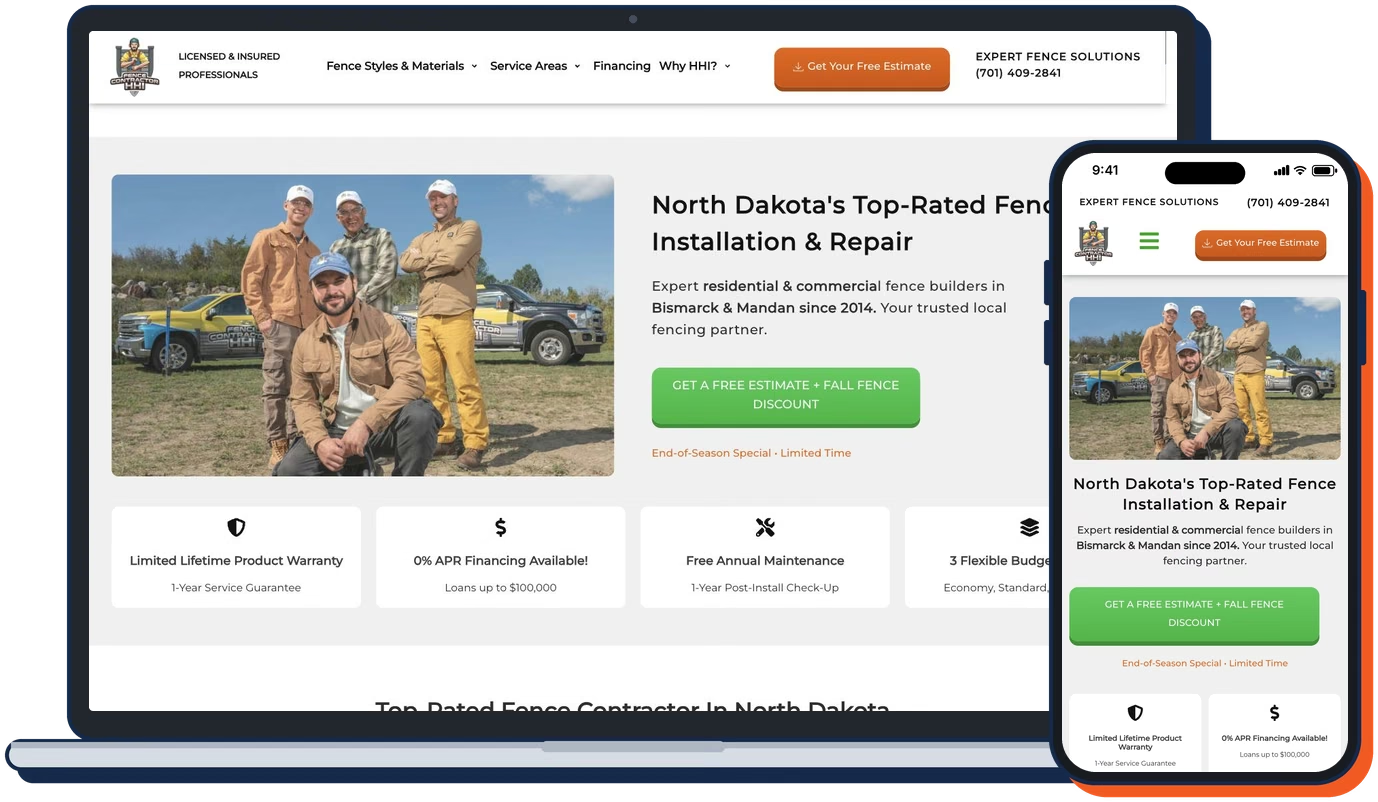
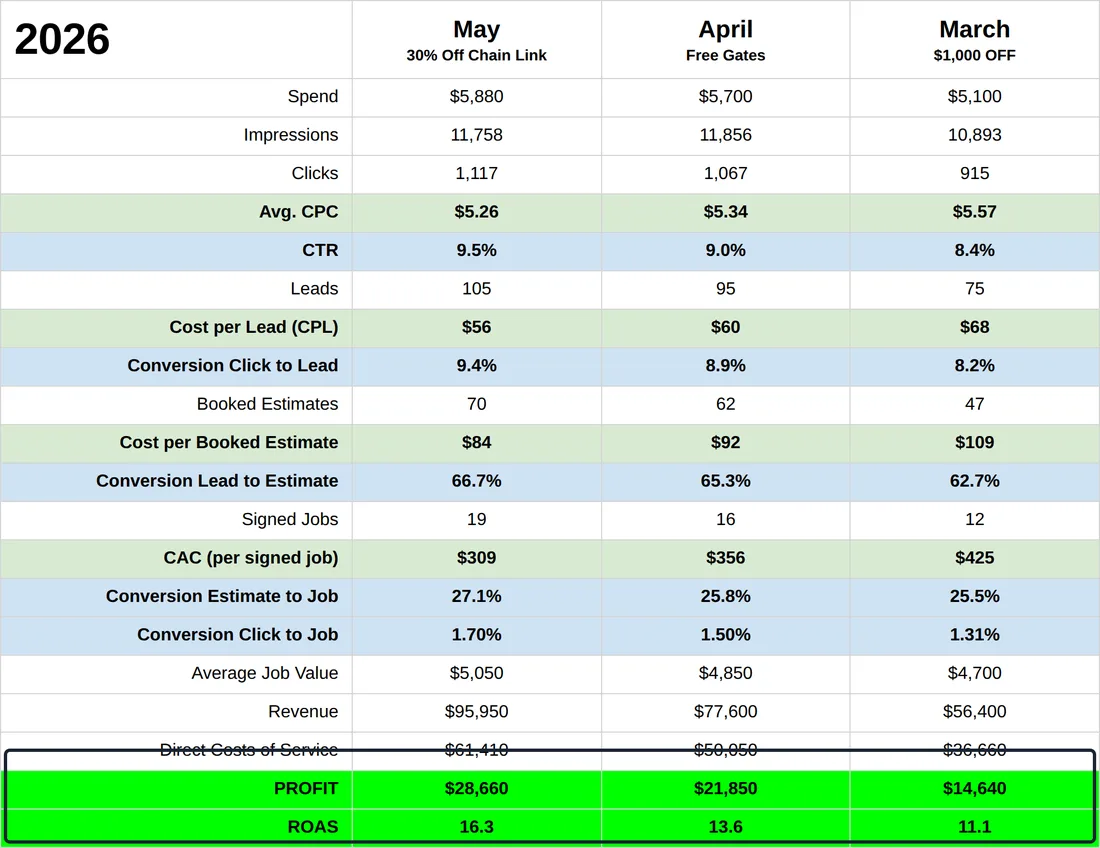
One example from home services: a fence company in North Dakota. In May 2026 a lead cost about $56, two out of three leads (67%) turned into a booked estimate, and each new customer cost $309 on an average job of about $5,000. There was no magic ad. The ads and the website showed why this company was worth choosing, every lead got a reply within minutes, every step had an owner, and no estimate was left without a next step.
I work alone — no account managers, no junior team. You always talk to me. I don’t just run ads: I build the sales side too — call scripts, follow-up messages, email templates — and I own how many leads turn into estimates and paid jobs.
Turn proposals into signed contracts
Done for you: work with me
A good fit if
- the business already makes steady money and you want to grow, not experiment;
- you’d rather be on jobs than learning ad platforms, websites and automations;
- you can put about $2,000 a month into marketing, ad spend included.
What I do
- Leads that turn into jobs. Your ads and website show why your company is worth the money — your work, your process, what’s included, your warranty, your reviews — so the people who reach out want results, not the lowest bid.
- Google and Meta ads — live in 3 days.
- A website or a page for your service — with a clear “book an estimate” button.
- No lead slips through — instant text and email after every lead, missed-call text-back, estimate booking, reminders after the quote.
- A sales system — call scripts, quote and email templates, rules for whoever answers the phone.
How I work
- No contracts. Pay by the week; stop any week.
- Everything is yours. Domain, website, ad accounts and customer list are in your name from day one.
- Reports in jobs: leads, booked estimates, quotes, paid jobs and what each job cost.
- You work directly with me. No account managers.
- No promised lead counts — I own the quality of the setup, the speed and honest numbers.
Who this isn't for
- If you want a guaranteed number of leads a month. I don't give one.
- If you have nothing to show yet. No project photos, no reviews? Start there. Without them there's no way to show your value.
- If your goal is to be the cheapest remodeler in town. That's a different strategy, and I'm not the right guy for it.
Questions owners ask
My customers only care about price anyway
The ones who came in through a bare "free estimate" ad with zero photos of your work, sure. So we change what people see before the appointment: your projects, your process, what's included. Then the people who reach out treat price as one factor, not the only one.
I don't have time to follow up with people for weeks
You don't have to do it by hand. Follow-up messages after the proposal go out automatically on a schedule, and you get a heads-up when the homeowner replies and it's time to call.
Clicks in my area are expensive. Maybe ads aren't for me?
An expensive click is a reason not to lose a single lead, not a reason to turn ads off. First we look at demand and click costs in your area, free on the growth plan call, and only then decide whether to launch and on what budget.
What does it cost?
Ads management starts at $220 a week, plus your ad spend, which you pay directly (at least $1,000 a month per channel), plus a setup fee. Lead tracking with automatic follow-up starts at $69 a week. Pay weekly, no contracts. Full pricing is on the pricing page.
I've been burned by an agency before
That's why there's no annual contract, the website, ad accounts and customer list are in your name from day one, and the weekly report counts appointments, proposals and signed jobs. Want to stop? Tell me by Friday and next week isn't billed.
Do you guarantee signed contracts?
No. A remodel is a family decision, and promising it on their behalf would be dishonest. I'm responsible for making your value visible, making sure no lead slips through and no proposal is left without a next step.
Who will I actually work with?
Me. No account managers, no hand-off to a junior after the first month.