
This one is for seasonal trades: fence, concrete, landscaping, pools, roofing up north. If every year from November to March you live off summer money, keep your best guys on a promise, and start March with an empty schedule — read to the end. It’s early October, which makes this the best time to make this winter different. At the end: an eight-week plan, step by step, and how to get it done with me.
In this article
- Sound familiar?
- Why the phone goes quiet — and why not all the way
- What owners do that backfires
- What works: slow months are for booking spring
- Your October–November plan, week by week
- What to sell when the main work stops
- How much spring is already sitting in your phone?
- Who I am and why I do this
- Let spring start in November
- Is there still time before winter?
- What March looks like
- Questions owners ask
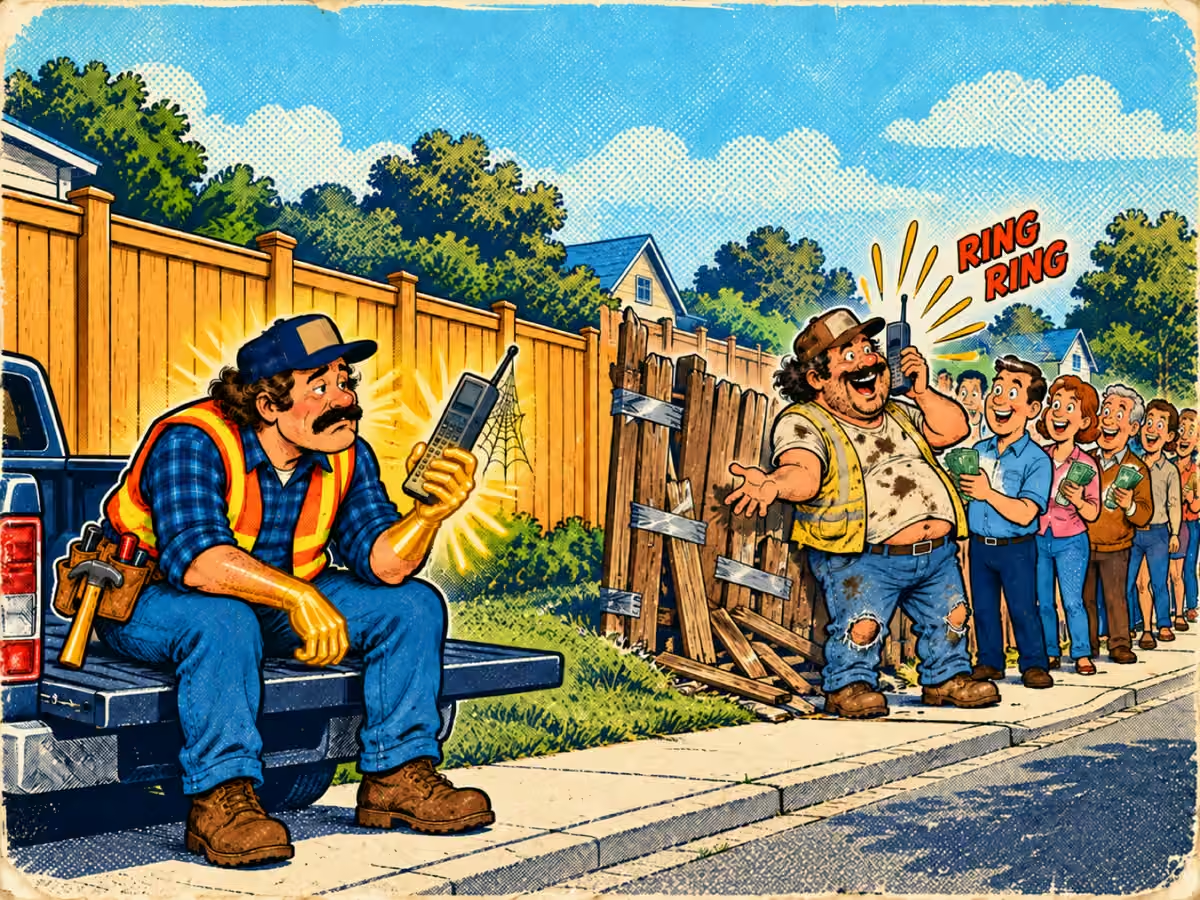
July. Your phone rings on the job, at lunch, in the truck, and at 10 p.m. You don’t pick up — crew, heat, concrete setting up. The people you do reach, you tell straight: “Earliest I can do is September.” You don’t ask anyone for a review — no time. You send quotes by the stack and never find out what happened to half of them.
November. You grab your wife’s phone and call your own business line — just to make sure it still works. It does. Nobody’s calling.
You’ll say winter is winter, you can’t fight the weather. The weather — no. An empty January — absolutely. Let me show you where the money sits during the slow months (money you left on the table back in summer) and what to do in October and November so spring starts with a schedule, not a scramble.
Sound familiar?
☀️Summer: no time
- Missed calls pile up. You call back the next day — they already hired someone else.
- You sent dozens of quotes this season. A third got an answer. The rest are “thinking about it” — and nobody followed up.
- You finished dozens of great jobs, and your Google profile picked up three new reviews. Asking felt like one more chore.
❄️Winter: no money coming in
- You have to keep your best guys or you’ll be hiring from scratch in spring. Paying them out of summer savings gets harder every week.
- Truck payment, insurance, the yard lease — the bills didn’t get the memo that it’s the off-season.
- In January you scroll through summer job photos and think: those look great. Shame nobody but you ever saw them.

🧠And in your head
- “I’ll run 30% off — something is better than nothing.” The idea shows up every winter and sounds reasonable every time.
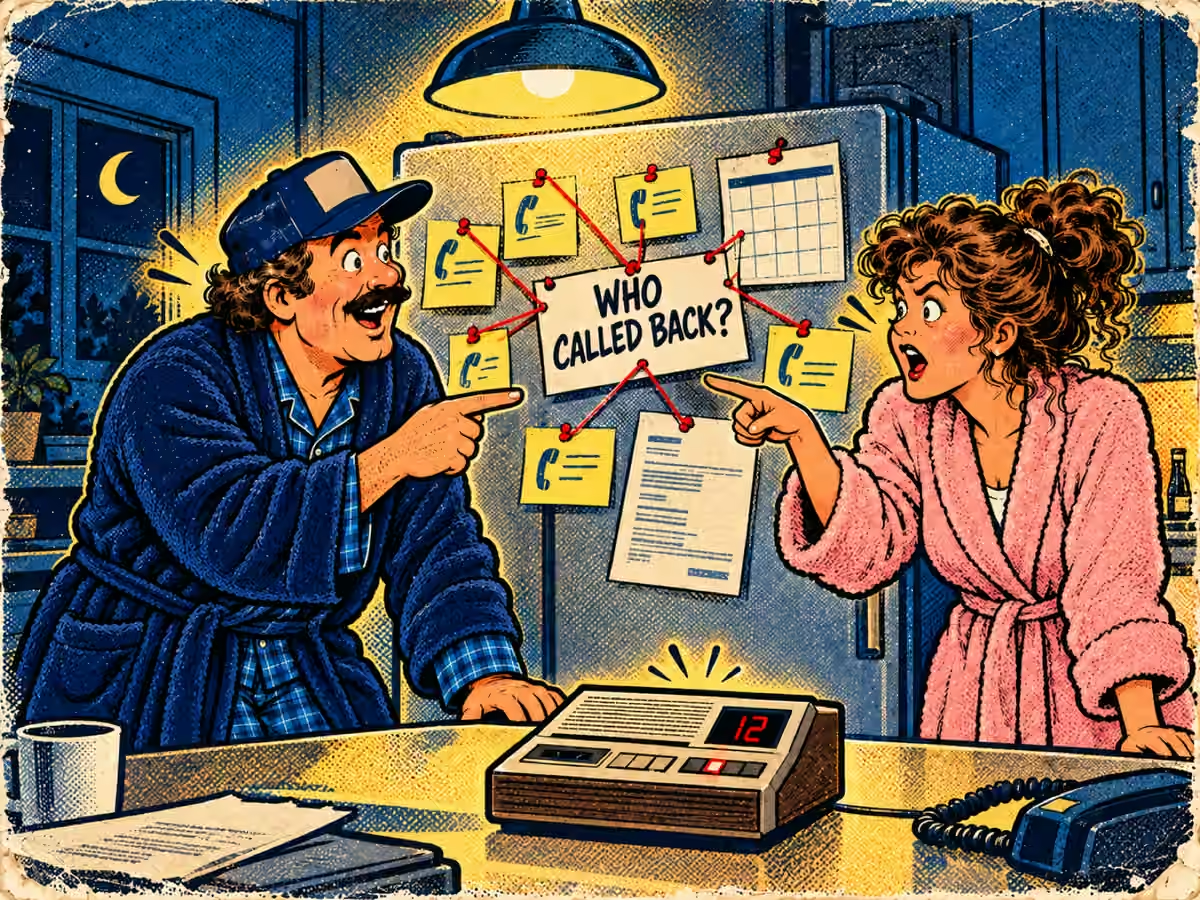
- Every fall you promise yourself, “This year I’ll be ready.” Every spring you start from zero.
- March is a stampede again: everyone’s phone wakes up the same week, and you take the jobs you can grab, not the ones you want.
Why the phone goes quiet — and why not all the way
The reasons are obvious. Nobody thinks about a new fence under a foot of snow; when the whole yard is white, the leaning sections stop bugging anyone. Pools are closed, lawns are asleep. Concrete has physics on its side: by the American Concrete Institute’s definition, cold-weather concreting starts when the air temperature falls, or is expected to fall, below 40°F during the protection period — and that calls for extra protection measures. Plenty of crews just wait for warmer days, and that’s the right call.
But notice the difference: the work stops in winter, the decisions don’t. The homeowner whose fence went down in a November windstorm is deciding now. The one who wants a new patio by May doesn’t start shopping for a contractor in May. And if your ads are off, your Google profile hasn’t been touched since August, and you’ve never texted a past customer — those decisions go to whoever stayed visible.
Think of your truck. You rebuild the engine in the shop in winter, not in July on a job with a full bed. Spring jobs get booked in winter too — while you have time and your competitors are on the couch.
What owners do that backfires
“Ads don’t work in winter — I’ll shut it all off till spring”
Sounds sensible: not much work, why pay? But in March you start from zero — the exact week everyone else turns their ads back on. And the people who decided in December and January already booked whoever they found back then. The hidden cost isn’t the ad money you saved. It’s the spring jobs you handed over without a fight.
Don’t switch off. Turn the budget down and change what you’re offering: off-season services and spring booking.
“A winter discount will fill the calendar”
Simple math. A job is $1,000, your costs are $700, you keep $300. A 20% discount leaves you $100 — now you need three jobs to make what one used to. And at 30% off you’re working for free, plus gas.
One more thing: a discount attracts exactly the people shopping for the lowest price. They’re the hardest to work with and the least likely to leave a review or call you again.
“I’ll rest up — spring will take care of itself”
It will. For everybody at once. Taking a break in winter is normal and healthy; the question is what you walk into March with. With an empty schedule you’ll grab everything for the first three weeks and never get to pick the profitable jobs. With a dozen spring bookings already in, you get to choose who gets an estimate and when.
“I’ll take anything to keep the crew busy”
A fence crew doing interior trim, a landscaper painting kitchens — not your trade, guesswork on the quote, profit zero at best. And one unhappy January customer with a one-star review sits on your profile all spring. Fill the off-season with what you do well, and with what sets up spring.
What works: slow months are for booking spring
Winter is when cheap leads are most tempting: “any lead beats no lead.” But the winter customer is a different animal. They’re in no rush — they need the fence by May, not by Friday. They don’t grab the first guy who answers; they research. They look at your project photos, read reviews, figure out what’s included in the price. That’s exactly the person a discount won’t win, and real value will.
So off-season ads shouldn’t shout “cheap.” They should show: here are our jobs, here’s how we work, here’s what’s in the quote, here’s the warranty, here’s what the neighbors say. And offer one clear step: book your spring spot now, before the schedule fills. You’ll get fewer leads than in summer, and each one will cost more than a “30% off” lead. But these are people who sign in spring instead of haggling.
Your October–November plan, week by week

- Week 1. Numbers and lists. Put it all in one spreadsheet: every quote from this season with no answer; every customer from the last two or three years with a phone number and address; how many Google reviews you have and when the last one came in. And decide what work you’re willing to do this winter. Without this list, everything else is guesswork.
- Week 2. The silent quotes. Send everyone who was “thinking about it” a short personal text: the season’s wrapping up, spring will book fast, I can put you in the first weeks. If you can, hold the quoted price until a set date. These people have already seen you in their yard and seen your number — all they were missing was a nudge.
- Week 3. Past customers. One useful message, not a weekly blast: an end-of-season check, repairs, a gate, staining, maintenance — whatever fits your trade. And one question: who else on your street could use this?
- Week 4. Reviews and your Google profile. Ask every summer customer for a review while the job is fresh — Google itself recommends sending a link or QR code. No gifts or discounts for reviews: Google prohibits it outright, and since 2024 the FTC bans fake reviews and rewards for reviews with a particular sentiment. Upload your summer job photos. Add an offer post for spring booking — you can set dates on it, and without dates Google archives posts older than six months.
- Weeks 5–6. Off-season ads. Smaller budget, two themes: the work you do in winter, and spring booking. A dedicated page on your website showing your jobs, what’s included in the price, and how to book.
- Weeks 7–8. Rhythm. Reply to leads in minutes, missed-call text-back, a reminder after every quote. Once a week, check the one number that matters in winter: how many people are already booked for spring.
What to sell when the main work stops
Winter ads only work if there’s something to offer. A few ideas to hold up against your trade:
- Fence. Repairing and replacing sections after wind and snow, gate repair, commercial work if you do it. And above all — booking spring installs.
- Concrete. Quotes and booking for spring driveways, walkways and patios; interior work, if you do it.
- Landscaping. Fall cleanup, winterizing, snow removal if you have the equipment, and maintenance contracts for next season.
- Pools. Closing, equipment service and repair, booking spring openings.
- Roofing up north. Pre-winter inspections, leak repairs, gutters — and book full replacements for spring.

How much spring is already sitting in your phone?
Five questions, ten minutes
- How many quotes from this season never got an answer?
- How many customers from the last three years do you have phone numbers for?
- When did your last Google review come in?
- What does someone who finds you on Google today see: this summer’s jobs, or an empty profile with photos from two years ago?
- Can they book a spring spot on your website right now?
Now do the math. Hypothetical example: 30 silent quotes, and just three come back in spring. On a $5,000 ticket that’s $15,000 in revenue you didn’t spend a dollar of ad money on this winter — you already paid for those leads in summer. Every “no” and “not sure” on that list is money sitting there, waiting for someone to remember it.
Who I am and why I do this

I’m Eddie A. For 12+ years I’ve worked in marketing and sales: projects in 50+ industries, ad budgets up to $60,000 a month, and $12M+ in revenue attributed to campaigns I managed — in the U.S., Canada, the UAE, Turkey, Europe and Kazakhstan. I’m based in Apopka, Florida, and run a registered LLC.
- 12+years in marketing and sales
- 50+industries I’ve run ads for
- $60Kmax monthly ad budget
- $12M+revenue from my campaigns
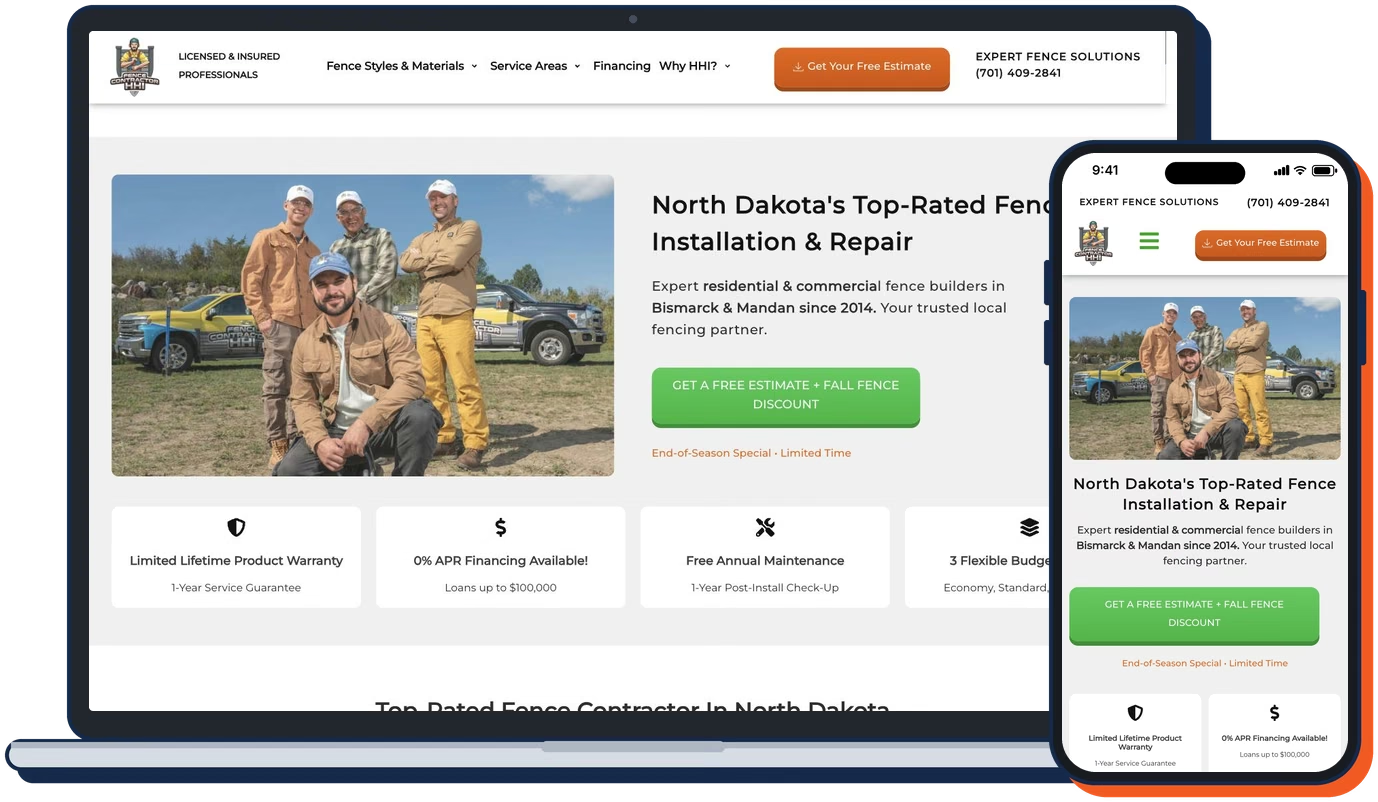
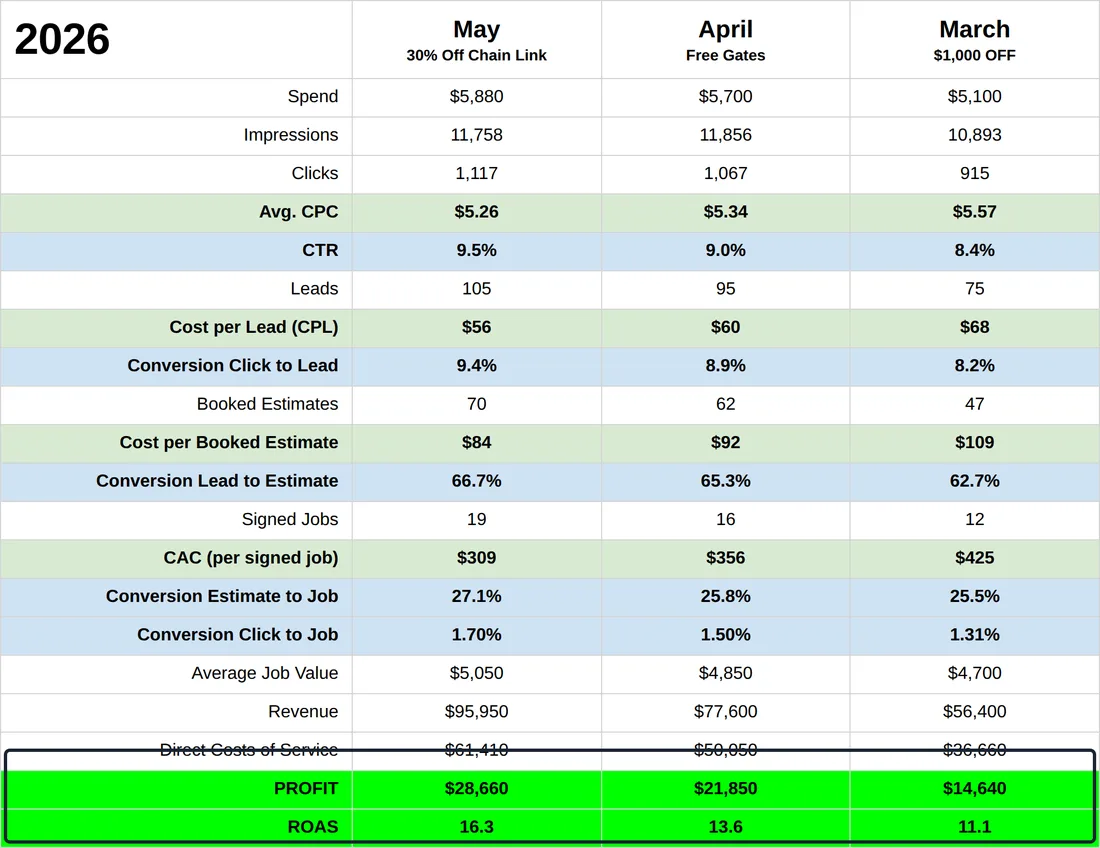
One example from home services: a fence company in North Dakota. In May 2026 a lead cost about $56, two out of three leads (67%) turned into a booked estimate, and each new customer cost $309 on an average job of about $5,000. There was no magic ad. The ads and the website showed why this company was worth choosing, every lead got a reply within minutes, every step had an owner, and no estimate was left without a next step.
I work alone — no account managers, no junior team. You always talk to me. I don’t just run ads: I build the sales side too — call scripts, follow-up messages, email templates — and I own how many leads turn into estimates and paid jobs.
Let spring start in November

Done for you: work with me
A good fit if
- the business already makes steady money and you want to grow, not experiment;
- you’d rather be on jobs than learning ad platforms, websites and automations;
- you can put about $2,000 a month into marketing, ad spend included.
What I do
- Leads that turn into jobs. Your ads and website show why your company is worth the money — your work, your process, what’s included, your warranty, your reviews — so the people who reach out want results, not the lowest bid.
- Google and Meta ads — live in 3 days.
- A website or a page for your service — with a clear “book an estimate” button.
- No lead slips through — instant text and email after every lead, missed-call text-back, estimate booking, reminders after the quote.
- A sales system — call scripts, quote and email templates, rules for whoever answers the phone.
How I work
- No contracts. Pay by the week; stop any week.
- Everything is yours. Domain, website, ad accounts and customer list are in your name from day one.
- Reports in jobs: leads, booked estimates, quotes, paid jobs and what each job cost.
- You work directly with me. No account managers.
- No promised lead counts — I own the quality of the setup, the speed and honest numbers.
Is there still time before winter?
- Ads go live in 3 days. Start in October and your first spring bookings can come in before the first snow.
- The full system takes about 4 weeks: a booking page, instant replies, follow-up after quotes, call scripts. By December it’s running while you take a break.
- No promised lead counts — not in summer, not in winter. You get numbers every week and can stop any week with no penalty.
What March looks like
Picture the first warm week. Everyone’s phone wakes up at once, and owners start the sprint: call back, drive out, measure, quote. Your calendar already has bookings from November and December: people who’ve seen your work, know your price, and are waiting for a start date, not a discount. Your crew rolls straight to a job instead of waiting for one. A few of the summer quotes that went silent in August have turned into signed contracts. Your Google profile shows fresh reviews and this year’s photos, so the next neighbor picks you before they even call.
Exactly how many jobs this brings, I won’t promise — it depends on your trade, your town, your budget, and how many old quotes and customers you’re sitting on. But the difference between “spring started” and “my spring started in November” shows up in the first week — on the calendar, not in your gut.
Questions owners ask
My crew barely works in winter anyway. Why run ads?
So spring starts with a schedule. Winter ads do two jobs: sell the off-season work you’re good at, and book spring. Someone who picked you in December won’t be collecting five quotes in March.
Won’t texting past customers come off as pushy?
One useful message a season isn’t pushy: an end-of-season check, a repair, a spring booking. Pushy is a discount blast every week. And we only text people who gave you their number and agreed to messages — texting rules are strict, and I set that up correctly.
Wouldn’t a discount be simpler?
Simpler, yes. More profitable, no. If your costs run 70% of the price, 30% off leaves you nothing, and customers learn you’re cheaper in winter. A spring booking with a reserved spot on the schedule beats a discount and doesn’t eat your margin.
What do off-season ads cost?
Google Ads management starts at $220 a week (plus a $450 setup fee on the two entry plans); you pay the ad budget directly, from $1,000 a month per channel. Pay by the week, no contract — run it through the fall and stop any week.
I do pools (roofing, landscaping) — it’s different
The services differ; the logic doesn’t: silent quotes, past customers, reviews, your Google profile and booking next season. What to sell in winter in your trade specifically — we’ll work that out on the free call.
It’s already October. Is it too late?
It’s the right time. Ads go live in 3 days and the full system takes about 4 weeks. Start now and it’s running by December while you take a break.