
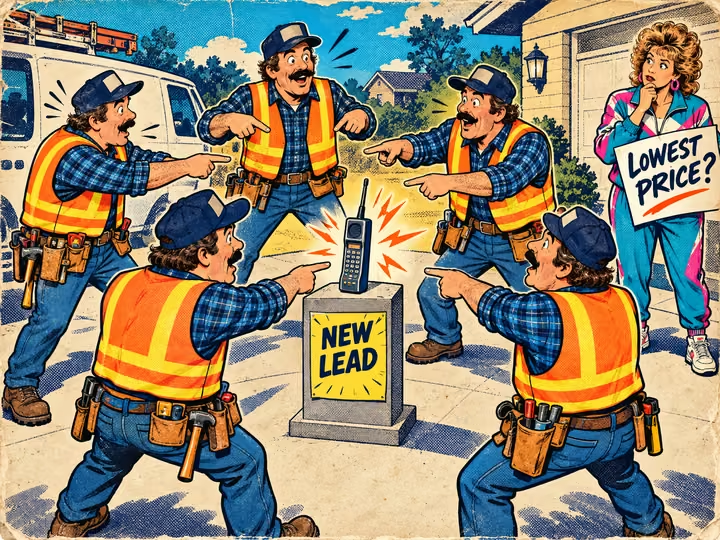
This one is for home service owners who get a big share of their work from Thumbtack, Angi and similar lead sites. If you pay per lead, compete on price, and keep thinking “I need to get off this thing” — but you’re afraid the phone goes dead the day you quit — read to the end. I’ll show you, with real numbers, how to measure the cost of a paid job instead of the cost of a lead, how a lead site differs from your own ads, and how to move off it step by step instead of jumping off a cliff. At the end: how to do it with me, and a free plan to start.
In this article
- Sound familiar?
- How lead sites work — in their own words
- Run the numbers: cost per job, not per lead
- Why the usual fixes don’t fix it
- What makes your own ads different
- Whose customer is it?
- How to get off lead sites without jumping off a cliff
- Run your numbers in 5 minutes
- Who I am and why I do this
- Getting to jobs you own
- Who this isn’t for
- Questions owners ask
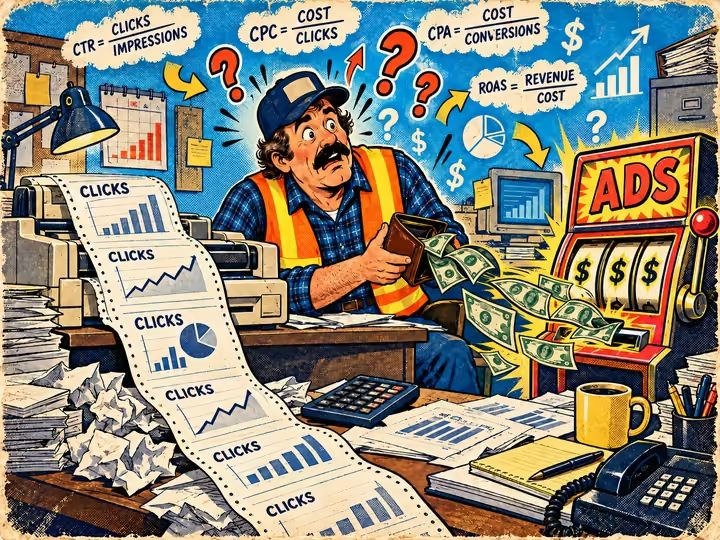
Ask any contractor what a Thumbtack or Angi lead costs and you’ll get an answer to the dollar. Ask what a paid job from that site costs and the conversation goes quiet. Almost nobody runs that number. Which is a shame, because it’s the one that tells you who’s really making money off your customers.
At first glance your own ads lose. A lead from a lead site can cost less than a lead from Google. Simple math — if you were in the business of selling leads. You’re not. You sell fences, roofs and remodels. Give me a few minutes and I’ll show you on real numbers why an expensive lead can produce a cheap job, and a cheap lead the opposite.
Sound familiar?
💸Paying for the privilege of being haggled with
- 7 a.m., your phone buzzes: new lead, card already charged. You call back five minutes later and hear, “Thanks, someone already reached out.”
- The homeowner wants “just a ballpark over the phone” without showing you the yard. You give a number. They ghost. Turns out they were collecting quotes from four guys.
- She went with the guy who was $300 cheaper. You know his posts will lean after two winters. You paid for the lead; he got the job.

🏚️Living in someone else’s house
- Lead prices move, and only the platform knows the rules.
- Your evening goes to arguing with support: the lead was two counties over, wrong service, but the charge went through.
- The reviews you spent years earning live on their page. Leave, and they stay behind.
- The customer you built a fence for will want a gate in two years — and will open the app again, where it offers him you and a few of your competitors.
😶And the stuff nobody says out loud
- You once started adding up what you paid the platform last year — and stopped halfway. Didn’t want to know.
- It feels like you work for the app, and the app takes its cut before you’ve earned a dime.
- You want out, but you’re scared: what if the phone stops ringing altogether?
How lead sites work — in their own words
No forum rumors — just what the platforms say themselves.
Thumbtack. The page for pros spells it out: when a request is a good fit, you “pay to send a quote,” and customers get quotes from up to 5 pros. You pay for access to the customer, not for winning the work — if the lead doesn’t turn into a job, you don’t get your money back (Housecall Pro’s 2026 breakdown).
Angi. The Angi Leads help center (formerly HomeAdvisor Pro) says you’re charged as soon as a homeowner sends a request that matches your services and area. With Market Match, the request goes to up to four pros. Lead price depends on project type, size and location. You can ask for a lead credit — “in some cases.”
One more piece of history. In 2023 the Federal Trade Commission ordered HomeAdvisor — now part of Angi — to pay up to $7.2 million. Contractors were promised leads matching their services and area and got others too, and the company overstated how often its leads turned into jobs.
Now look at it from the homeowner’s side. They opened the app to compare. They were promised several quotes. They’ve never seen one of your fences and have no idea how your warranty differs from the next guy’s — they’re looking at five names and five numbers. What do they pick? The one thing they can compare in a second. Price.
Run the numbers: cost per job, not per lead
One formula works for every channel: everything you spent to get customers, divided by the number of paid jobs. Not leads, not estimates — jobs the customer actually paid for.
“Lead-site leads are cheaper, so they’re the better deal”
Makes sense on paper: $35 is less than $56. But a lead isn’t money in the bank — it’s an entry ticket to a bidding contest. Let’s put the two side by side.
In this comparison the lead from your own ads costs more, and the job costs less than half. Those people weren’t collecting five quotes: they saw the company’s work, understood what’s included in the price, and called asking “when can you start,” not “how much can you knock off.” To be fair: add your management fee to the ad spend and divide that by the number of jobs too. And swap my hypothetical numbers for yours — there’s a five-minute check below.
For reference: according to LocaliQ, the average search-ad lead in Home & Home Improvement costs about $91 in 2026. So when someone promises you “$10 leads,” ask right away how many of them will end up as signed jobs.
Why the usual fixes don’t fix it
“I’ll just respond first and win”
Speed matters — call back that evening and you’re often too late. But on a lead site, being first only gets you to the front of the comparison line. The homeowner still waits for the other quotes; they were promised them. You win the race to a finish line where the medal goes to the lowest bid.
“I’ll drop my price and win more often”
You will. You’ll also work more and make less. A discount doesn’t come out of thin air — it comes straight out of profit. Say a $5,000 job leaves you $1,500: a $500 discount eats a third of what you make. Worse, you teach your market that you’re “the cheaper guy,” and that label is hard to shake even when your schedule is full.

“I’ll get credits back for the bad leads”
Sometimes you will — platforms do give credits, in some cases. But price your own hour. An evening on chat with support over $35 is an evening you didn’t send three quotes or call back the people waiting on you. And the leads that technically “match” but never turn into anything — nobody refunds those.
“My own ads are just a pricier lottery”
If you run them like a lead site, yes. An ad that says “Fence Installation — Free Estimates — Low Prices!” and a website with three stock photos will pull in exactly the same people the app does: price shoppers. Your own ads win not because they’re yours, but because you finally have a place to show why you’re worth the money.
What makes your own ads different
A lead site puts you in a lineup. Picture the Home Depot parking lot: four trucks, four contractors, and a homeowner walking down the row asking each one for a number. However good your work is, in that row you have exactly one feature — the number on the paper.
Your own ads bring that homeowner to your yard. Your fences are there, with the neighborhoods where you built them. They can see how you work: the site visit, a quote that spells out what’s included, the timeline, the cleanup, the warranty. They can read reviews from people who’ve been through it. By the time they fill out the form, they’re not choosing between five prices — they’re choosing between “yes, I want that” and “let me think about it.”
That’s why I don’t chase cheap leads. Your ads and website have to show what your company is worth — then the people who reach out want a result, not the lowest bid. You get fewer leads and each one costs more. But those are the ones that book estimates and sign. There’s one scorecard: what a paid job cost you.
Whose customer is it?
There’s one more bill the lead site never shows you. A customer who came through the app found the app, not you. Two years later they need a gate or a section repaired — and they open the app again. You pay for the same lead a second time and compete again, this time for your own customer.

Your own system works the other way around. The customer’s number is in your list. The review is on your Google profile, where the next neighbor will see it. A year from now you text those people yourself, and it costs cents, not the price of a new lead. Website, ad account, customer list and reviews are in your name and stay with you, no matter who you work with. Every job makes the next one cheaper. On a lead site, every job starts from zero.
How to get off lead sites without jumping off a cliff
You don’t need to cancel on Monday. If the lead site is feeding your crew right now, let it — until your own system brings jobs in cheaper. Here’s the order:
- Find your cost per job on the lead site — last three months, using the formula above. That’s your baseline; without it you won’t know if things got better or worse.
- Show your value — put your real projects, your process, what’s included in the price, your warranty and your reviews on your website or a page for the service. That’s exactly what a homeowner never sees in a lineup of five quotes.
- Get your Google profile in shape — photos of real jobs, services, service areas, fresh reviews. Ask every happy customer whose number you have for a review — including the ones who once came from a lead site.
- Launch your own ads in your own account — on services with a healthy ticket, in the areas you want to work. Ad budget starts at $1,000 a month per channel.
- Reply in minutes and never drop a quote — missed-call text-back, estimate booking, follow-up after the quote. An expensive lead nobody answers is lost just like a cheap one.
- Cut the lead-site budget as your system grows — once your own cost per job is consistently lower, the platform becomes a spare tire, not the engine.
Every week, one simple table: leads, booked estimates, quotes, jobs, and what each job cost by channel. Then “keep the lead site or not” is a decision made on numbers, not nerves.
Run your numbers in 5 minutes
What a lead-site job really costs you
- How much did you pay the platform over the last three months? Pull the card statement — don’t go from memory.
- How many leads came in over that period?
- How many turned into a booked estimate?
- How many became paid jobs — from the platform specifically, not referrals?
- Divide line 1 by line 4. That’s your cost per job.
- How much did you come down on price to win those jobs? Add it on.
Now compare that with the profit you keep on one job. If the cost per job eats a real chunk of it, the platform is making more on your customers than it looks. And if you can’t answer line 4 with a real number, that’s an answer too: you’re paying for a flow of leads nobody is measuring.
Who I am and why I do this

I’m Eddie A. For 12+ years I’ve worked in marketing and sales: projects in 50+ industries, ad budgets up to $60,000 a month, and $12M+ in revenue attributed to campaigns I managed — in the U.S., Canada, the UAE, Turkey, Europe and Kazakhstan. I’m based in Apopka, Florida, and run a registered LLC.
- 12+years in marketing and sales
- 50+industries I’ve run ads for
- $60Kmax monthly ad budget
- $12M+revenue from my campaigns
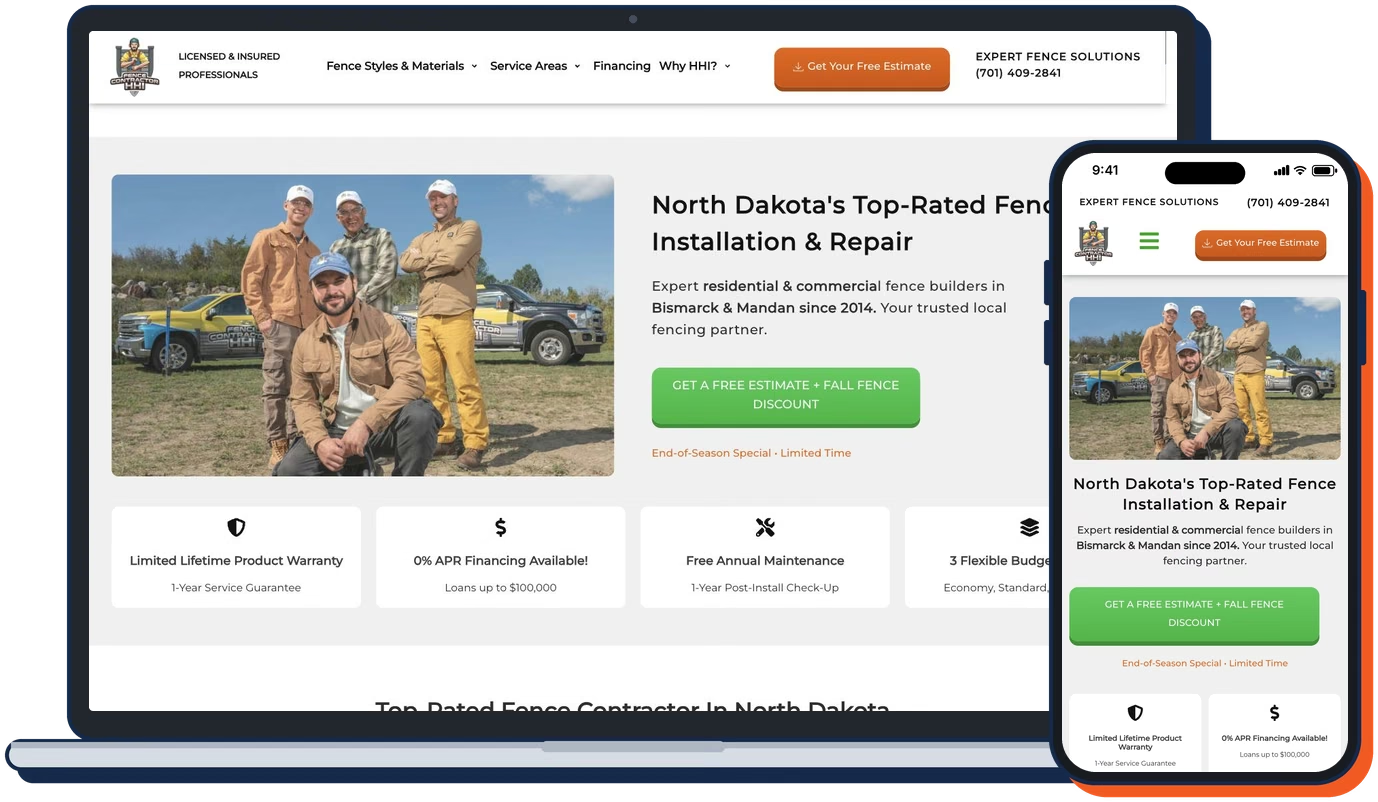
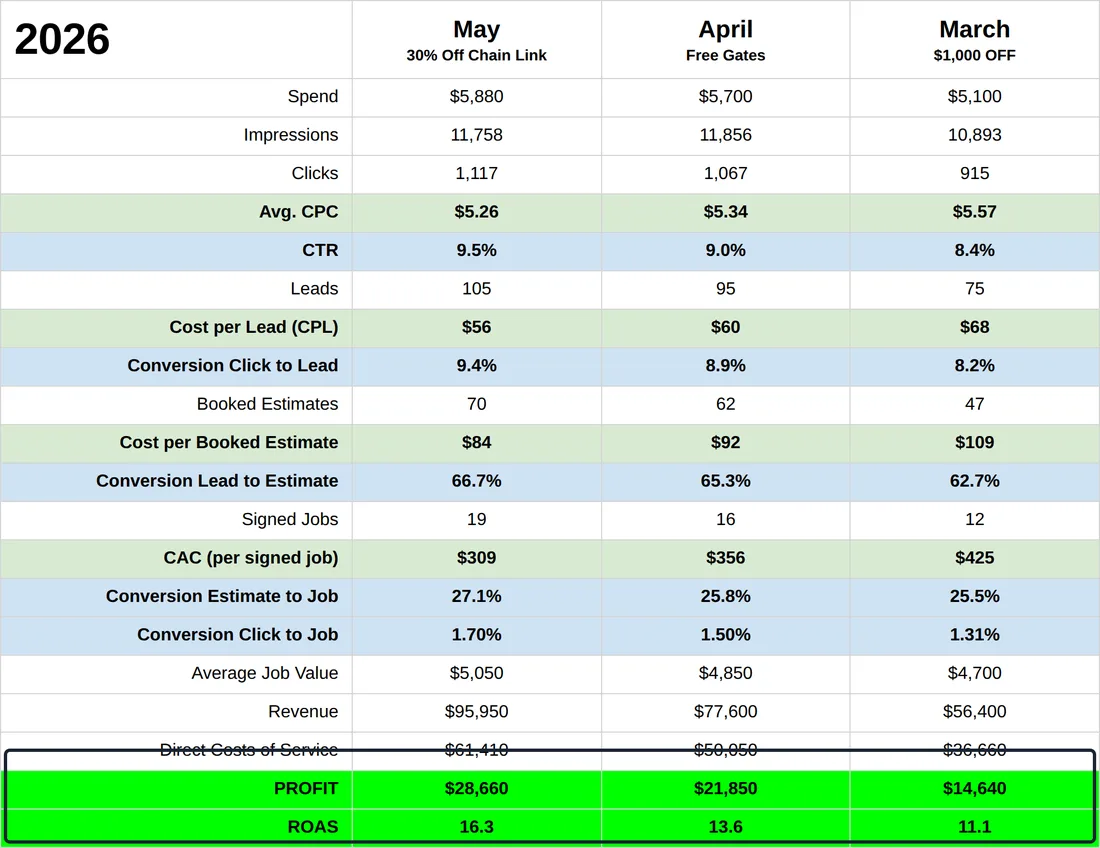
One example from home services: a fence company in North Dakota. In May 2026 a lead cost about $56, two out of three leads (67%) turned into a booked estimate, and each new customer cost $309 on an average job of about $5,000. There was no magic ad. The ads and the website showed why this company was worth choosing, every lead got a reply within minutes, every step had an owner, and no estimate was left without a next step.
I work alone — no account managers, no junior team. You always talk to me. I don’t just run ads: I build the sales side too — call scripts, follow-up messages, email templates — and I own how many leads turn into estimates and paid jobs.
Getting to jobs you own

Done for you: work with me
A good fit if
- the business already makes steady money and you want to grow, not experiment;
- you’d rather be on jobs than learning ad platforms, websites and automations;
- you can put about $2,000 a month into marketing, ad spend included.
What I do
- Leads that turn into jobs. Your ads and website show why your company is worth the money — your work, your process, what’s included, your warranty, your reviews — so the people who reach out want results, not the lowest bid.
- Google and Meta ads — live in 3 days.
- A website or a page for your service — with a clear “book an estimate” button.
- No lead slips through — instant text and email after every lead, missed-call text-back, estimate booking, reminders after the quote.
- A sales system — call scripts, quote and email templates, rules for whoever answers the phone.
How I work
- No contracts. Pay by the week; stop any week.
- Everything is yours. Domain, website, ad accounts and customer list are in your name from day one.
- Reports in jobs: leads, booked estimates, quotes, paid jobs and what each job cost.
- You work directly with me. No account managers.
- No promised lead counts — I own the quality of the setup, the speed and honest numbers.
Who this isn’t for
- If the lead site gives you jobs at a cost you’re happy with. Ran the numbers and they work? Keep going — I’m not against lead sites, I’m against not measuring them.
- If you want a guarantee of “50 leads a month.” I don’t give one — and I’d be wary of anyone who does.
- If your main selling point is the lowest price in town. Then, honestly, a lead site is your channel.
Questions owners ask
On a lead site I only pay for leads. With you I pay for ads plus management. Isn’t that more expensive?
Per lead — maybe. The number to compare is cost per paid job: everything you spend, management fee included, divided by jobs. Google Ads management starts at $220 a week, plus ad spend from $1,000 a month. If your lead site gets you jobs cheaper than that, stay — I’ll tell you so.
Half my work comes from a lead site. I can’t just quit
Don’t. Your own ads launch alongside it, and you only cut the lead-site budget once the numbers show your own jobs cost less. The call gets made on the weekly report, not on a hunch.
Can you guarantee it’ll be cheaper than Thumbtack?
No. I don’t guarantee lead counts or cost per job — nobody honestly can. I own the quality of the setup, the speed and honest numbers. And you pay by the week with no contract: if the numbers don’t work, tell me by Friday and next week isn’t billed.
I got burned by an agency before
That’s why it works the other way here: the ad account, website, domain and customer list are in your name from day one, the leads are yours alone and never resold, and the report is in jobs and cost per job — not lead counts.
My trade is different — lead sites are the only thing that works
Maybe — check it with numbers. People search Google for fences, roofs, concrete and remodels every day; the question is whether they find you there and see why you’re worth choosing. On the free call I’ll show you how many people search for your service in your area.
How fast will I see leads?
Ads go live in 3 days. Website, follow-up and scripts take about 4 weeks. So leave the lead site alone this month.