
This one is for owners of home service companies — fence, remodeling, roofing, concrete, cleaning, HVAC, handyman — who text with homeowners and keep running into the same wall: you send the price, you see “Read,” and then nothing. Inside: the 7 texting mistakes that send homeowners to the next contractor, with before-and-after messages you can steal, a 10-minute check of your own threads, and how to make sure every lead gets a fast reply and a clear next step.
In this article
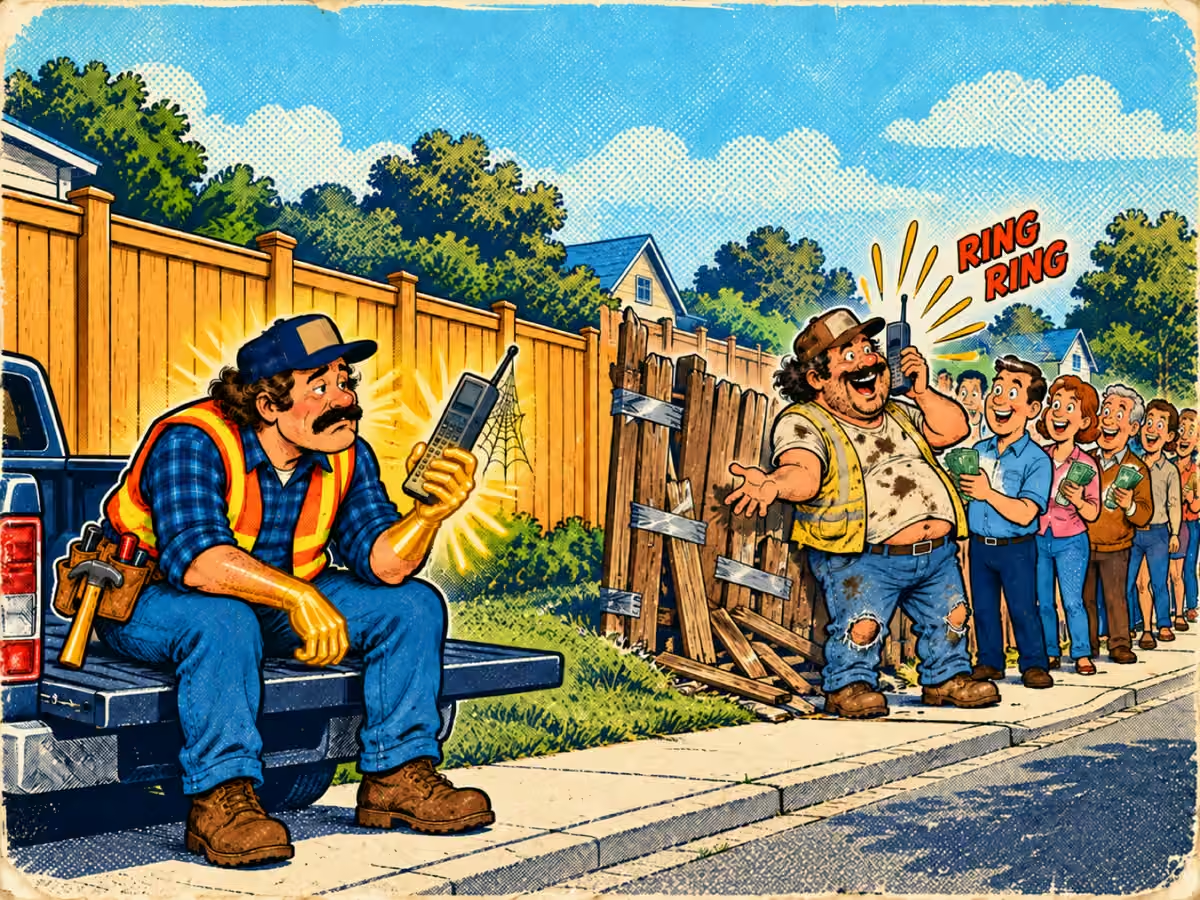
Tuesday, 9:40 p.m. A homeowner one town over filled out your form at lunch: “Hi, how much for a 6 ft privacy fence?” You were on a job all day. Now you’re in the truck in your driveway, typing with your thumbs, trying to sound professional. You send it. “Read.” Silence. A week later you drive past her house, and there’s a brand-new fence. Someone else’s. Honestly, not a straight one.
The easy explanation is “she found someone cheaper.” Sometimes that’s true. But put your text next to the one from the contractor she picked, and the difference usually isn’t the price. Their message made it easy for her to say yes. Yours made her do the work. Sound like a stretch? Here are the seven mistakes, with real before-and-after texts.
Sound familiar?
📱“Read” — then nothing
- You text the price, see “Read,” wait a day, then two. Text again and you look desperate. Don’t, and the job’s gone.
- A homeowner asks “How soon can you start?” You give an honest, detailed answer — and never hear from them again.
- You reread your own message and can’t find anything wrong with it. Polite, accurate, no typos. Still no reply.
⏳Texting eats your evenings
- Leads come in while you’re on a roof or in a trench. The only time to answer is after dinner — and by then they’ve booked whoever answered at 2 p.m.
- Every reply gets written from scratch. Ten threads a night, every night, during busy season.
- A long email from a homeowner sits there for three days because you want to “answer it properly.”
🤐The part that stings
- You know your work is better than the outfit she hired. You just couldn’t get that across in two lines of text.
- Your spouse handles the texts some days, you handle them other days, and nobody is sure who followed up on the Johnson quote.
- Somewhere in the back of your mind: “Maybe I’m just not a good salesman.”
7 texting mistakes that send homeowners to someone else
Each one comes with a before and an after. Names, towns, numbers and company names are placeholders — swap in your own.
1. You sound like a robot (or a bank)
A lot of contractors set up an auto-reply once, years ago, and never looked at it again. Or they copy a “professional” message from somewhere. It reads like a letter from the electric company. Homeowners can smell a canned message in one line — and a canned message tells them they’re a ticket number, not a neighbor with a project.
Before: “Dear Valued Customer, thank you for contacting ABC Home Services LLC. Your inquiry is important to us. A representative will reach out within 2–3 business days.”
After: “Hi Sarah, this is Alex with [Company]. Thanks for reaching out about the fence! Quick question so I can give you a real number: roughly how many feet, and are you thinking wood or vinyl?”
Why it works: her name, a real person’s name, and one easy question she can answer from the grocery store line.
2. You lead with a bare number
She asked “how much?” so you answered with a number. But a bare number is an invitation to compare it with other bare numbers. You’re $8,500, the other guy is $7,200 — and without context, the smaller number wins. Maybe his price skips tear-out, haul-away, the permit and the warranty. She doesn’t know that. You didn’t tell her either.

Before: “Its 8500.”
After: “Most 150 ft cedar privacy fences we build land between $7,800 and $9,200. That includes tearing out the old fence, hauling it away, the permit, and a written warranty. I can give you an exact price after a free 15-minute visit. Would Thursday at 4:30 or Saturday at 10 work?”
Why it works: a range instead of a target, what’s included spelled out, and a straight path to the visit where you’ll give the real number.
3. You send a wall of text
You want to cover everything up front: materials, post depth, concrete, timeline, payment schedule. It ends up as one giant paragraph that fills her whole screen. She opens it in the school pickup line, sees the wall, and saves it “for later.” Later is dinner, homework and three new texts on top of yours.

Before: twelve lines in one block — materials, concrete, steps, payment terms.
After: “Got it — 150 ft, cedar, 6 ft tall. That’s usually a 2–3 day job for us. Easiest next step is a quick visit so I can measure and show you samples. Thursday 4:30 or Saturday 10?”
Why it works: three or four short lines, one idea per line. The details belong in the visit and the written quote, when she’s ready to read them.
4. You don’t offer a next step
“Let me know.” “Feel free to reach out.” “Just call me whenever.” Polite — and it hands the work back to her. Now she has to figure out when you’re free, text back, and wait again. It’s easier to reply to the contractor who already offered a time.
Before: “Let me know if you have any questions or want to set something up.”
After: “I have two openings this week: Wednesday at 5 or Saturday at 9. Which works better for you?”
Why it works: a choice between two options beats an open question. Typing “Saturday” takes two seconds.
5. You reply when you get a minute
While you’re on a job, the lead goes cold. In a study published in Harvard Business Review, companies that tried to contact an online lead within an hour were nearly 7 times as likely to have a real sales conversation as those that waited even one hour longer. That research covered online leads in general, not just home services, but the logic holds: a homeowner who reached out to several contractors talks to whoever answers first. And if the lead came from a lead site, assume you’re not the only pro who got it.
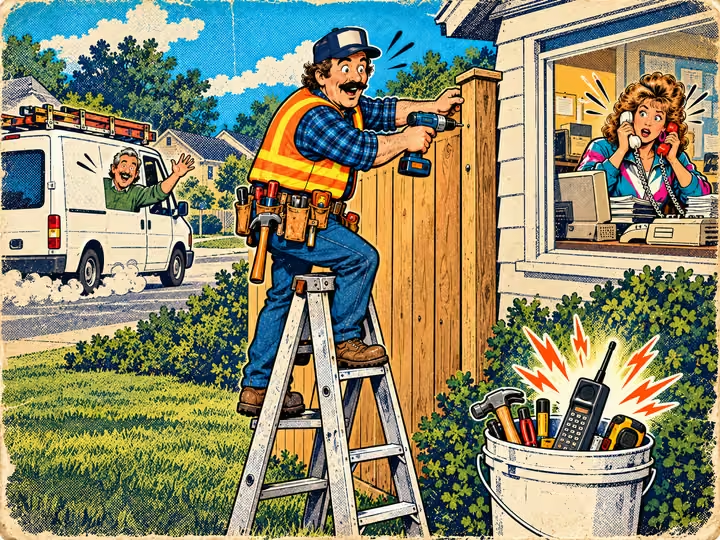
Before (9:40 p.m.): “Sorry for the late reply, been slammed. What are you looking for?”
After (automatic, one minute after the form): “Hi Sarah, thanks for your request! I’m on a job site right now and will call you before 6 pm today. Meanwhile, here are a few fences we built nearby: [link]”
Why it works: she knows she was heard and when you’ll call, and she’s looking at your work instead of the next contractor’s website. And you didn’t have to type it — it went out on its own.
6. You’re too casual — or too stiff
Two ways to miss. One is “yo,” “k,” “np,” and three fire emojis. Fine with your buddy, odd to a homeowner about to hand you $9,000 and her backyard. The other is “Dear Ma’am, we would be honored to serve you” — which sounds like a timeshare pitch. The right tone is a pro neighbor: first name, friendly, short, no slang, no bowing.
Before: “yo 🔥🔥 we can def do that np” — or — “Dear Ma’am, we would be honored to serve you.”
After: “Hi Sarah — sounds good, we can definitely do that. I’ll bring samples Saturday so you can pick the color.”
Why it works: it sounds like someone you’d let into your backyard. Not your fishing buddy, not the DMV.
7. You don’t show what she’s paying for
“Quality work,” “best prices,” “25 years of experience.” Every contractor in town says it, so it weighs nothing. Value is what she can check: photos of similar jobs near her house, reviews, what’s included, the warranty, how the job runs from day one to cleanup. Without that, the only thing left to compare you on is price.
Before: “We do quality work at the best price. Licensed and insured.”
After: “Here are 3 fences we finished in [Town] this spring: [link]. Every job includes cleanup and haul-away, and you get a written warranty. Our Google reviews are here: [link].”
Why it works: proof instead of promises, one tap away.
Why the usual fixes don’t fix it
“I’ll just text back faster from the truck”
Speed matters, but you can’t answer from the top of a ladder or with a post-hole digger in your hands. What you get instead is half-answers between jobs, typos, a bare number with no next step — mistakes 2 through 4 in a hurry. And texting while driving is the one shortcut you really shouldn’t take.
“My wife (or the office) handles the texts”
That solves the who, not the what. Without set answers, she writes “Let me check with my husband,” and the homeowner waits another day. And who follows up three days after the quote? Everyone thinks someone else did. That’s how the most expensive sentence in the trades is born: “I thought you texted her back.”
“I’ll quote low so they answer”
They’ll answer, all right. The ones shopping on price — and they’ll leave the minute someone else comes in $300 under you. It’s the same trap as agencies and lead sites chasing cheap leads: lots of people reaching out, all of them haggling, very few signing. You make less on every job and spend more evenings on people who were never going to hire you.
“I just need more leads”
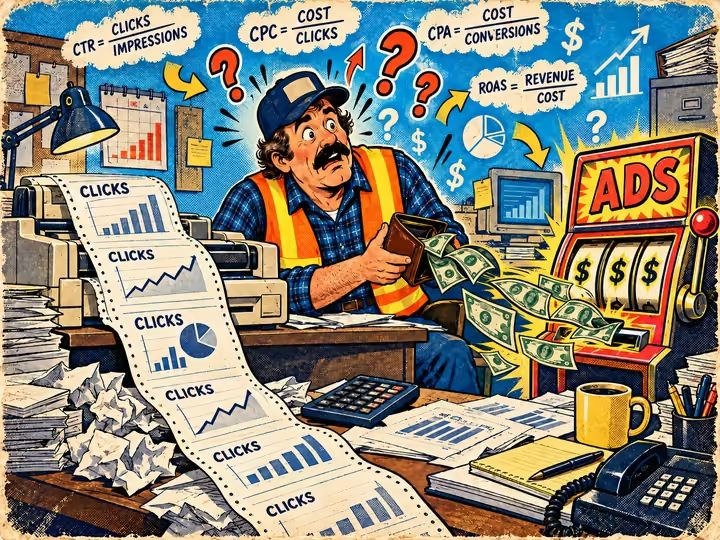
If two out of three leads go quiet after your first text, buying more leads buys more silence. It’s pouring more water into a bucket with a hole in it. Fix the replies first, then turn up the ads — every lead you already paid for becomes worth more.
Your text is your storefront
Look at it from her side. She sent your form and two or three others. An hour later she has a stack of replies on one screen, and she scrolls them like a menu: this one’s a form letter, this one’s an essay, this one’s just a number — and this one used her name, said what’s included, showed photos of fences on her side of town and asked if Saturday works. Guess who gets the reply.
It’s two trucks in the Home Depot parking lot. One is clean, lettered with the company name, phone number and a photo of a finished deck. The other has a cardboard sign under the wiper: “FENCE CHEAP.” Maybe they build equally well. But people call the first one, because it already answered the question “can I trust these guys?”
So the job of your message isn’t to win on price. It’s to show what makes your company worth the money: that you understood the project, what’s included, why she can trust you, and what happens next. Then the people who book an estimate are the ones who want the job done right. The pure price shoppers weed themselves out — and that’s fine, because you don’t burn an evening and a tank of gas on them. The number to watch isn’t how many people replied. It’s how many booked an estimate and signed.
The fix: templates and instant replies
Good news: home service conversations repeat themselves. Homeowners ask the same handful of questions — how much, how soon, what’s included, why are you higher than the other guy. That means you can write the best answer to each one once and use it for years, dropping in the name, the footage and the time.
- An instant first reply — to every web form, every missed call and every weekend message. She knows she was heard and when you’ll call, even while you’re on a roof.
- Ready-made templates for the situations that keep coming up: first reply, the price question, “how soon can you start,” rescheduling, “that’s too expensive,” and texts after the quote.
- A value snippet — photos of similar jobs, a review link, what’s included, your warranty. Pasted in one second, and it does the selling you don’t have time to type.
- Always a next step — two estimate times, or a link where she picks a slot herself.
- Follow-up after the quote — on a schedule, automatically, until she says yes or an honest no. No more wondering whether a second text is pushy.
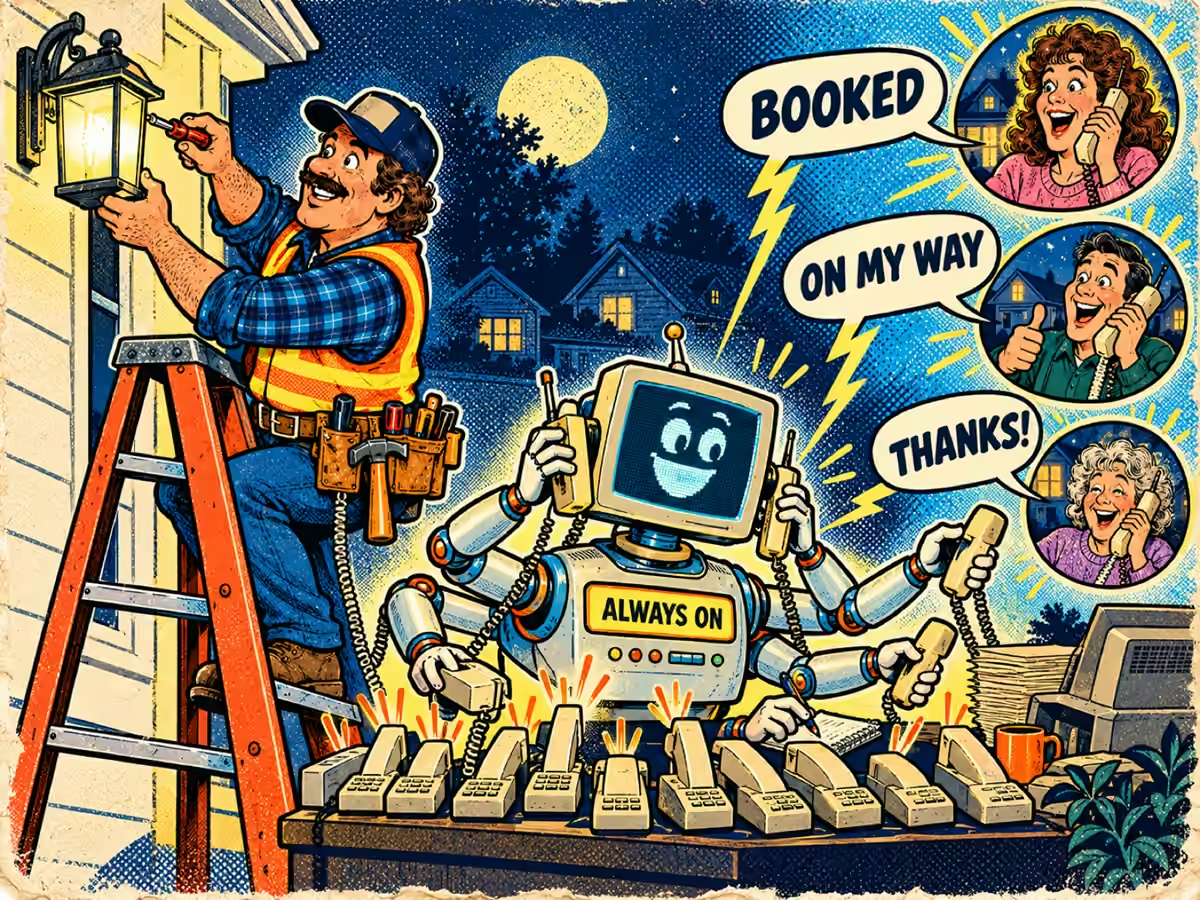
That’s a sales system for your texts. You stop writing from scratch and start picking: the right template, her name, the footage, the time. Fifteen minutes per reply becomes one, and the very first reply goes out without you.
Check your last 10 threads
Open your phone and go through each one
- How long from the lead to your first reply — minutes, hours or the next day?
- Does your first text include her name and yours?
- Did you send a price without saying what’s included?
- Does your message fit on one phone screen without scrolling?
- Does every message end with a question or a specific estimate time?
- Did you send at least one photo of your work or a link to your reviews?
- Did you follow up after the quote — and how many times?
If three or more first replies came after an hour, start with an instant reply — it’s the cheapest, fastest fix there is. If prices went out without context or a next step, you need templates. If there’s silence on both sides after the quote, you need follow-up. Most owners find all three, and that’s good news: it means you’re losing jobs to the process, not to the quality of your work.
Who I am and why I do this

I’m Eddie A. For 12+ years I’ve worked in marketing and sales: projects in 50+ industries, ad budgets up to $60,000 a month, and $12M+ in revenue attributed to campaigns I managed — in the U.S., Canada, the UAE, Turkey, Europe and Kazakhstan. I’m based in Apopka, Florida, and run a registered LLC.
- 12+years in marketing and sales
- 50+industries I’ve run ads for
- $60Kmax monthly ad budget
- $12M+revenue from my campaigns
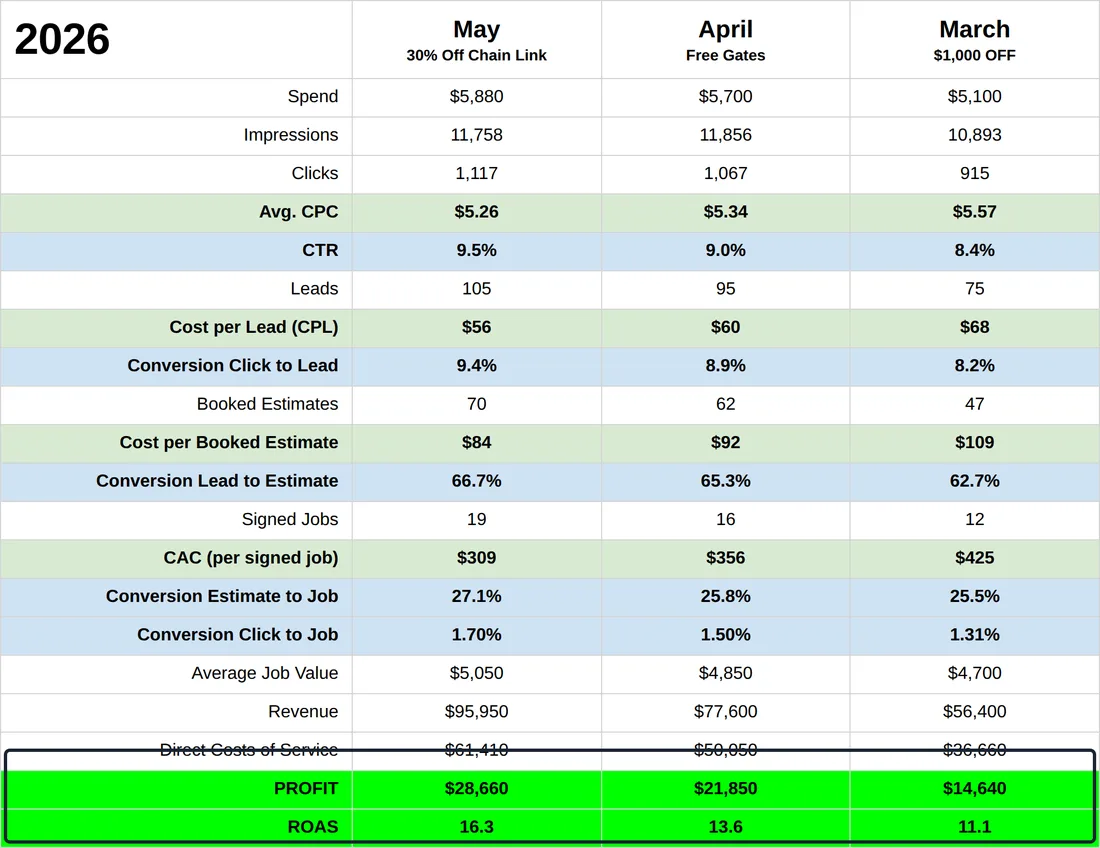
One example from home services: a fence company in North Dakota. In May 2026 a lead cost about $56, two out of three leads (67%) turned into a booked estimate, and each new customer cost $309 on an average job of about $5,000. There was no magic ad. The ads and the website showed why this company was worth choosing, every lead got a reply within minutes, every step had an owner, and no estimate was left without a next step.
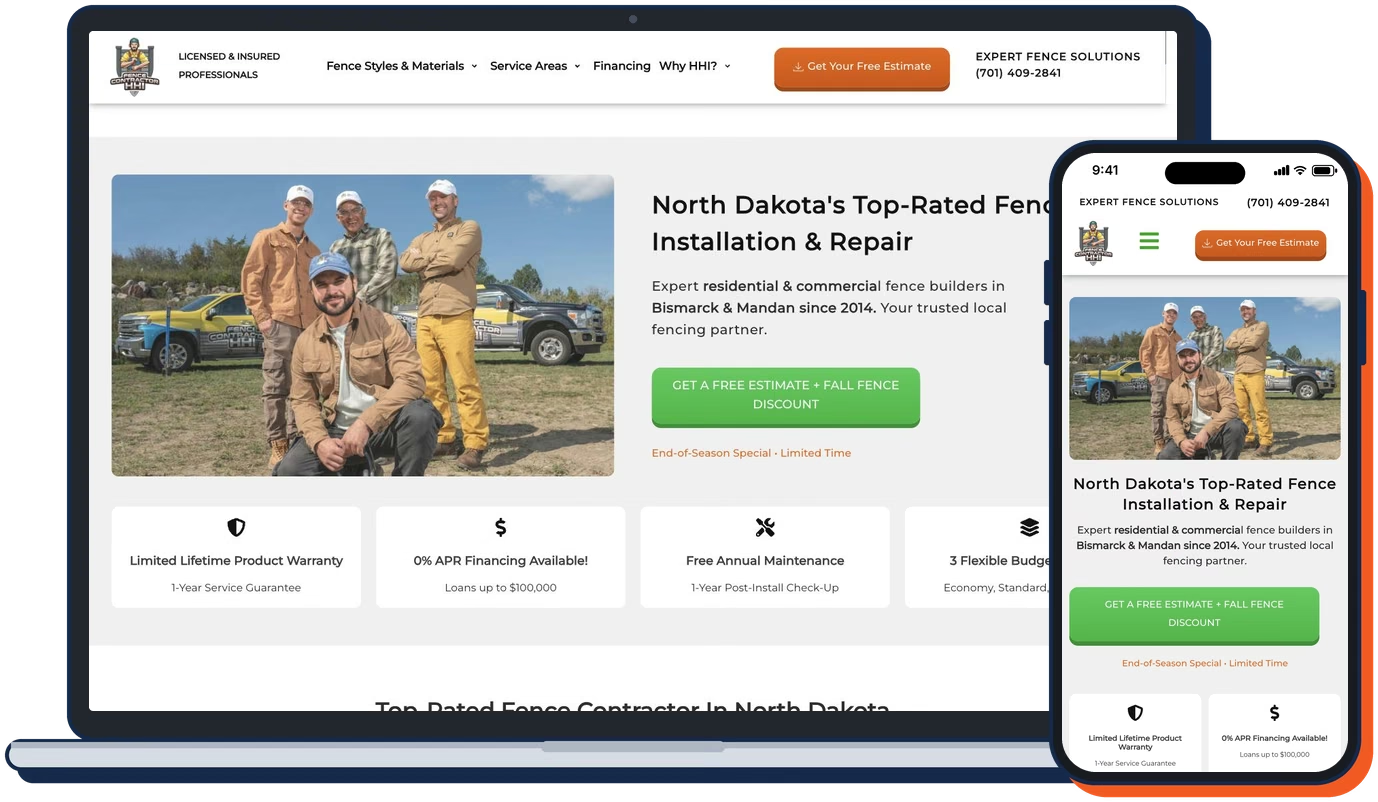
I work alone — no account managers, no junior team. You always talk to me. I don’t just run ads: I build the sales side too — call scripts, follow-up messages, email templates — and I own how many leads turn into estimates and paid jobs.
Texts that book estimates, done for you
I write the templates for your trade, set up the instant replies, missed-call text-back and post-quote follow-up, and give you call scripts for whoever answers the phone. You just confirm the estimate time.
Done for you: work with me
A good fit if
- the business already makes steady money and you want to grow, not experiment;
- you’d rather be on jobs than learning ad platforms, websites and automations;
- you can put about $2,000 a month into marketing, ad spend included.
What I do
- Leads that turn into jobs. Your ads and website show why your company is worth the money — your work, your process, what’s included, your warranty, your reviews — so the people who reach out want results, not the lowest bid.
- Google and Meta ads — live in 3 days.
- A website or a page for your service — with a clear “book an estimate” button.
- No lead slips through — instant text and email after every lead, missed-call text-back, estimate booking, reminders after the quote.
- A sales system — call scripts, quote and email templates, rules for whoever answers the phone.
How I work
- No contracts. Pay by the week; stop any week.
- Everything is yours. Domain, website, ad accounts and customer list are in your name from day one.
- Reports in jobs: leads, booked estimates, quotes, paid jobs and what each job cost.
- You work directly with me. No account managers.
- No promised lead counts — I own the quality of the setup, the speed and honest numbers.
What changes
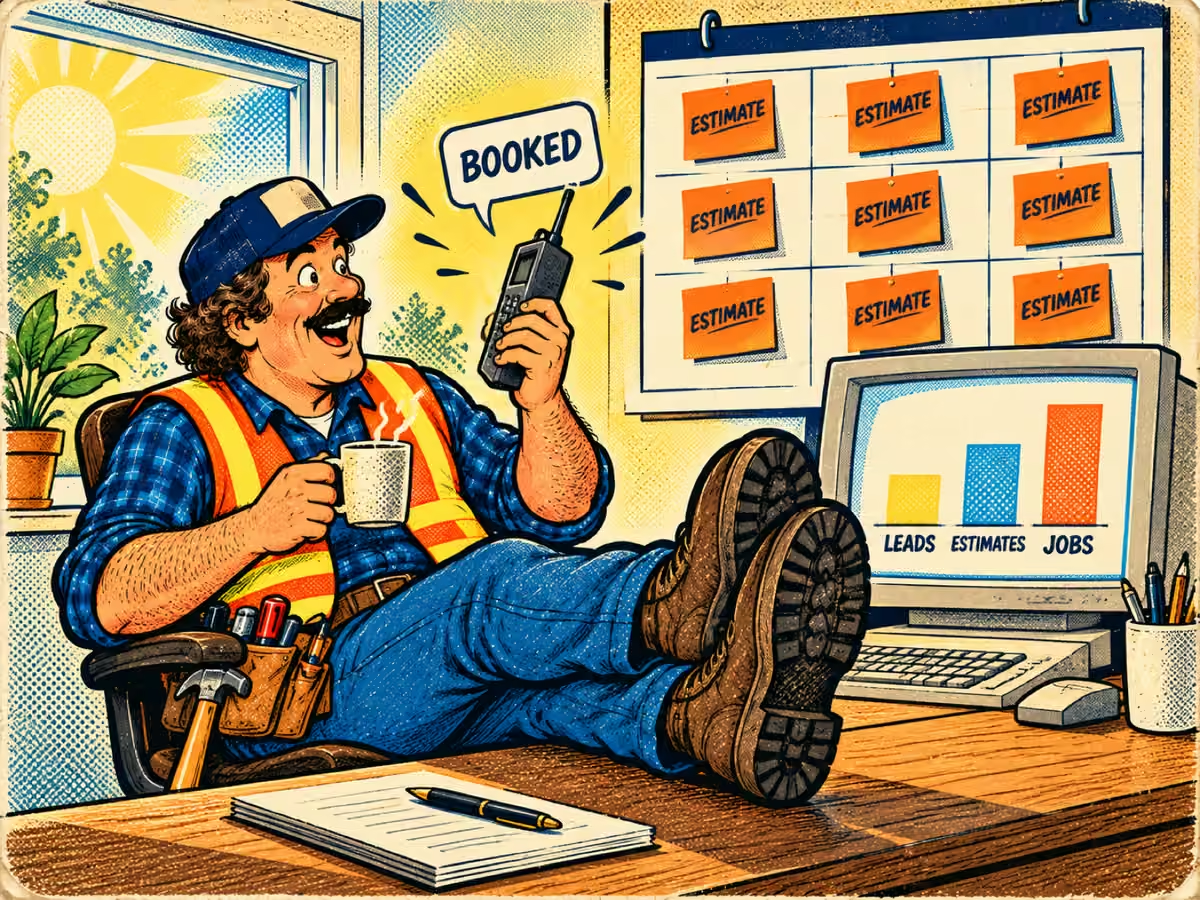
A lead comes in while you’re on a job, and a minute later the homeowner has a reply and photos of your work. In the evening you’re not writing essays from the driveway — you answer in five minutes from a template that already sounds like you. After the quote, follow-up goes out on its own, and you stop wondering whether it’s okay to check in. The homeowner sees a company that replies fast, talks like a person and shows what she’s paying for.
How many extra jobs that adds, I can’t honestly promise up front — it depends on your trade, your area and how many leads you already get. But the leads you’ve already paid for stop going to whoever simply texted back better.
Questions owners ask
Won’t homeowners notice it’s a template?
Not if it’s short and has their details in it: name, footage, material, time. A template isn’t a mass text — it’s your best answer, written once, with the specifics dropped in.
Most of my customers call instead of text
Then the first fix is missed-call text-back: anyone who can’t reach you gets a text right away, so they don’t call the next contractor on the list. For live calls there are call scripts. And if you want every call answered, an AI receptionist can pick up 24/7 and book estimates.
Isn’t following up after the quote pushy?
Not when it’s helpful: answering questions, offering a time, a heads-up before your schedule fills for the season. Most homeowners who go quiet didn’t say no — they got busy.
My trade is different
Homeowners ask surprisingly similar questions across trades: how much, how soon, what’s included, why are you higher. I write the templates for your service, your prices and your process.
I don’t have time for this
That’s the point. The first reply and the follow-up go out without you. What’s left is picking a template and confirming a time — minutes, not evenings.
What does it cost?
Missed-call text-back starts at $25 a week; lead tracking with instant replies starts at $69 a week, plus a one-time setup. Call scripts are $790; scripts plus follow-up sequences are $1,990. No contracts — you pay by the week.
Can you guarantee homeowners will reply?
Nobody can honestly guarantee what other people do. I own the parts you can control: every lead gets a fast reply, a clear next step and follow-up, and you get an honest report of how many booked an estimate and how many signed.